 Hedayat Reda
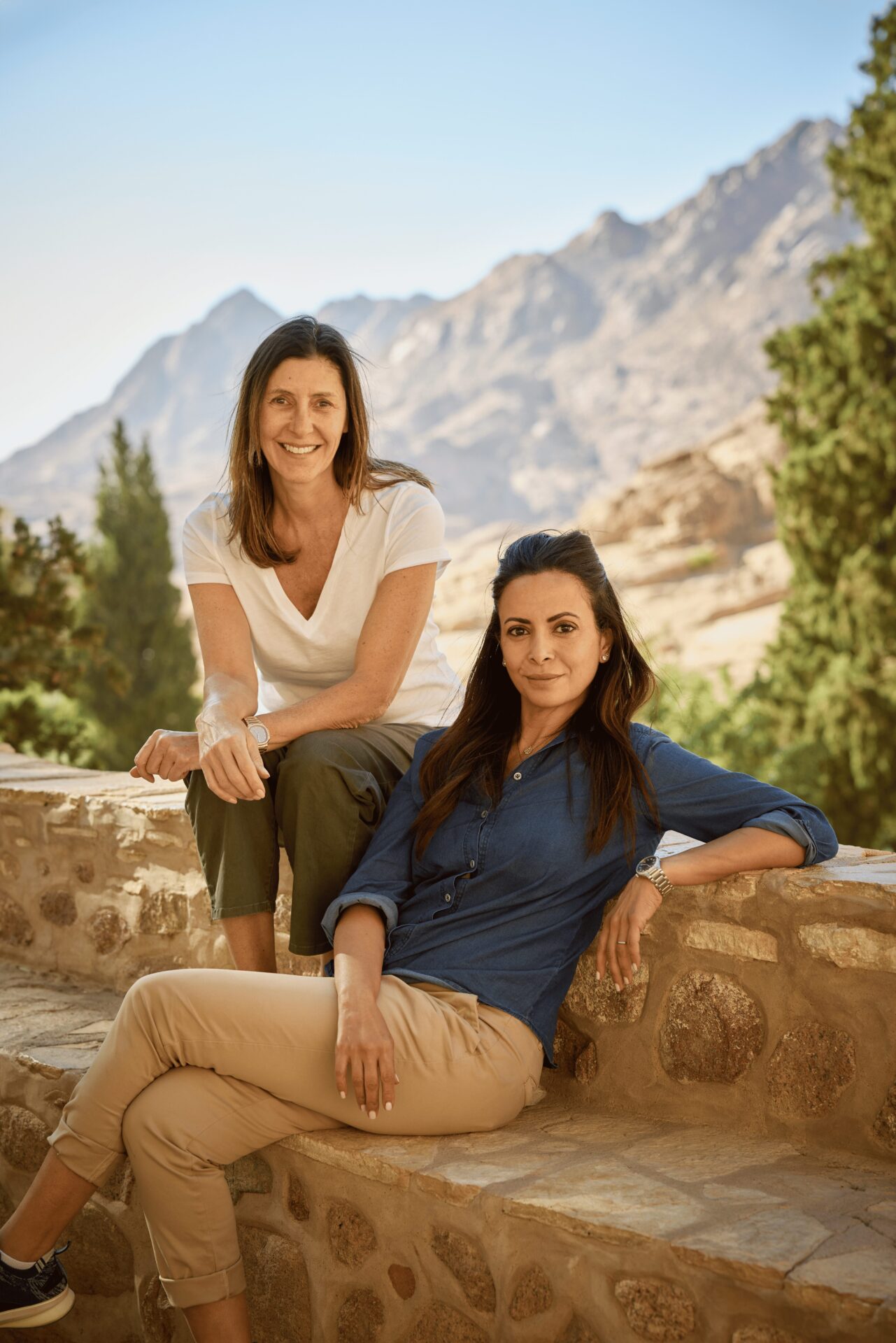
 Across countries and continents, Rawah Badrawi and Suzanne Zeidy, best friends and longtime Abu Sir neighbours, have come together to take on a project of extraordinary proportions: a cultural cookbook that spans the cuisines and regions of Egypt.
Titled Egypt: Recipes and Stories from an Ancient Land, this sweeping compendium reflects three years of intensive research, anthropological study, first-hand interviews, and oral histories gathered from across the country’s many regions. It is at once a cookbook, a cultural guide, and a personal diary, intending to preserve the recipes and traditions of Egypt.
“This isn’t a plain-Jane cookbook. It’s a manifesto,” Rawah states with gusto.
I spoke to Rawah and Suzanne a couple of weeks ago in a three-way Zoom call. While the author duo is often based in Egypt, Rawah is a part-time resident in the UK, and Suzanne spends much of her time in Berlin.
Like any good journalist, my first instinct was to ask about the spark. I always want to know the story behind the story.
“Where did the idea come from?” I asked curious and excited.
“We had both already been working on a book—or at least the idea of one—separately,” Suzanne recalls reflectively. “One day we were out in London having lunch together. Both our eldest kids had gone off to college four years earlier, so we had a bit of extra time on our hands, and we were comparing notes. I said, ‘You know, I really want to do a second book. I was thinking of doing a culinary book about the coast.'”
“‘Oh, that’s so funny. I was going to write a book about Nubia,’ Rawah replied.
“So we got to talking, and we said, ‘Why don’t we just join forces, tackle a bigger subject, make it all of Egypt, and bring together culture, travel, and food in one book?'”
Three years later, they have a 420-page manuscript and an already excited fan base that can’t wait to read it. Having received a sneak-peak, I can guarantee that what is coming has not been attempted before and is both instructive and joyful to consume.
Suzanne, the foodie of the two, comes from a business and economics background. Having completed her undergraduate degree at AUC and earned a master’s degree from NYU, she interned in the food industry in New York before returning to Cairo to work on three of its most beloved restaurants and food spaces: La Bodega, Cilantro, and Cairo Kitchen. Yes—that La Bodega—the one you probably partied at with friends, trying (and often failing) to get your name was on the reservation list. Her first book, published by Tzyk and Hardie Grant Books in 2013–14, Cairo Kitchen, is a deep dive into Cairo’s street food and home cooking. In it, she introduces—and reintroduces—the best of the city’s diverse offerings, from seared sea bass and kofta stew to classic stuffed vine leaves.
Rawah comes from the world of travel writing and cultural preservation. A Georgetown graduate, she holds a double degree in Economics and History, two fields she has built her career around. Her recent work has focused on using storytelling to preserve and revive Egyptian heritage. Her first book, Siwa: Legends & Lifestyles of the Egyptian Sahara, delves into one of Egypt’s most underrated and culturally rich communities, bringing to light its traditions and way of life.
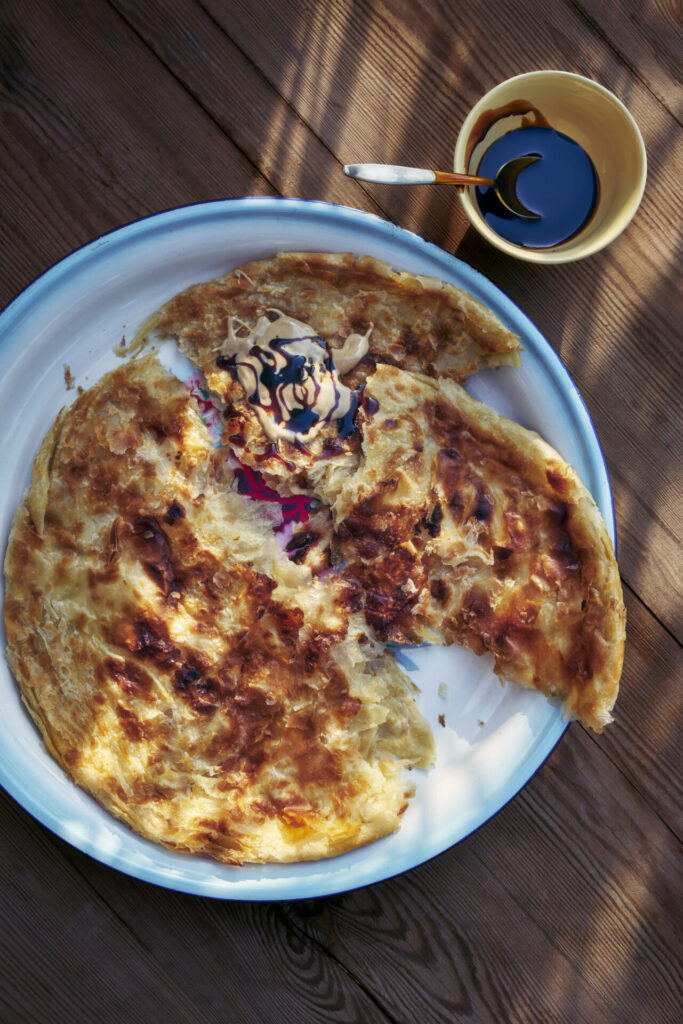
What makes their joint book especially unique is its structure and narrative voice. Unlike most cookbooks, which are divided into entrées, mains, and desserts, this one is organised by region—or, more precisely, by topography: Sea, Desert, River, Mountain, and finally Cairo. Each section opens with an illustration by multidisciplinary artist Louis Barthélemy before moving into the key cities that define each landscape, from Alexandria to Sinai. The cities begin with a concise historical guide, interwoven with stories and anecdotes from Suzanne and Rawah’s own travels and experiences. Around 10 to 15 recipes then introduce readers to the defining cuisine of each place, highlighting local ingredients, cooking techniques, and culinary traditions. In Alexandria, the duo explores its vibrant café culture, while Siwa delves into its farm-to-table way of life via their stay at Adrere Amellal.
“So how do you end up hearing about an obscure Bedouin woman who makes bread in Sinai?” I asked, a sucker for the “how-to”, and already waist-deep in asking about their research and compilation process.
“It’s all someone who knows someone who knows someone…” Suzanne said with a laugh.
“When we get to a place, we find our champion—the person we appoint as our local representative there. All we do is say, ‘Hey, we’re here,’ and they reply, ‘Come over, come and eat with us. So we go, and we eat whatever they’re eating, while also observing what’s happening around us: ‘What’s cooking in the kitchen?’ ‘What have they put on the table?’ ‘What are the women doing over there?'” Rawah, described the investigative work.
“We start to create a thread, without making anyone feel like we’re just there to gather information, because we’re also there to make friends.”
At the same time, a great deal of academic research took place in the background: reading papers and books about different tribes and their histories, examining the social fabric of each city, making contacts, nurturing relationships, and as Suzanne instructed me “cooking, re-cooking, and finally writing down the recipes.”
“We were constantly thinking, ‘If we have the responsibility of bringing Egypt to the world in a book, this is no joke. We have to be fastidious in the way we look for information,'” Rawah reflected honestly.
“Tell me about the stories from your travels. What was the most memorable experience?” I was curious to know.
“Saint Catherine. There is an energy there that is very unique and particular to that area. It’s not a cliché; it’s a highly spiritual place, whatever you believe in. Things happened in this peninsula. This is an extremely magical feeling that stays with you for some time,” Rawah shared truthfully.
During their repeated trips to this beloved mountain, the two women stayed at the monastery with the monks. Deir Saint Catherine is the world’s longest continuously functioning monastery, a place of profound significance to several religions and one that has been remarkably preserved throughout the centuries.
“Do you usually know what recipe you’re looking for, or do you find it when you’re there?” I ask, curious about how much of the book was pre-planned and how much is discovered along the way.
“No, we discover over time,” they both respond simultaneously.
“Before we went, we were reading these books on Sinai and the Gabaleyah tribe and their relationship with the monks. Then we started digging deeper and deeper and found that there’s a woman who employs some Bedouin women to dehydrate fruit in the orchards in Saint Catherine. Saint Catherine is famous for its ancient orchards. Her name is Om Suleiman and from there she led us to some of the women she works with…” Suzanne says, using their Sinai experience as an example of what typically happens in each location to get to the final recipe.
“We have to follow these trails until we reach the person we end up visiting and getting the recipe from,” Rawah sums it up.
Each destination required two or three visits from the authors, with them returning to meet different people and gradually earning their trust.
“There is one Bedouin woman who lives in a very remote area that took us three years to befriend.I n the beginning, she wouldn’t let us take any pictures, but towards the end she said, ‘You make me proud of my heritage. You can take my photo,'” Suzanne recalled vividly.
As I leaf through the Sinai chapter I come across a photo of the bedouin woman. Fully dressed in her traditional clothing, the vibrant colours she wears accent the black of her tarha and dress, allowing her strength and dignity to shine through. At that moment, I begin to comprehend the enduring value that these two women have brought us through their work.
“In five years, many of these recipes may be extinct,” Rawah says between stories, a remark that greatly surprised me. However, when I think of my great-grandmother’s Tatar Börek recipe, which has been changed across generations, each person adding their own spin, I recognised exactly what she means.
Throughout our conversation, I learned some fascinating facts about Egyptian food that I never would have guessed at. For example, much of what we eat today finds its roots in Pharaonic culture: eish baladi, foie gras, even beer and wine. Another surprising detail is that people in Sinai consume a great deal of fennel, an ingredient not especially common elsewhere in Egypt. Additionally, according to these two experts, it is actually Port Said—not Sardinia—that deserves to be famous for its batarekh. The volume itself is littered with stories and fascinating facts like this. From funny reflections with titles such as “Where is the Fayoumi Chicken?” and “Where are the Crazy Tomatoes?”, to depictions of legendary sights (the temple of Khnun, the Church of the Blessed Virgin in Minya, the Sheikh Nasser al-din Mosque…), to- my personal favourite- the story of the Siwan woman and her environment-inspired craftsmanship, each chapter unearths a new cultural tidbit, a new lesson in who we are, making it impossible not to keep reading—and admiring.
“Did you test the recipes on your kids?” I asked, wondering about the review committee and fully expecting a “no”.
“Of course. The recipes would either get a thumbs up or a thumbs down. Whatever got a thumbs down got axed right away,” Suzanne replied with a wry smile.
“Our 15- and 16-year-old boys would be like, ‘I give that a 7 out of 10’ or ‘a 9 out of 10,'” Rawah chuckled.
“What was the most popular dish?” I wondered.
“In this house, they loved the duck with green bamia in white sauce,” Rawah revealed.
“My kids loved the lamb—the slow-cooked lamb from Marsa Matruh,” Suzanne added after a moment’s thought.
moment’s thought.
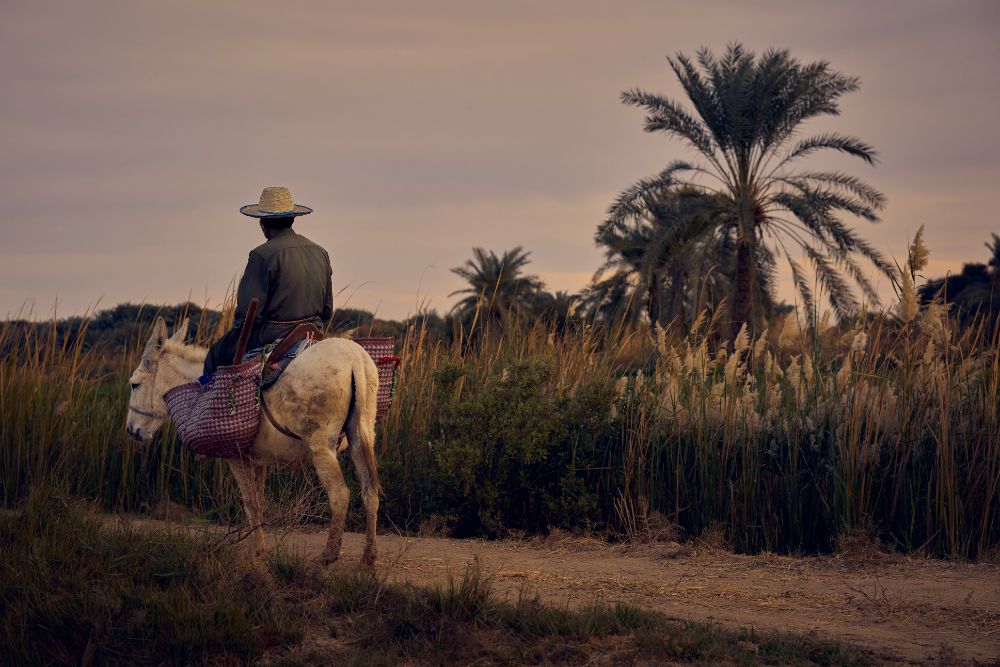
One of the things I noted the most is the beautiful photos that accompany the cities and landscapes As well as the mouth-watering food, of course.
“Who took these incredible photos?”
Suzanne explained that they worked with British photographer Jonathan Gregson, with whom she had also collaborated on her first book. Gregson is an award-winning photographer based in London whose clients include Harrods, Le Labo, and Tesco, and whose work has appeared in publications such as Lonely Planet Magazine and The Guardian.
“We needed someone experienced in both food and location photography.”
Because the book ends in Cairo, I was curious as to how that chapter differed from the rest.
Rawah shared that Cairo, as a city, is much younger than many other parts of the country and has historically absorbed cuisines from across the region. As a major trade hub, it bears strong Mamluk and Ottoman influences, reflected in dishes such as Sharkaseya (Circassian Chicken) and Kishk (Chicken Savoury Pudding)- which can be found in the book.
“Cairo was different to the rest of Egypt; having arrived late, it was an incubator of cuisines rather than a creator of one, adopting culinary traditions from around the country and broader region thanks to the people that brought their culture with them… As a love letter to Cairo, we gathered special heirloom recipes from a mixed group of Cairene families famous for their exquisite dishes—some guarded for hundreds of years and released here for the first time—to demonstrate that food is the purest expression of the history of a people, their differences enriching the community, their shared joy humanity’s enduring legacy,” the book reads.
This excerpt offers a glimpse of the care and intention that have gone into creating this remarkable volume.
“So when will it be available? I can’t wait to get my hands on it,” I asked eagerly hoping to get my hands on it.
“The book is available for pre-order in the UK and USA through major retailers and independent bookstores. The book is also available for pre-order in Egypt via Diwan.,” Rawah answered.
Egypt: Recipes and Stories from an Ancient Land introduces a new way of looking at the country. It takes readers on a journey through places they have visited—or hope to visit—people they will want to know more about, and histories they may never have encountered, all via the best route: their stomachs. But most importantly, it fosters a deeper appreciation for the communities that have safeguarded our traditions for generations, reminding us that heritage survives only when it is shared.
Pre-order your copy now at Diwan Egypt.