 Sama Farrag
Allow me to get blasé, but I don’t believe in therapy. I do, however, believe in retail therapy. We’ve all been there. Mental breakdown at 3 am, immediately opening the Zara app to buy a questionable top for a little hit of dopamine, convincing yourself it’s avant-garde, only to realize it makes you look like a lost Victorian child. While our late-night impulse buys usually end up the back of the closet, the fashion industry plays for much higher stakes. Which made me wonder: if the line between avant-garde, kitschy genius and total madness is so thin, what happens when a legendary designer crosses it live on the runway?
In the fickle world of fashion, success is usually measured in sell-through rates and KACHINGS! Yet, some of history’s most jaw-dropping collections were initially met with outrage, confusion and outright rejection. Critics called them bonkers, executives questioned their commercial appeal, and the fashion establishment collectively lost its mind. The kicker? Decades later, those very same collections are revered as holy-grail masterpieces.
Grab a Diet Coke, put on your highest heels and let’s talk about the four times fashion designers completely lost their minds – and subsequently changed history.
Yves Saint Laurent: La Collection du Scandale (Spring/Summer 1971)
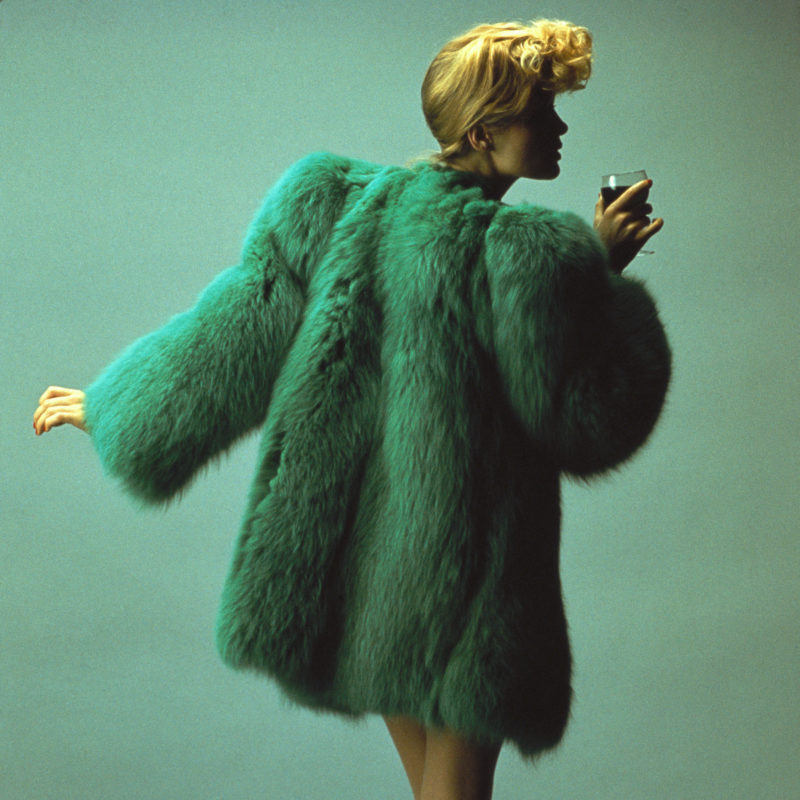
Let me set the mood: January 1971 in Paris. Everyone is dreaming of sleek modernity, and Yves Saint Laurent rolls out a collection ripped straight from 1940s Nazi occupied France. We’re talking heavy platforms, aggressive shoulder pads, turbans, and makeup so harsh it looked like a cry for help. Faux pas, indeed.
Scandal. And I’m not saying it was a scandal, I’m telling you that it was literally dubbed the Scandal collection. Absolute pandemonium. French press practically clutched its pearls into dust, and critics accused him of glorifying a dark era, calling the whole thing vulgar, regressive and deplorable. An insult to fashion.
And yet, this was the moment retro fashion got a serious push. By making the past chic, he helped bring vintage-inspired styling into the mainstream. Sometimes, you have to drag the ghosts of the past down the runway just to give the present a little nudge.
Perry Ellis: The Grunge Collection (Spring/Summer 1993)
Oh, Marc. Bless his soul. Back in 1993, a very young and very ambitious Marc Jacobs was creative director at the ultra-polished, country-club-chic American sportswear brand Perry Ellis. Instead of giving the rich ladies what they wanted – pastel cardigans and sensible pleats – Jacobs sent supermodels down the runway looking like they had just rolled out of a tent at Lollapalooza. We’re talking thermal underwear, combat boots, beanie hats, and plaid shirts made out of pure silk and cashmere.
Executives at Perry Ellis were horrified. Kurt Cobain and Courtney Love, two of grunge’s most recognisable faces, also reportedly rejected the collection – burning the sample pieces Jacobs sent them. It doesn’t get anymore grunge than this, ladies. Sell thrift-store grunge for luxury prices? Absolutely not. Marc Jacobs was promptly fired, and the collection’s production was halted before it could properly reach the market.
Naturally, Jacobs had just captured the defining cultural zeitgeist of the nineties. By elevating anti-fashion into high-concept luxury, he brought grunge aesthetics onto the high-fashion runway and helped establish the cultural crossover that would define his career. Getting fired from Perry Ellis was quite literally the best thing that ever happened to his career. Proof that sometimes, getting told “get out” is just the universe clearing a path to Louis Vuitton.
Alexander McQueen: Highland Rape (Autumn/Winter 1995–1996)
If you want to clear a room, just whisper the title of Alexander McQueen’s Autumn/Winter 1995 show. When a young and slightly feral McQueen sent models down the runway in torn, blood-splattered tartan, slashed lace, and shredded garments that looked like they’d survived a street fight, the fashion industry lost its collective mind.
Critics shrieked about misogyny and violence against women, while the collection’s historical references sparked a much bigger debate. They saw a shocking title and ran for the hills, while the collection’s deliberately provocative imagery made its message considerably more complicated.
Except McQueen wasn’t simply staging a spectacle of violence against women. The title referred to what McQueen described as the historical “rape” of Scotland, drawing on the Jacobite risings, the Highland Clearances and the brutal displacement of Highland communities by landlords. The collection also referenced the mass slaughter of Scots at the Battle of Culloden, drawing straight from his own Scottish ancestry. The imagery was raw, furious and deeply political, deliberately confronting audiences with the brutality of history and the uncomfortable parallels between past and present. McQueen proved that the runway was a theater of war, emotion, and absolute genius, and that art in all its forms, is inherently political.
Maison Martin Margiela: The Debut Collection (Spring/Summer 1989)
Imagine showing up to a Parisian fashion show in 1988, expecting opulent eighties glamour, and instead watching models walk out in face-obscuring veils, unconventional deconstructed garments, and split-toe Japanese Tabi boots whose soles had been dipped in bright red paint, leaving bloody footprints on the runway.
Traditional luxury buyers were, to put it mildly, deeply confused. The clothes looked inside out, unfinished, and entirely at odds with conventional ideas of luxury.
Which, of course, was the entire point. Margiela challenged the idea that luxury had to look pristine, finished and expensive. By ripping off the mask of luxury and showing the raw and messy inner workings of garment construction, he helped redefine what fashion could look like through deconstruction, reconstruction and unconventional approaches to clothing. And those bizarre red-footprint Tabi boots? Today, they are one of the most recognisable designs in the Maison’s history. Not bad for a collection that initially looked like it had walked straight out of a crime scene.
Here’s the moral of the story: In this life, you can play it safe and sell a million beige cardigans, or you can throw a Molotov cocktail at the status quo, alienate the entire fashion establishment, and change culture forever.