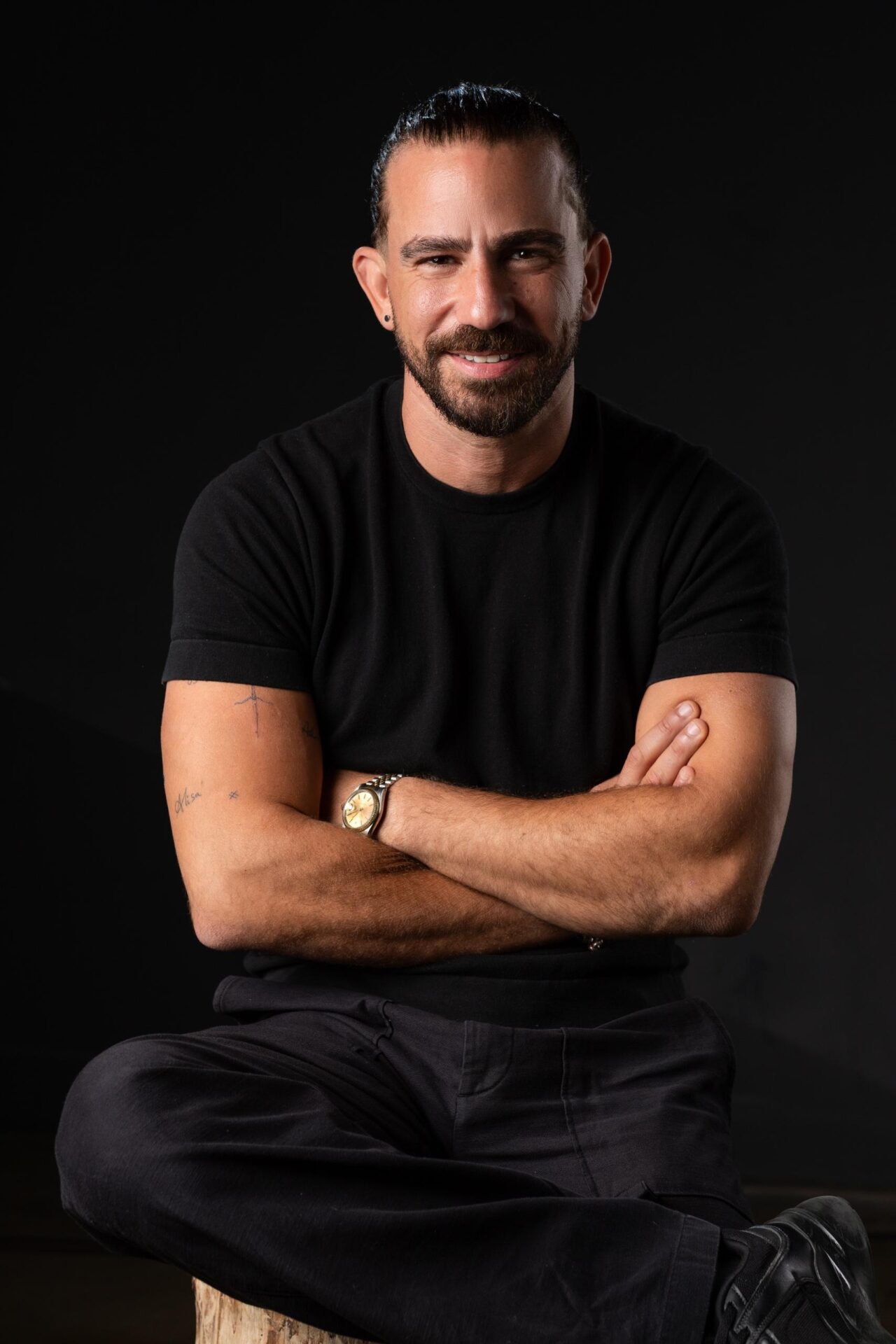
 Hedayat Reda
 Two years since opening its doors, ESCĀ Cueva has become one of Egypt’s most distinctive hospitality success stories. In just twenty-four months, the venue has remained consistently fully booked, reached its return on investment within its first year, and earned international recognition at the Restaurant and Bar Design Awards—where it won against globally celebrated names including Zuma and Sexy Fish. With its sculptural interiors, immersive atmosphere, and seamless blend of music, dining, and design, the space quickly established itself as more than just another restaurant opening. It became a statement about where Egyptian hospitality could go next.
In honor of the anniversary, we sat down with Ahmed Heggy, the company’s founder, to discuss the vision behind ESCĀ, the philosophy that shaped its growth, and how a deeply personal idea evolved into one of the country’s most talked-about hospitality brands. This is the ESCĀ story.
Heggy did not come from hospitality. He grew up in a family business rooted in garments and jewelry, graduating from the German University in Cairo before moving to Dubai and London. When he returned to Egypt in 2017, he noticed a gap in the local dining landscape—one he was adamant to fill. Inspired by concepts he had experienced abroad, he became interested in the idea of the supper club: spaces like Zuma, COYA, and Amazonico, where music, energy, and social experience matter just as much as the menu itself. “At the time, most concepts in Cairo were either purely fine dining or a club atmosphere,” he says. “There wasn’t a place where you could genuinely have both good food and good music.”
The first ESCĀ opened in Heliopolis– Heggy’s hometown– in December 2017. It was intentionally intimate, with limited seating designed to help him control quality and better understand the business from the inside out. Today, the group has expanded to eight venues and more than 300 employees, the latest being Ragù, a more casual, family-friendly concept.
“The main reason we succeeded is because I didn’t understand anything about this job,” he says, laughing. “I’m not a chef. I know nothing about music—I don’t even know the difference between house and R&B. I’m not an architect. We just chose the right people in every field.”
What Heggy does understand, as is evident by the unique one-of-a-kind experience he has built at ESCĀ, is leadership and instinct. Rather than aggressively headhunting from the beginning, the manager built his team slowly through trial, error, and customer feedback. Some of his strongest team members came from entirely different industries. “Our general manager used to work in IT. Our accountant was in cost control,” he says. “We listened to people constantly. That’s how we built our culture.”
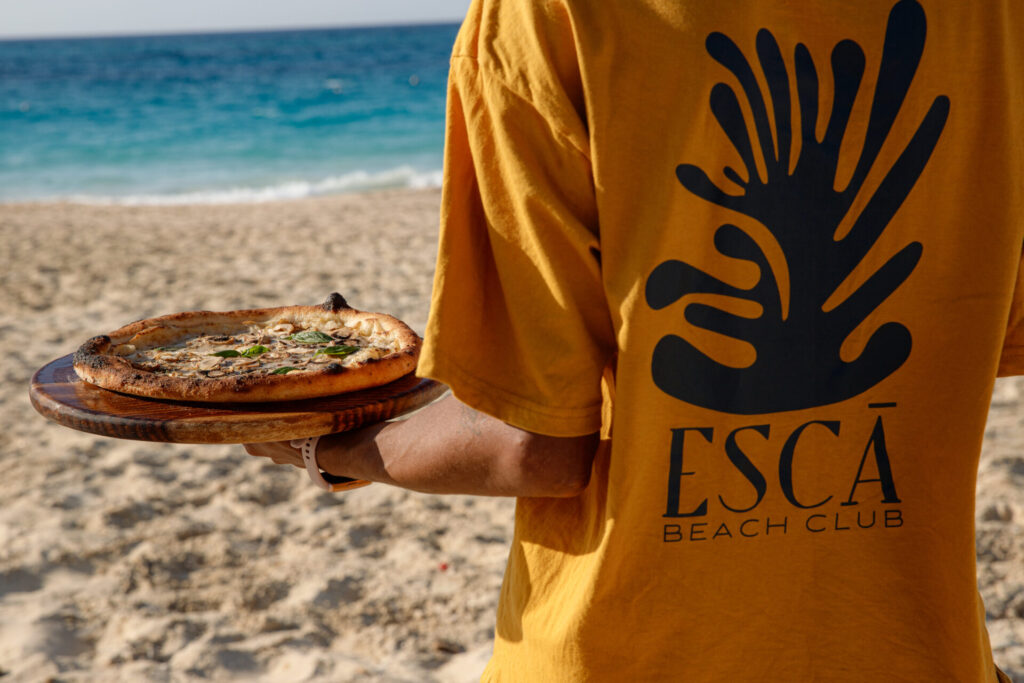
That culture has become one of the defining characteristics of ESCĀ. In an industry often obsessed with exclusivity, Heggy speaks more about fairness than prestige. For him, hospitality is not performative. It is emotional infrastructure. “We are equal to the customer,” he explains. “We make sure the customer and the team are aligned. A customer cannot disrespect a waiter without consequences. I’ve blacklisted people before for speaking badly to a waiter.”
That mindset became especially important as the brand expanded. “Management is management,” he explains. “A lot of it in the beginning is cash flow and operations. But the real challenge is that hospitality is a live business. Any problems you encounter, you have to solve on the spot. If the AC isn’t working, you need to bring someone in straight away. Bring the plumber in. Bring the electrician in.”
But the greatest sign of success, he says, is when a waiter repeats a story or philosophy he once shared internally with the team. “You cannot fake that,” he says. “That’s when you know the culture is real. That’s when you know you’ve built something lasting.”
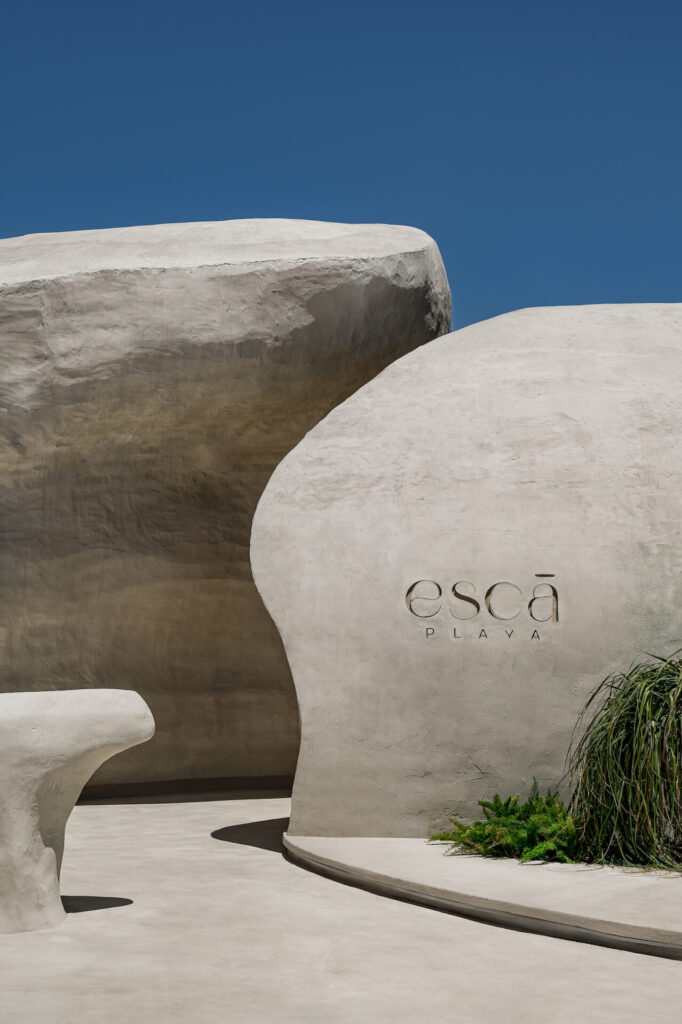
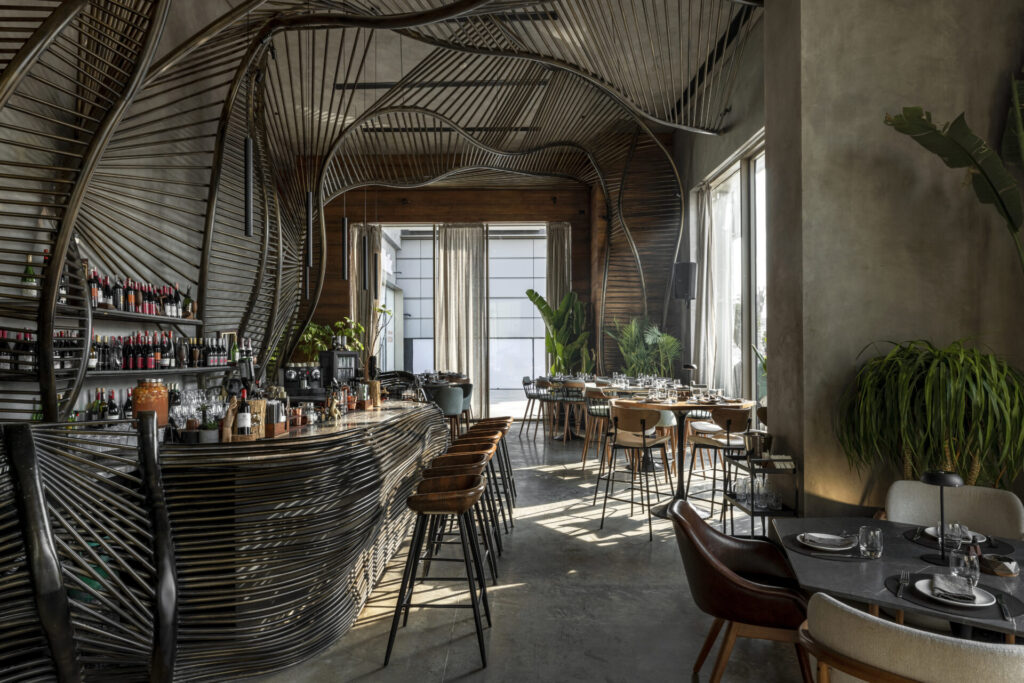
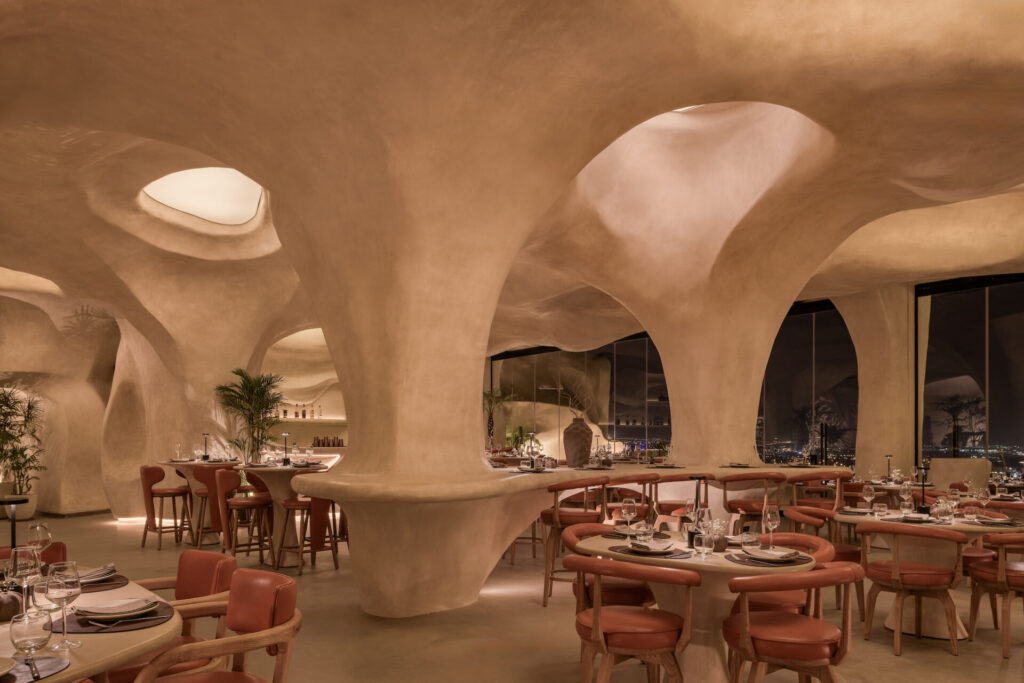
Part of what distinguishes ESCĀ—particularly ESCĀ Cueva and Playa—is the physical language of its spaces. Across locations, the brand has become known for its immersive architectural identity.
Heggy credits much of this philosophy to the designers behind the venues and their belief that “God never created a square or rectangle.” The result is an aesthetic rooted in parametric architecture: organic forms inspired by movement and nature rather than symmetry. At ESCĀ Cueva, the concept reached its peak—a 100-square-meter venue with sculptural interiors, layered textures, and dramatic spatial rhythm that quickly became one of the city’s most sought-after reservations. The venue’s design has also gained international recognition, most recently with Playa being selected for ArchDaily’s Building of the Year 2026.
Yet despite the scale of growth, Heggy still describes the brand’s beginnings in deeply personal terms. Before restaurants, there were gatherings at home: late nights hosting friends, card games around carefully arranged tables, obsessive attention to lighting and music, bowls of nuts displayed just right. That emotional attention to detail still defines the experience today.
“I like to go out and bring people together,” he says simply. “So I am my own customer. I was looking for something specific and couldn’t find it, so I built it.”
At ESCĀ, music is not background noise but part of the narrative itself. Over the years, the brand’s beach club experiences in Sahel have hosted large-scale events with names such as Mathame, Fideles, Stephan Jolk, and Abyusif, attracting crowds of thousands.
The food, meanwhile, remains intentionally crowd-aware rather than overly conceptual. ESCĀ’s signature offerings include its steak and sushi selections, while Heggy’s personal favourite and recommendation is the pappardelle truffle pasta. At Ragù, the namesake pasta has become a favorite among returning guests.
As the brand enters its next phase, the vision is becoming even more ambitious. Heggy is currently developing what he calls the “SOHO House of Egypt”: a 2,000-square-meter social club in Katameya Heights set to open this October. The project will combine hospitality with membership culture, featuring lounges, billiard tables, coffee corners, screening spaces, and collaborations with internationally acclaimed Portuguese Michelin-starred chef Vasco Santos.
“It’s the first social club of its kind in Egypt,” Heggy says.
He is also currently developing a fast-food concept, expanding the brand’s hospitality philosophy into a more accessible, high-volume format.
Despite the expansion, his philosophy remains surprisingly disciplined. Heggy follows what he calls the “Miracle Morning” routine, built around the SAVERS method: silence, affirmations, visualization, exercise, reading, and scribing. The structure, he says, helps him stay grounded in an industry that rarely slows down. Hospitality, after all, is relentless.
And perhaps that immediacy is what makes ESCĀ feel alive. Not just designed, but felt. Every curve, every playlist, every interaction engineered toward a single emotional outcome.
When asked what he ultimately wants people to leave with after an ESCĀ experience, Heggy pauses before answering.
“To feel the love for every moment.”