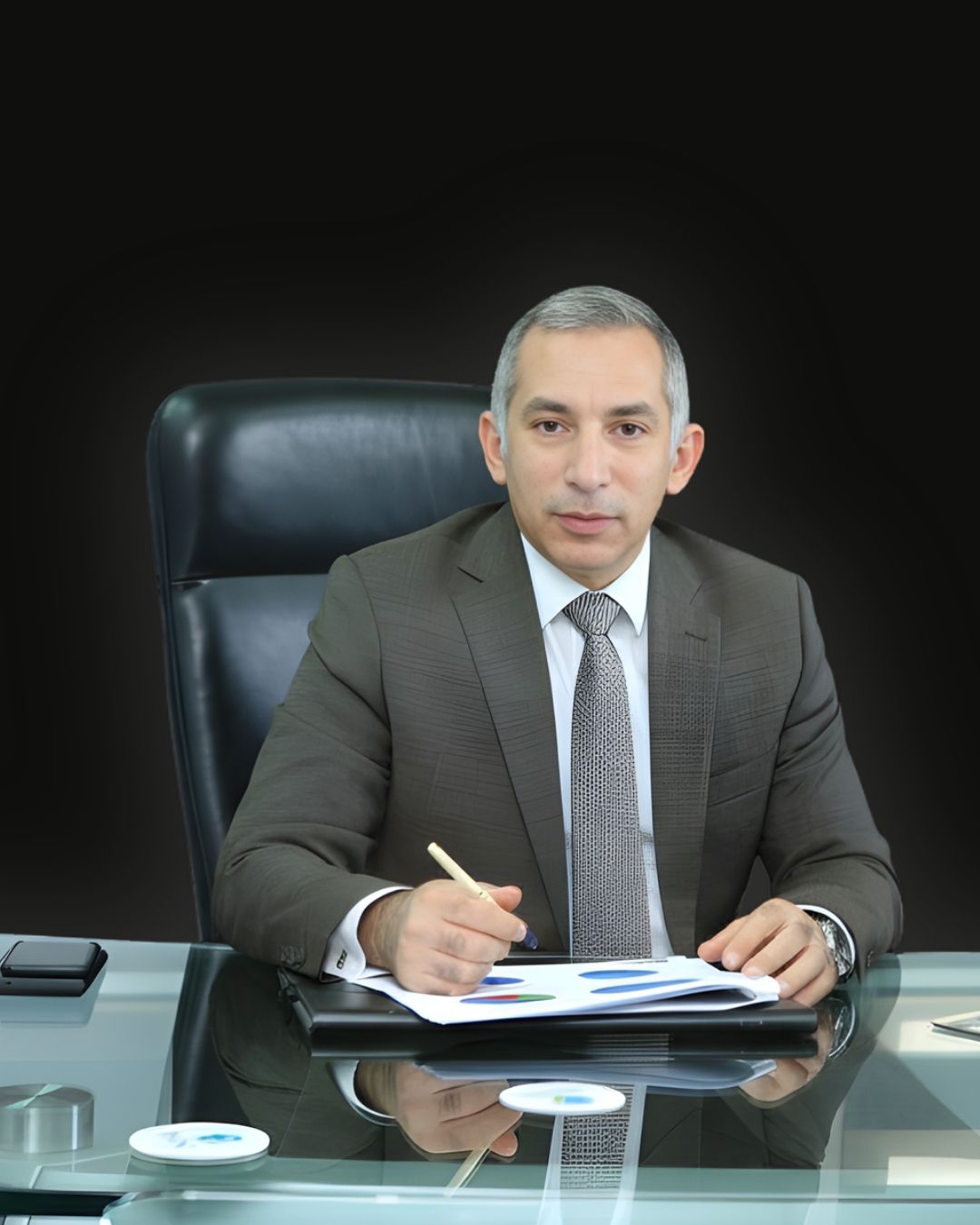
 Hedayat Reda
 Tell us the story of your first industrial business park and the one you are developing today.
Our journey began in 1998 with a clear ambition: to redefine industrial development in Egypt from basic land allocation to fully integrated ecosystems. Our first industrial park (SIDC) was built on creating reliable infrastructure, efficient operations, and a trustworthy environment for investors.
Today, our developments go far beyond that foundation. We are building next-generation industrial communities that integrate sustainability, smart infrastructure, and investor-centric services. Projects like our Abu Rawsh Industrial Park and Green Industrial Hub in Sokhna reflect a shift from “industrial zones” to “industrial ecosystems” that enable productivity, innovation, and long-term value creation.
How do you integrate sustainability as a building block in your company and what is meant by a “sustainable community”?
For us, sustainability is not an add-on—it is embedded in every decision we make. This includes renewable energy, encouraging clients to reuse each others’ waste, managing and reusing water efficiently for irrigation, reducing waste and following green building standards.
A sustainable community is one where industry coexists with the environment and society. It supports economic growth while preserving resources for future generations, and it creates a balanced ecosystem where businesses, employees, and surrounding communities all thrive.
When working in a field that builds and fosters industrial communities, what are some of your own values that you like to pass along? What are some you yourself have learned from those around you?
We focus on three core values: integrity, long-term thinking, and partnership as well as empowering human power by providing a safe and secure workplace for our employees. Industrial development is not a short-term business—it requires trust, resilience, and collaboration.
Personally, I have learned that listening is one of the most powerful leadership tools that teach patience and understanding. Our clients, partners, and teams continuously shape how we evolve. Leading by inspiration, adaptability and humility are essential in a sector that is constantly changing.
What do you think Egypt still gets wrong about industrial zones or economic cities, and what would you like to see done differently in the next decade?
Historically, industrial zones in Egypt have been treated as land-driven projects rather than service-driven ecosystems. The focus was often on allocation rather than long-term operational excellence.
Going forward, the shift must be toward integrated planning—where infrastructure, logistics, sustainability, and investor services are all aligned. Streamlining regulations, enhancing digitalization, and improving connectivity will be critical over the next decade.
As Egypt increases building its infrastructure, it has become easier for industrial zones/economic cities to thrive. What I would like to see done in the next decade is more national production, which we have seen increase each year. In 10 years, I would hope that we continue this trend and begin to locally manufacture most goods/products that we use, as well as increase the exportation of Egyptian-made goods/products. Also, increasing in clean energy (solar, wind, etc.).
How do you see your role in Egypt’s ecological future? What are some challenges you foresee and what are some you have already conquered?
Industrial developers play a major role in Egypt’s ecological future. We provide the infrastructure that encourages our clients to be more eco-conscious. Following Egypt’s Vision 2030, we do our duty by choosing clients that will honor this responsibility, like we do.
We see ourselves as enablers of responsible industrialization. Our role is to ensure that economic growth does not come at the expense of environmental sustainability.
We are already addressing challenges such as energy efficiency and resource management, but the road ahead includes scaling green solutions and aligning with global ESG standards. The challenge is balancing competitiveness with sustainability, but we believe this is also a major opportunity for Egypt.
What’s something about industrial development that people would find surprising if they saw it up close?
Usually, industrial zones are filled with factories and a lot of pollution, however people would be surprised to find that our developments are filled with greenery, and less air pollution than most.
Behind every successful industrial park is a sophisticated eco-system of infrastructure, planning, and continuous service delivery.
What does success mean to you?
Success is not measured only by financial returns. It is about creating lasting impact—developments that continue to generate value for decades, support economic growth, and contribute positively to society.
At a personal level, success is building something meaningful with a strong team and leaving a legacy of trust and excellence.
This or That:
City life or coastal life? Coastal life offers clarity and perspective.
Slow mornings or nightlife? Slow, focused mornings.
Minimalism or maximalism? Maximalism.
Sokhna weekends or Gouna weekends? Gouna weekends.
Maintaining status quo or constant reinvention? Constant reinvention.
Energy vs. function? Function powered by efficient energy.
Water elements or greenery? Greenery- sustainability starts with it.