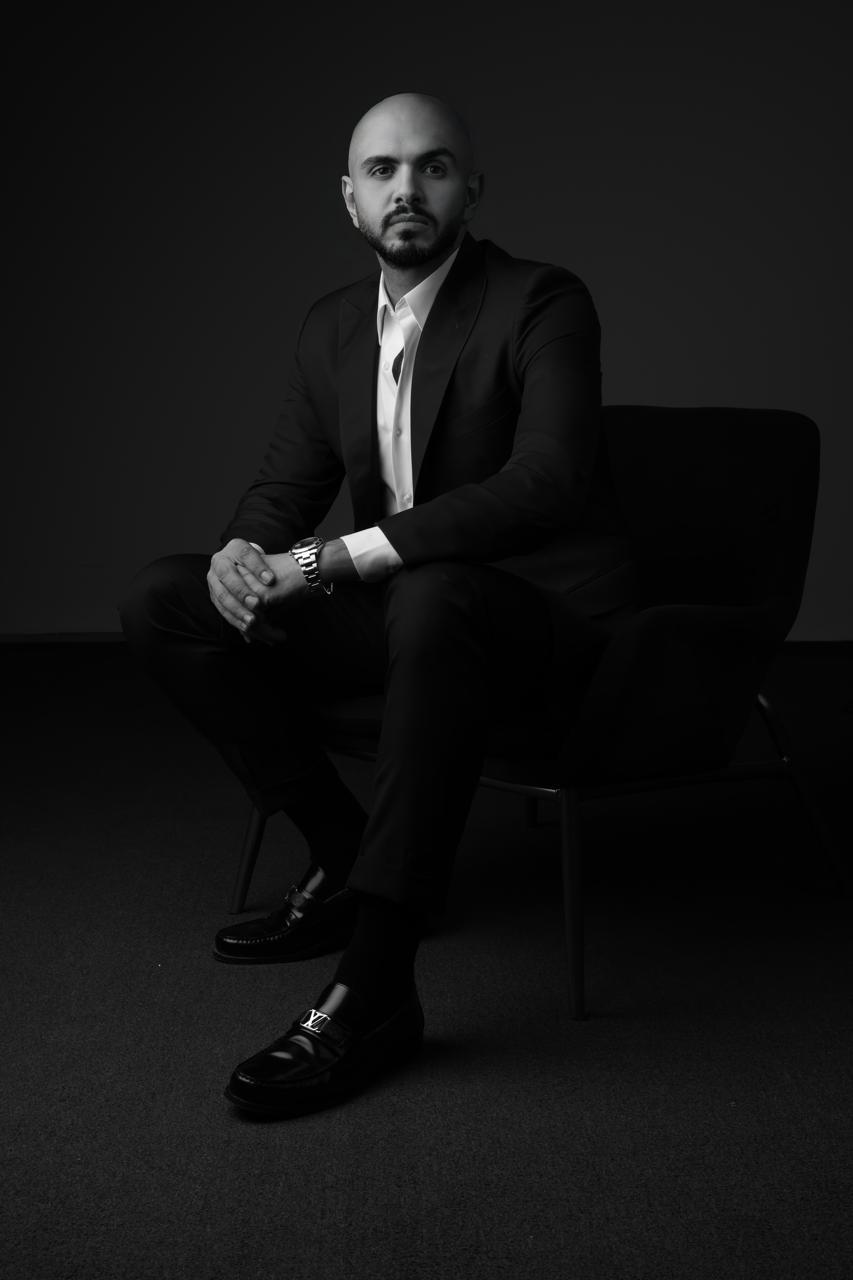
 Hedayat Reda
 Real estate development today is no longer just about buildings—it’s about community. In an era where cities are expanding faster than ever, a new kind of developer is emerging—one who thinks beyond square meters and skyline appeal, and instead focuses on crafting fully integrated ways of life. With a portfolio spanning healthcare, hospitality, and beyond, this conversation explores a philosophy where community, precision, and long-term impact take center stage—reshaping not just spaces, but the everyday experience of living.
Having invested across multiple industries, how are you rethinking the concept of “community” in your real estate projects?
From my perspective, the concept of ‘community’ goes far beyond brick and mortar or mere physical infrastructure, stretching into a holistic ecosystem approach with four essential founding pillars.
Firstly, any successful project must provide a well-designed and highly adaptable environment that truly meets the needs of modern families. Secondly, it must instill stability among members, because a sustainable community offers inhabitants a sense of belonging and serenity. Thirdly, it must ensure full integration of public services, so that residents have seamless access to all their daily needs and wants. And lastly, but most importantly, we focus on trust and security.
This type of philosophy, which we applied to our NileView Towers project, is what creates a fully integrated living community—not just another real estate project. Our goal is always to ensure that everything residents need is available within their reach, while maintaining the highest levels of quality and convenience. We hope that people always feel safe and confident that their voices are heard in any community we establish.
Your early investments in Egypt came out of Banha—why did you choose this city specifically, and what did your experience teach you?
I’ve always believed that valuable opportunities usually lie in places that others overlook or disregard. While many investors focused on new cities at the time, I saw strong untapped potential in Al-Qalyubia Governorate, given its strategic location in the Delta and its established purchasing power.
Despite early skepticism, I trusted in the local potential of the city, and our vision came true in Banha, where today we’ve delivered one of the largest integrated commercial destinations nationwide, along with a prosperous residential community whose value rivals that of newer communities.
This experience confirmed a key belief for me: the best opportunities are often hidden in plain sight. And I still see significant potential in Banha moving forward.
How do you balance global standards with the realities and challenges of building locally?
Balancing world-class standards with local realities and challenges comes down to one key principle: attention to detail. With over four decades of experience in Qatar, we’ve developed the expertise and discipline to focus on the smallest elements that ultimately define quality.
In many local markets, the fundamentals are done well, but what’s often missing is that extra level of precision and care. For me, achieving global standards isn’t about reinventing the process; it’s about executing every detail to the highest level to maximize efficiency and quality. That’s what bridges the gap between local execution and international excellence.
You are a qualified physician—how has that way of thinking shaped your approach to development and decision-making?
Studying medicine shaped how I think, especially in terms of discipline, analytical decision-making, and attention to detail. It taught me to assess situations carefully and make decisions with precision and responsibility.
However, transitioning into investment was a key turning point in my life. I realized early on that my true passion is construction and utilizing my leadership skills across diverse sectors to create a tangible and lasting impact on the local community and beyond.
Over the years, I’ve grown through different roles within the organization, starting as a regular employee and progressing to a leadership position at the group level. That journey has reinforced a key belief: passion is what drives excellence and innovation. When you truly enjoy what you do, you naturally embrace an ‘out-of-the-box’ mindset and perform at a higher level.
That’s why I always say: choose what you love, because that’s where real success begins.
What responsibility do developers have today beyond delivering new projects?
The role of real estate developers should go far beyond delivering physical buildings and establishments. We are responsible for envisioning and shaping how people live and interact in their local communities, ensuring all their needs are met for a truly enjoyable experience.
This requires developing sustainable communities, not just buildings, by creating spaces that ensure quality, functionality, and long-term living viability. It’s also about establishing longstanding trust through transparency, thus maintaining a lasting relationship with residents and stakeholders.
In essence, our responsibility is not only to build according to schedule, but to deliver impactful projects that can continue to serve and grow with the community without compromising quality for years to come.
Your portfolio spans across healthcare, hospitality, F&B, automotive, and more—what insights have you gained from each sector, and do you see real estate as the platform that brings all these industries together?
Each sector has given me a different perspective. Healthcare taught me precision and responsibility, while hospitality emphasized experience and service. F&B highlighted the importance of quality and consistency, and the automotive industry reinforced efficiency and performance.
What I’ve come to realize is that real estate is the platform that brings all these elements together. It’s where experience, service, quality, and functionality intersect to create fully integrated ecosystems.
That’s why I don’t see real estate as just property development—it’s the foundation for delivering a complete lifestyle.
How has your approach to leadership evolved from when you first started your career until today?
My leadership approach has evolved significantly over time. When I started my career, I focused on execution and proving myself through tangible results. I was very hands-on and detail-oriented in every aspect.
Today, I’ve developed a macro perspective with a more strategic vision. I focus on building systems, empowering teams, and supporting future leaders within the organization, rather than micromanaging the work directly.
The biggest shift has been to understand that leadership is not about asserting control, but rather about establishing trust, defining a clear vision, and enabling others to perform and reach their maximum potential.
How do you balance efficiency and scalability with creating spaces that feel human and intentional?
Balancing efficiency and scale with human-centered design requires standing up to fundamentals and refusing to compromise on intent. Efficiency and scalability are essential for growth, but they should never come at the expense of experience.
For me, the key is to integrate both from the start, designing with a clear understanding of how people will utilize space, while ensuring the development is operationally efficient and scalable.
When both aspects are aligned, you don’t just create large projects—you create fully inclusive, sustainable environments that feel thoughtful and go beyond functionality into being truly human.
What does the word “home” mean to you?
To me, home goes beyond a house—it’s an inner sense of security and belonging. It’s where you are surrounded by the people you care about, and where everything you need is within reach.
It’s not just a physical space—it’s a feeling of comfort, stability, connection, and serenity.
How do you define success?
I believe that success is about establishing a legacy by creating lasting and impactful value, not just by delivering short-term results. It’s about building something that continues to grow and change people’s lives, while still standing the test of time.
On a personal level, success is also about alignment: when your work reflects your values, your vision, and your passion—that is when true success happens.
Financial outcomes matter, but they are a result, not the definition.
Ultimately, true success—to me—is when what I build improves people’s lives and continues to create value long after the initial effort.
THIS or THAT:
City life or coastal life? Coastal life.
Slow mornings or late nights? Slow mornings.
Minimalism or maximalism? Both.
Sokhna weekends or Gouna weekends? I prefer something totally different.
Maintaining the status quo or constant reinvention? Constant reinvention.
Instinct or data? Both.
Greenery or water elements? Water elements.
Routine or spontaneity? Spontaneity.