 Sama Farrag
If you have found yourself squinting at a screen trying to figure out how Rachel Zegler singing folk ballads in a dusty amphitheater connects to Jennifer Lawrence threatening to eat poisonous berries in The Hunger Games – or where Sunrise on the Reaping drops into the lore – consider this your unofficial survival guide.
With two major prequels now sitting alongside the original four films, The Hunger Games franchise spans 65 years of Panem’s history. Watching them in release order means jumping backward through time, catching Easter eggs in reverse, and realizing that almost everything bad that happened to Katniss Everdeen started because an 18-year-old Coriolanus Snow lost his marbles to a situationship. What began as a gritty 2010s YA dystopia has morphed into a multi-generational political drama about propaganda, generational trauma, and one man’s beef with a coal-mining district.
Here is how the prequels actually connect to the original trilogy, untangled in chronological order so you never have to pause mid-movie to do the math again.
Before the Reaping: Where the Hunger Games Timeline Begins (74 Years Before Katniss)

Long before the Capitol had hovercrafts, neon-haired stylists, and Effie Trinket’s fabulous fits, Panem was at war. During The Dark Days, the 13 districts rose up against the Capitol and catastrophically lost. District 13 was allegedly bombed into oblivion (spoiler alert: they survived and went underground like doomsday preppers), and the Capitol drafted the Treaty of Treason to ensure nobody ever got ideas again.
The penalty was simple yet brutal. Every single year, each of the remaining 12 districts must offer up one boy and one girl between the ages of 12 and 18 to fight to the death on live television. Nothing says “healing as a nation” like mandatory child gladiator matches. For the first decade, the Games were a grim public execution that nobody in the Capitol actually wanted to watch.
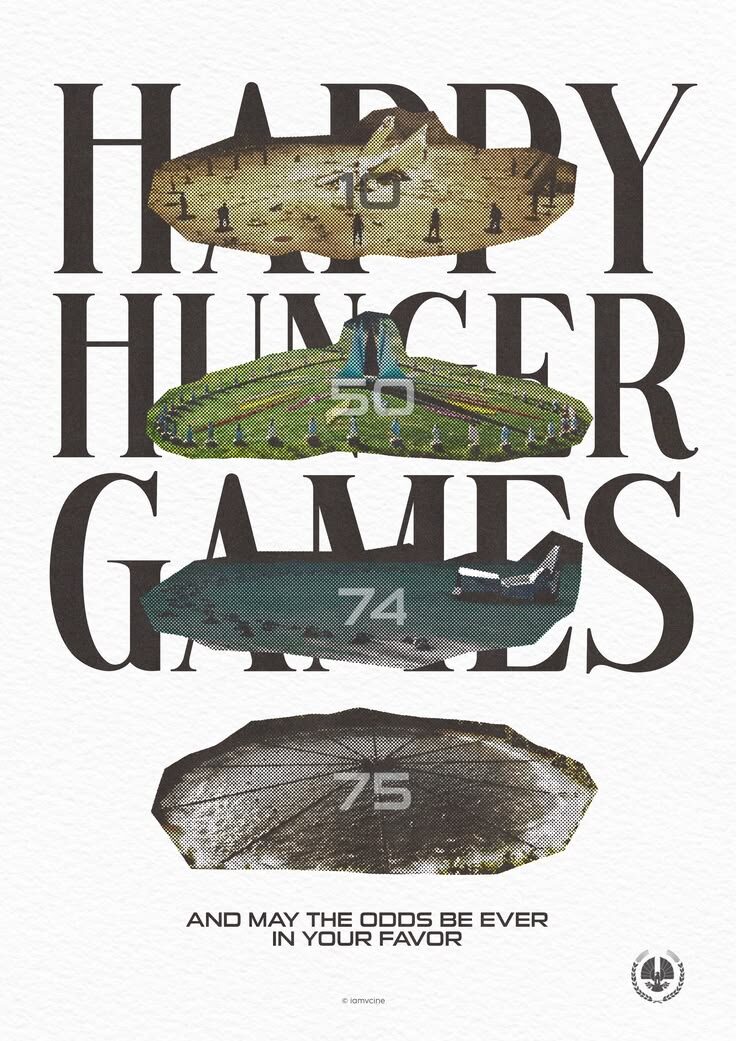
1. The Ballad of Songbirds & Snakes — The 10th Hunger Games (64 Years Before Katniss)
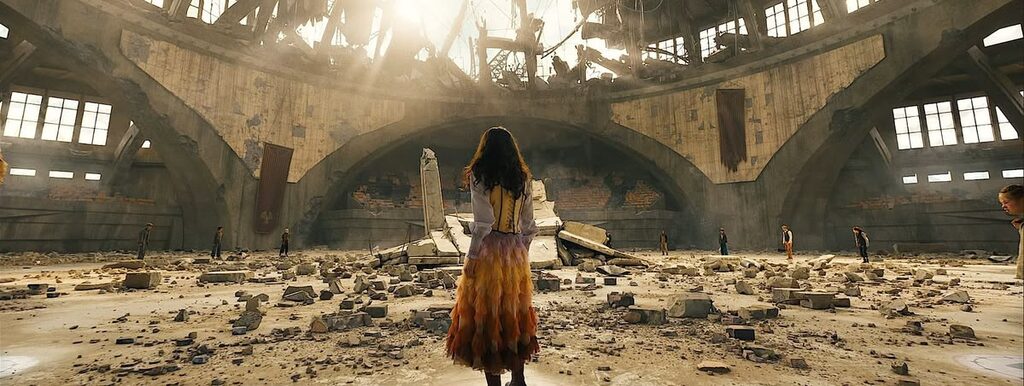
At this point in Panem’s timeline, the Hunger Games are not the high-budget, Met Gala-on-steroids spectacle Katniss walks into decades later. Ratings are tanking, there are no sponsorships, and the arena is literally a bombed-out sports stadium with zero food, water, or traps. Enter an 18-year-old Coriolanus Snow, desperate to restore his family’s crumbling aristocratic fortune while pretending in front of his classmates that he isn’t eating boiled cabbage soup for dinner.
Assigned to mentor District 12 tribute Lucy Gray Baird, a charismatic folk singer from a nomadic musical group called the Covey, Snow essentially invents modern reality television just to keep her alive and win himself a university prize. He introduces betting, viewer sponsorships, and theatrical arena cruelty, turning punishment into prime-time entertainment. By the time the movie ends, Snow has fumbled the bag with Lucy Gray in the woods, poisoned his way up the political ladder, and officially entered his villain arc.
The Katniss connection here runs way deeper than shared geography. Lucy Gray is the original District 12 rebel, and her influence lingers across the franchise like a ghost haunting the narrative. Her songs – most notably “The Hanging Tree” and “Deep in the Meadow” – survive in District 12’s oral history for over six decades until Katniss sings them, turning Lucy Gray’s personal, tragic ballads into viral rebel anthems that rattle the Capitol. Even Snow’s visceral, petty hatred of mockingjays starts during this era, proving beyond a shadow of a doubt that men will literally build an authoritarian surveillance state instead of going to therapy.
2. Sunrise on the Reaping — The 50th Hunger Games (24 Years Before Katniss)

Every 25 years, the Capitol throws a “Quarter Quell”, an anniversary edition of the Games with a sadistic twist written into the original treaty. For the 50th Games, President Snow (now a real and true dictator, roses pinned to his lapel and all) decrees that double the usual number of tributes will be reaped. That means 48 innocent kids dropped into an arena that looks like a tropical paradise, except every single plant, drop of water, and squirrel in it is genetically engineered to kill you.
Sixteen-year-old Haymitch Abernathy is pulled from District 12 alongside Maysilee Donner, a sharp-tongued merchant-class girl from town who refuses to go down without a fight. Haymitch survives not through brute strength, but by outsmarting the Gamemakers – specifically by weaponizing the forcefield at the edge of the arena to bounce a fatal axe right back at his opponent.
This chapter explains everything about why Haymitch is a functioning alcoholic sleeping off hangovers on train floors by the time we meet him in 2012. Snow viewed Haymitch’s forcefield trick as a humiliating public exposure of the Capitol’s flaws, and within weeks of his victory, Snow had Haymitch’s mother, younger brother,and girlfriend murdered, establishing the exact playbook of psychological warfare he later threatens Katniss with.
Even more importantly, the Mockingjay pin Katniss wears into the 74th Games originally belonged to Maysilee Donner, Haymitch’s district partner in the 50th. After Maysilee’s death in the arena, the pin passed down through her family to her niece, Madge Undersee, who eventually handed it over to Katniss like a cursed heirloom that ended up taking down an entire empire.
3. The Hunger Games — The 74th Hunger Games (Year 74)

Twenty-four years after Haymitch’s victory, District 12 hasn’t produced another winner. That is until 16-year-old Katniss volunteers to take her little sister Prim’s place in the famous “I volunteer as tribute” moment in that has since become a meme.
Mentored by a deeply cynical Haymitch who finally sees a real shot at revenge, Katniss and Peeta navigate a forested arena run by Gamemaker Seneca Crane, who is far more interested in a good love story than political stability. When the Capitol tries to revoke a mid-game rule change that would allow two victors from the same district, Katniss pulls out a handful of poisonous nightlock berries, bluffing a double suicide live on air. The Gamemakers panic and cave the second they realize the alternative is having no victor at all.
When President Snow watches Katniss hold out those berries from his mansion in the Capitol, he gets hit with a wave of full-blown déjà vu. District 12 has now outsmarted him three times across three generations. Lucy Gray escaped his control and vanished into the woods, Haymitch turned his own arena technology against him, and Katniss just shattered the illusion of Capitol invincibility in front of millions of viewers.
4. Catching Fire — The 75th Hunger Games (Year 75)

With uprisings breaking out across the districts following Katniss’s berry stunt, Snow uses the Third Quarter Quell to rig the system in broad daylight. He announces that the 75th Games will reap tributes from the existing pool of living victors, a rule clearly written overnight to put Katniss back in the arena and eliminate her legally without turning her into a martyr. Inside a clock-shaped tropical arena designed like a death trap, Haymitch orchestrates a secret alliance of former victors – including fan-favorite Finnick Odair and tech genius Beetee – to keep Katniss alive at all costs.
The film ends with Katniss firing a wire-wrapped arrow straight into the arena’s forcefield, a direct and deliberate callback to Haymitch’s strategy 25 years earlier. Katniss blows up the dome and gets airlifted out by rebels from the supposedly extinct District 13.
5. Mockingjay – Parts 1 & 2 — The Second Rebellion (Years 75–76)
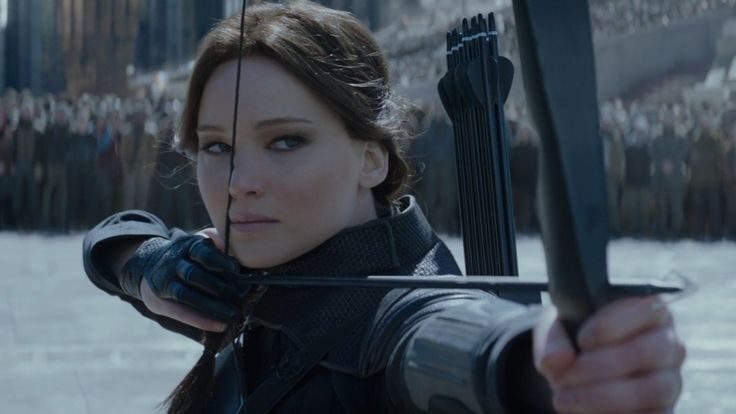
District 13 finally emerges from underground, turning Katniss into the reluctant PR face of the revolution: the Mockingjay. The war shifts from bows and arrows and typical weaponry to propo videos, media manipulation, and a ruthless political chess match between Snow and District 13’s power-hungry President Alma Coin.
As the districts unite to march on the Capitol, the entire 65-year story comes full circle. Snow’s lifelong obsession with crushing Katniss and the ghosts of Lucy Gray and Haymitch blinds him to the larger rebellion closing in on his doorstep. In the end, Katniss’s refusal to become just another pawn in a new authoritarian regime (culminating in her executing Coin instead of Snow during what was supposed to be a ceremonial execution) finally breaks the cycle of the Games for good.
How to Watch Without Losing the Plot
If you’re planning a franchise marathon, you have two solid options depending on how you like your storytelling served.
For first-timers, release order is still the undefeated way to go. Start with The Hunger Games (2012), move through Catching Fire (2013) and Mockingjay – Parts 1 & 2 (2014–2015), and then rewind to The Ballad of Songbirds & Snakes (2023) and Sunrise on the Reaping (2026). Watching Snow’s downfall before his origin story makes his villain arc hit way harder and lets you experience every lyrical callback, forcefield trick, and Mockingjay reference the exact way audiences did in theaters.
For lore purists and rewatchers, chronological order turns the entire series into a completely different beast. Starting with the 10th Games in Ballad, jumping 40 years forward to the 50th Games in Sunrise, and then running straight through the original four films transforms the franchise into an epic character study of Coriolanus Snow. Consider it a six-movie masterclass in how one man’s fragile ego ruined an entire country, and how three kids from District 12 dismantled it piece by piece.