 Sama Farrag
There are two types of Grand Theft Auto players in the world. There are the pragmatists, who steal the nearest dented four-door sedan just to get from one mission marker to the next. And then there are the purists, who will easily burn forty-five minutes hunting down a specific two-door coupe, agonizing over pearlescent paint finishes, and testing out rim styles before pulling onto the highway and inevitably wrapping the whole thing around a lamppost.
If you have ever abandoned an urgent heist setup because a slightly sleeker convertible pulled up beside you at a red light, you already have an idea of how this works. Across nearly three decades, Rockstar has built an entire automotive universe – one where what you drive says everything about who you are, even when you’re driving down the wrong side of the highway with three tires left. GTA car culture has evolved from stealing the fastest car on the street to building entire virtual garages, customizing dream rides, and turning every highway into a racetrack.
With GTA VI dropping us back onto the sun-drenched highways of Vice City in just two days, here is how the franchise turned virtual car theft into the heart of the franchise.
1997–2001: Where GTA Car Culture All Began
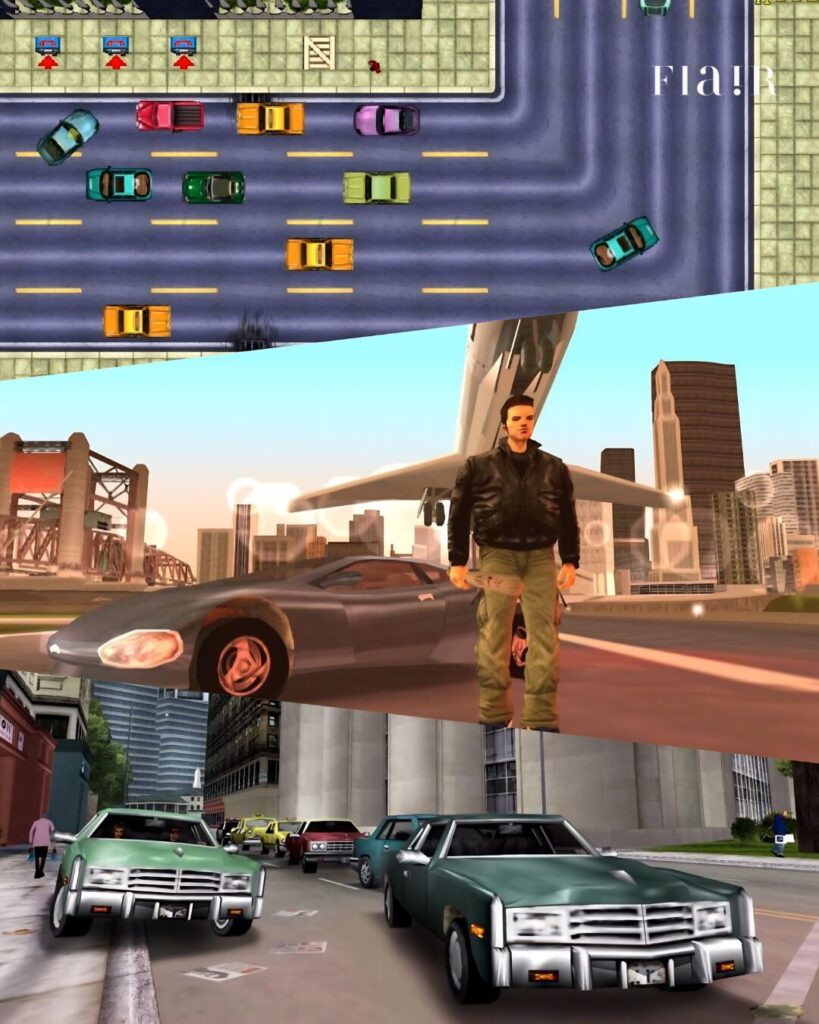
Back in the bird’s-eye-view, 2D days of 1997, cars were strictly utilitarian. You were a tiny sprite hijacking another tiny sprite just to outrun pixelated cop cars and beat a payphone timer. Vehicles had zero personality and even less durability. If your hood caught fire, you bailed out at full speed, grabbed whatever was idling in the next lane, and kept moving without a second thought.
Everything shifted in 2001 when Grand Theft Auto III pulled the camera down to street level, and driving in Liberty City had rules and risks. Every vehicle in Liberty City had its own distinct handling profile – from sluggish, heavy-set Mafioso sedans that drifted wide on wet corners to twitchy sports coupes that could barely survive a sharp turn without rolling onto their roofs. Even the city’s layout revolved around what you were driving: stealing a taxi cab meant unlocking side-missions for quick cash, while spotting the rare Banshee sports car parked behind the glass showroom of Capital Autos in Portland became an immediate early-game target. And just like that, stealing a car actually meant something.
2002: Vice City Made Driving a Mood
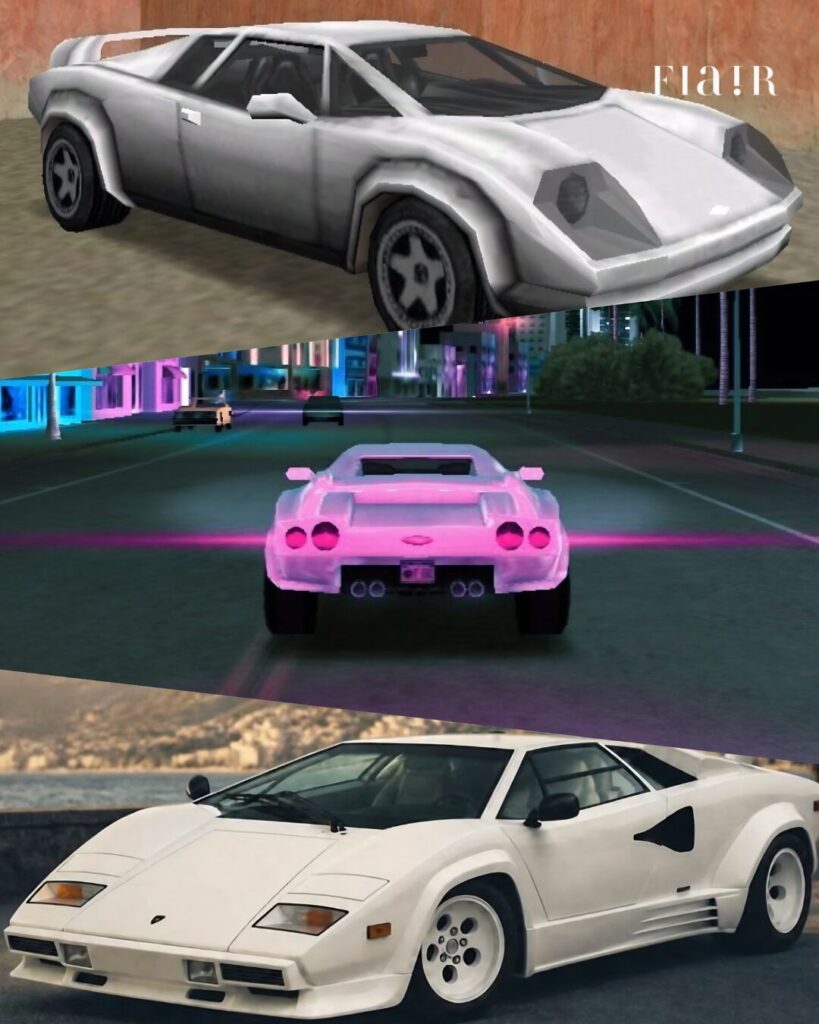
If GTA III gave cars physics, Vice City gave them glamour.
By the time Vice City dropped in 2002, Rockstar had completely abandoned Liberty City’s gray-scale misery for ’80s Miami excess. The fleet shifted toward wedge-shaped supercars, boxy convertibles, and roaring muscle cars built for long, flat coastal stretches rather than tight city blocks – borrowing heavily from real ’80s status symbols like the Ferrari Testarossa, Lamborghini Countach, and Pontiac Firebird. Even the names – Cheetah, Infernus, Stinger – fit the fantasy to a fault and sounded like the names of glam rock bands.
Nothing beats stealing a white Cheetah right before sunset and coasting down the Ocean Beach strip while Hall & Oates’ “Out of Touch” played on Flash FM. By the time Vice City Stories arrived a few years later, picking the right ride to match the evening neon had become half the appeal of the game. For the first time, driving had nothing to do with speed or efficiency. It was all about the vibes. And, God, were the vibes good.
2004: San Andreas Made It Personal
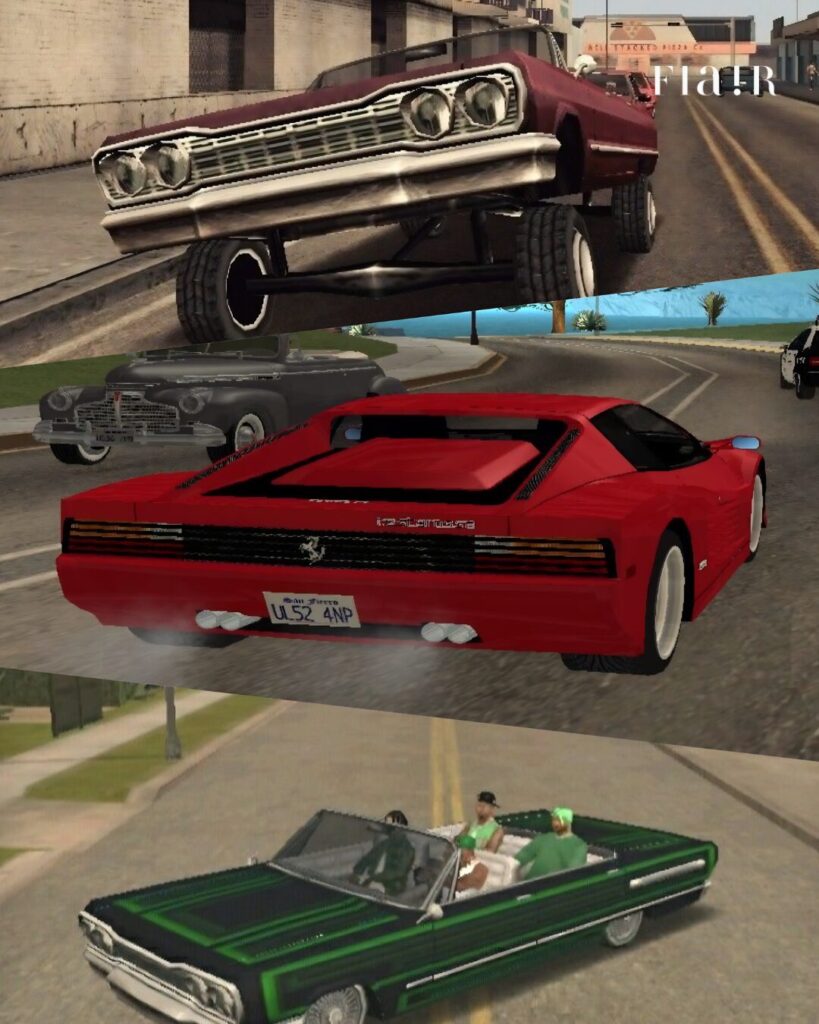
Reflecting the street culture of 1990s Los Angeles, Rockstar made vehicle customization a central pillar of the experience. Lowriders became more than just eye-candy. You could roll into Loco Low Co., install hydraulics, tweak the paint job, swap the wheels, and literally bounce your car down the block in rhythm mini-games. Instead of simply stealing whatever fast car happened to drive by, you could finally build one that felt like it was your own.
Stretching across three massive cities and miles upon miles of desert and countryside also meant terrain mattered. A sleek street racer worked wonders on the avenues of Los Santos, right up until you tried taking it up the dirt trails of Mount Chiliad and desperately wished you’d stolen a Sanchez dirt bike instead.
San Andreas was the first one my brother and I were finally old enough to play properly on the PS2, and half our afternoons were spent fighting over the controller just to see if we could find the coolest car possible. We’d steal a lowrider or a ridiculously fast sports car, take turns trying to survive a five-star police chase across the desert, or see if we could actually make it up the narrow dirt trails of Mount Chiliad without flying off a cliff.
Even when we were playing solo, spending ten minutes customizing a Voodoo or a Remington at Loco Low Co. only to lose it to the notorious safehouse garage glitch – where the door closed and swallowed your prized car into thin air – felt like the end of the world. Oh how I miss you, PlayStation 2.
2008: Heavy Metal and Hard Brakes
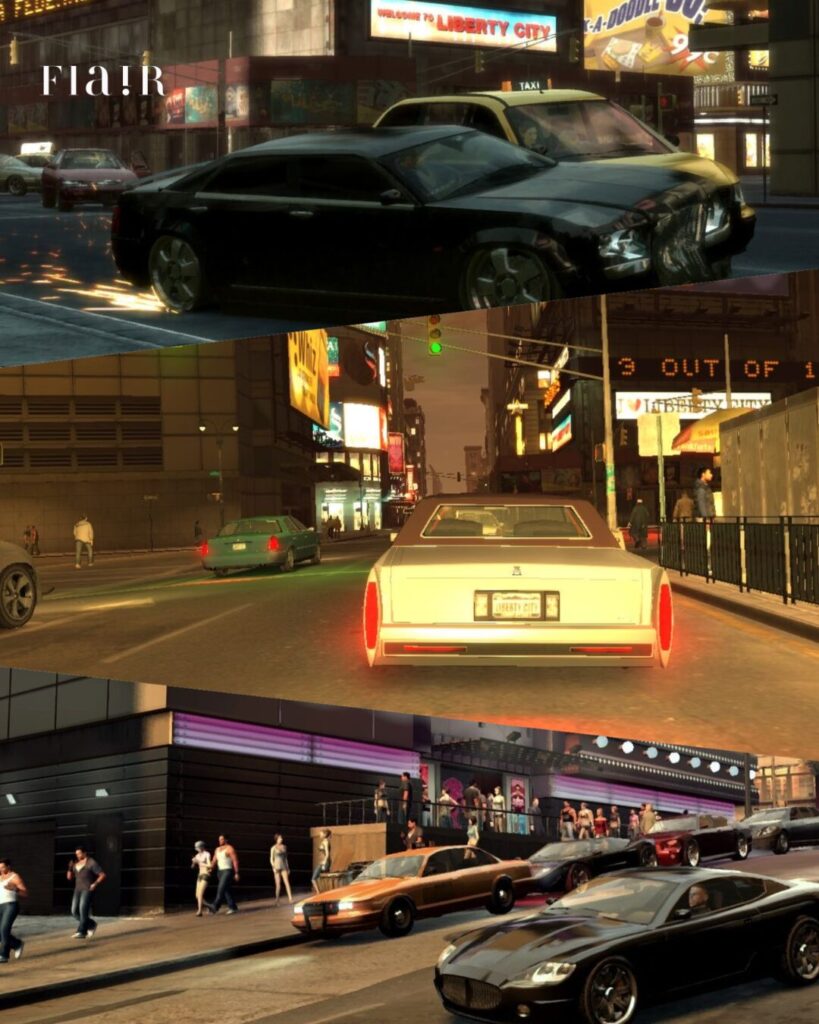
By the time Grand Theft Auto IV arrived in 2008, Rockstar swung hard toward realism – and surprised everyone who had spent the last four years taking ninety-degree turns at full throttle.
The cars felt massive. Suspension rolled heavily around tight New York-style corners, tires screeched in protest, and slamming into a guardrail at top speed meant watching your windshield spiderweb – or watching Niko fly straight through it onto the pavement. It forced players to learn how to brake, turning every high-speed chase into a white-knuckled exercise in damage control.
The roster itself mirrored late-2000s New York street culture, trading San Andreas‘s ’90s lowriders for a grounded mix of beaten-down American fleet sedans, heavy-duty SUVs, and status-symbol imports. You were constantly weaving through rows of boxy Crown Victoria-style cabs and worn-out Buick beaters just to spot a Porsche-inspired Comet, an Aston Martin-style Super GT, or a Dodge Viper-esque Banshee idling outside a high-end club in Algonquin. Even the underground car scene leaned into gritty, late-2000s tuner culture – think boxy Honda CR-X-style hatchbacks and rally-bred Subaru sedans tucked behind industrial warehouses in Alderney rather than flashy neon boulevards.
2013: The Ultimate Virtual Garage
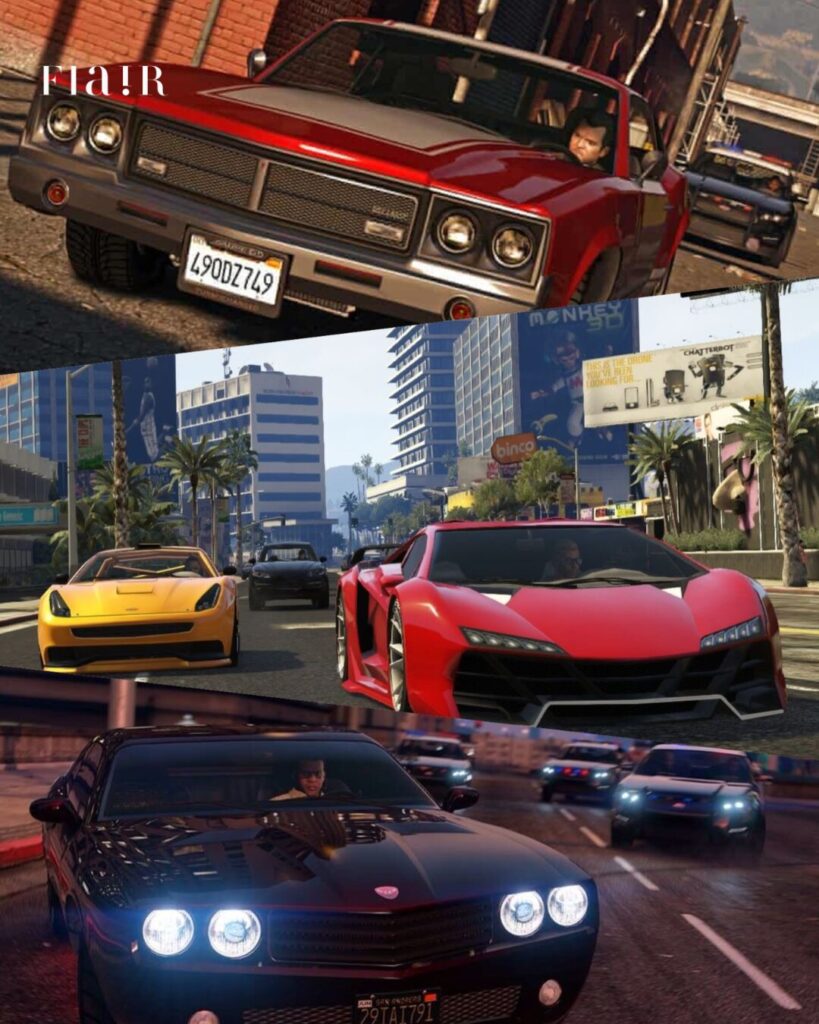
Five years later, Grand Theft Auto V found that sweet spot between IV‘s weight and San Andreas‘s playground energy. Los Santos Customs turned modification into an obsession, letting players fine-tune everything from turbochargers and armor plating to custom tire smoke and bulletproof tires.
The cars also bled directly into the storytelling. Each of the three leads had an unmistakable relationship with what they drove: Franklin’s street-racing instincts and sleek custom rides, Michael’s understated luxury sedans that screamed midlife crisis, and Trevor’s beat-up, mud-caked pickup truck complete with a stuffed teddy bear tied to the front bumper. My personal favorite.
I had a strict rule in GTA V: if my car got even a minor scratch on the passenger door – or a single cracked headlight – it was damaged goods, and I had to immediately pull over and commandeer a clean one. And because I don’t know how to drive in the real world, my driving in the virtual one was sub-par, at best.
Between weaving through traffic in the Vinewood Hills and mistiming turns at a hundred miles an hour, it took approximately five minutes for me to total whatever I was driving – turning every trip across Los Santos into an endless revolving door of freshly stolen replacements, and a minor argument with my brother because he thinks he drives better than I do. He does.
Beyond the single-player story, GTA Online turned that obsession into a full-blown social economy. Over the last decade, collecting rare builds became the ultimate status symbol in Los Santos. Multi-floor executive garages turned into curated art galleries where players organized their collections by color, era, or manufacturer. When Rockstar added the LS Car Meet in 2021, players finally got a dedicated underground warehouse just to park, pop their hoods, compare specs, and run street races. For a massive chunk of the player base, building a clean garage became the actual endgame – heists were just the day job paying for the next paint coat.
November 19, 2026: Welcome to Leonida
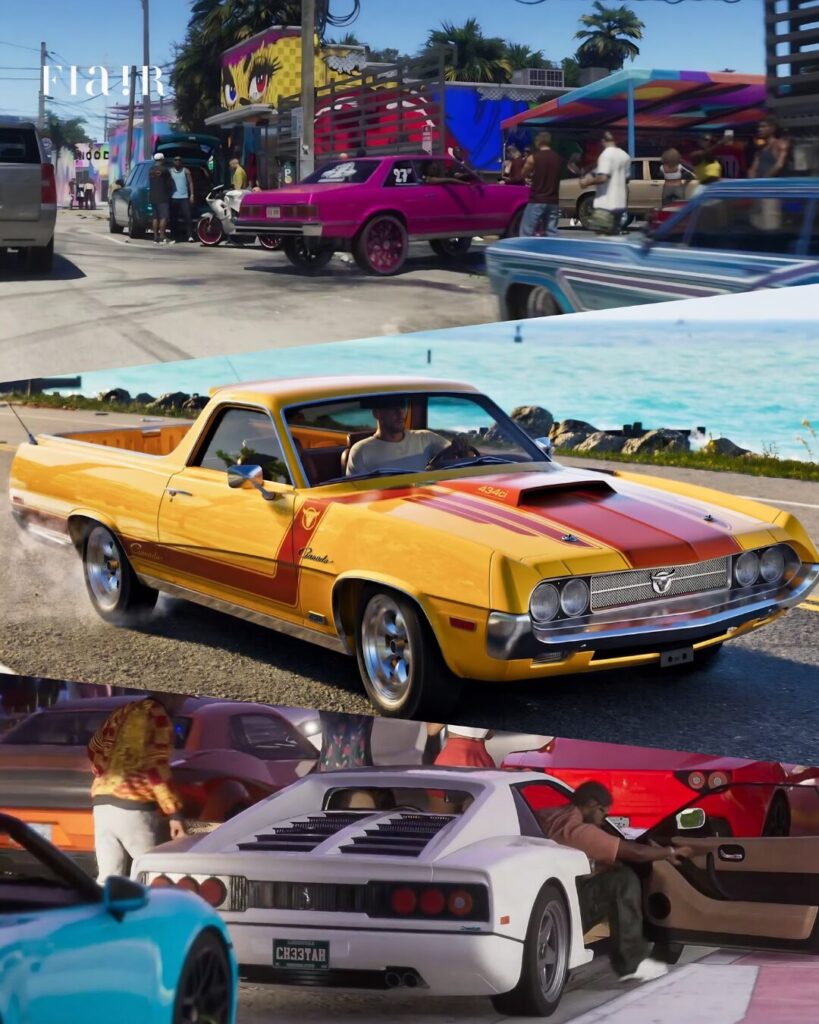
Now that GTA VI is finally out, Rockstar has completely overhauled how you steal, build, and keep a ride across Leonida.
From lifted Mud Club trucks and roaring muscle cars to glossy Vice City supercars, dirt bikes, airboats, and jet skis, the lineup mirrors Leonida’s wildly varied landscape. Moving between Vice City’s crowded nightlife, the Keys, and the backwoods of Mount Kalaga means your garage genuinely needs range. Better yet, stealing a high-end ride is unfortunately no longer as simple as smashing a window and hotwiring the steering column: modern supercars now require a key cloner, the in-game Waink app lets you scan parked cars for trackers and resale value before you even touch the door handle, and keeping a stolen favorite means driving it to Pay ‘n’ Spray to officially register it.
Once you’re inside the mod shop, the customization goes deeper than anything in the series’ history. Players are already losing hours tweaking seat stitching, upholstery zones, and headlight bulb warmth alongside exhausts and superchargers that actually change how your engine sounds echoing off downtown buildings. Combine that with heavier, more grounded handling and brutal crash damage where mirrors, panels, and entire wheels can tear clean off, and my old GTA V one-scratch-and-I’m-swapping-cars rule has immediately flown out the window.
Twenty-five years later, the weapons get bigger and the maps keep sprawling, but the core appeal hasn’t budged an inch: steal something with enough torque to pin you to the seat, redline it down the coastal highway, and try not to wrap the chassis around a palm tree before Emotion 98.3 plays your favorite song. Leonida’s doors are officially open – see you at the respray booth.