 Hedayat Reda
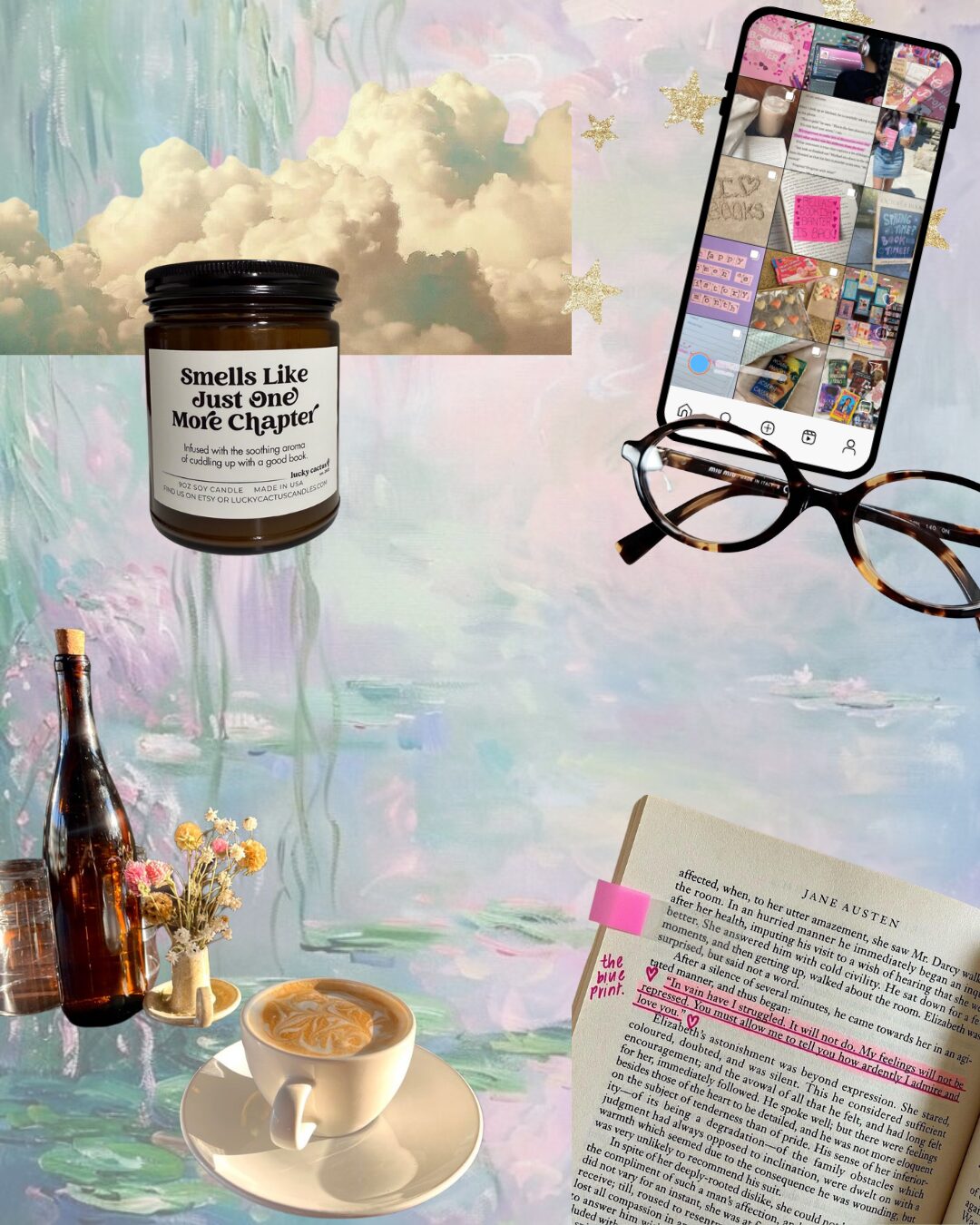
 You’ve seen her. The girl with the perfectly curated Bookstagram feed. The one posting her heavily flagged copy of Pride and Prejudice beside an oat milk latte and a candle called “Rainy Library.” She’s filming “Sunday reset” TikToks with jazz in the background, wearing an oversized cardigan, tagging pages like her life depends on it, and casually saying things like, “This book altered my brain chemistry.”
And in 2026? She’s everywhere.
Somewhere between the death of attention spans and the rise of hyper-online burnout, reading became cool again. Not in the “assigned summer reading” way — in the “I stayed up until 3 a.m. because fictional people were making catastrophic decisions” way. Honestly, that has always been my life, ever since I picked up my first The Famous Five at age seven, but it’s nice to see the rest of the world finally catching up.
Welcome to the era of the soft girl reader.
After years of doomscrolling, there’s something deeply romantic about returning to physical books. The quiet ritual of reading in bed while pretending your life is a 90s romcom. Dog-eared pages. Highlighted passages. Coffee-stained paperbacks. It’s escapism, yes — but it’s also connection, in a different way. In the past few years, BookTok and Bookstagram have turned reading into a shared cultural event. Whether it’s the rise of romantasy through books like A Court of Thorns and Roses and Quicksilver, or the takeover of modern romance novels with actual emotional depth (think Emily Henry, Ali Hazelwood, and Abby Jimenez…), we’re all reading together, crying together, and immediately sending quotes to the group chat. My book club is now one of many that meet around Cairo, and the constant flow of new readers — young and old — still surprises me three years later.
With book-to-screen adaptations absolutely dominating culture right now, the lines between literature and internet obsession have fully blurred. Readers aren’t just consuming stories anymore — they’re building identities around them. My entire feed for the past week has basically been Off Campus behind-the-scenes footage. Cast reveals. Table reads. Fancams. Paparazzi shots from set. Side-by-side comparisons between actors and fan-casts people made three years ago on Tumblr. It’s become less about simply reading a book and more about entering a fully immersive universe.
The girls are tracking their “26 Books in 2026” Goodreads challenges like Olympic athletes. They’re carrying paperbacks in tiny handbags that realistically cannot fit a paperback. They’re debating morally grey men in comment sections like it’s international diplomacy. (Hello, Xaden.) But mostly? They’re sharing. What moved them. What motivates them. What inspires them. What makes them feel part of something bigger than themselves. What gives them hope.
And that’s also why I’m so excited about this new era of adaptations.
Before social media, adaptations mostly lived on TV. You watched the movie, maybe bought the soundtrack, and moved on. Now? The internet gives us access to the entire making of the thing. We see costume fittings on TikTok, actors accidentally revealing details in interviews, and fans dissecting leaked set photos like FBI agents. The narrative expands beyond the pages and beyond the final show itself, turning into a full ecosystem.
Take The Summer I Turned Pretty. Half the excitement wasn’t even the show itself — it was the discourse. Team Conrad versus Team Jeremiah practically became a personality type online (and IRL). Suddenly everyone was posting beach photos with melancholy captions like they were personally living inside a coming-of-age montage. I hate to admit that I did as well.
Then there’s It Ends with Us, which proved just how massive BookTok’s influence really is. Long before the adaptation arrived, readers had already built such a strong emotional connection to the story that it transcended publishing and became a full-scale pop culture conversation. The fandom existed before Hollywood even fully caught up.
And that’s really the core of this entire reading renaissance: participation.
We’re no longer passive audiences waiting for a finished product to arrive on screen. The internet turned storytelling into something collaborative. Readers are now editors, theorists, fancasters, marketers, meme creators, and emotional investors all at once. A single adaptation announcement can spark months of TikToks, Reddit threads, fan edits, outfit recreations, soundtrack playlists, and discourse before the first trailer even drops. Stories no longer begin and end with the book or the screen adaptation itself — they continue living online through the people obsessed with them.
Which is probably why the Soft Girl Reader feels deeper than just another aesthetic trend. Yes, there are still pastel tabs, curated shelves, and beautifully staged reading photos. But underneath all of that is this idea of people looking for immersion again. For attention spans that last longer than fifteen seconds. For stories that make them feel something intensely enough to discuss it with strangers online at midnight.
A girl reads a romance novel alone in her room. Six months later, she’s buying special editions, joining book clubs, arguing over casting choices, and sharing theories with strangers across the internet. One story becomes thousands of conversations.
Basically, literature has entered its cinematic universe era. And the girls are fully seated for it.
Now if you’ll excuse her, she has to go update her Goodreads challenge. She’s three books behind.