 Nadine Mustafa
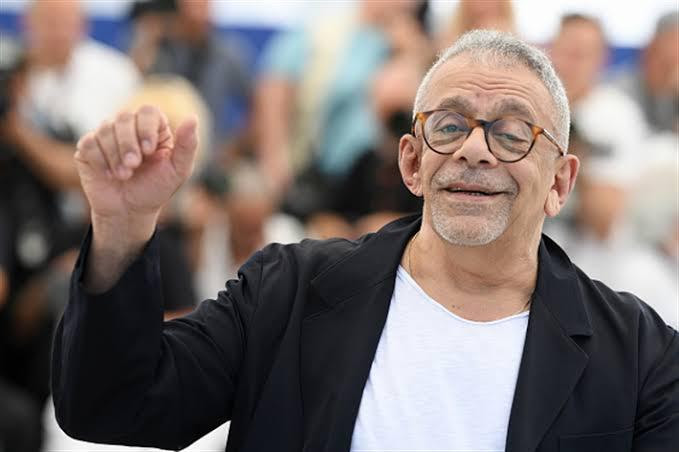
 CIFF announced honoring the iconic director Yousry Nasrallah through the Golden Pyramid Honorary Award for Lifetime Achievement
Hussien Fahmy: He is a unique director. His works are so prominent in the history of cinema.
Amir Ramses: His works include a special cinematic language. He used the terms of Egyptian cinema in a brave way.
Yousry Nasrallah: I’m glad to be granted the Golden Pyramid Honorary Award. I appreciate being honored at CIFF.
Cairo International Film Festival (CIFF) announced honoring the iconic director Yousry Nasrallah through the Golden Pyramid Honorary Award for Lifetime Achievement during the proceedings of the 45th edition, scheduled to take place between November (15-24), in appreciation of what he has presented throughout his fabulous artistic career.
Concerning the honoring of Yousry Nasrallah, CIFF president, actor Hussien Fahmy stated: “I’m really glad because the Egyptian director Yousry Nasrallah is taking part in this edition. I appreciate this honor. He is a unique director and his works is unforgettable. These works are so prominent in the history of Egyptian cinema. He is a cherished friend and colleague”.
Fahmy added: “I’ve known Yousry for a long time. I got to know him when I worked with the iconic director Youssef Chahine. At that time, Yousry worked as an assistant director. Furthermore, I worked with Youssef Chahine as an assistant director in certain periods. Thus, we belong to the same school. Our ideas are pretty close. That’s why my happiness is indescribable. I’m also glad because he accepted being honored at CIFF”.
CIFF director Amir Ramses pointed out that the festival is proud to honor the iconic director Yousry Nasrallah with the Golden Pyramid Honorary Award, saying: “Yousry Nasrallah is one of the most prominent Egyptian directors who presented fabulous cinematic works which achieved international success. Additionally, he is one of the creative directors whose films include a special cinematic language. He used the terms of Egyptian cinema in a brave way which influenced a huge number of young directors. Personally, I’m proud for honoring the professor and friend Yousry Nasrallah. He contributed to developing my cinematic character, like many of my generation”.
On the occasion of honoring him, Yousry Nasrallah stated: “I’m glad to be granted the Golden Pyramid Honorary Award at CIFF. During these moments, I remember a lot of details in my life. I remember my starting point, as well as my current position. I didn’t do it alone. Many friends and Egyptian filmmakers helped me a lot. They supported me and worked with me. They helped me to reach my current position. I want to thank them a lot. They deserve to be honored”.
Yousry Nasrallah started his artistic career in 1985 as “the assistant of the late director Youssef Chahine”, for he worked as an assistant director in “An Egyptian Story” and “Adieu Bonaparte”, starring Michel Piccoli, Patrice Chéreau, and Mohsen Mohey El-Din. He co-wrote the script of the previously-mentioned film. Subsequently, he started working as a film director who belongs to the author cinema.
He started working as a director in 1988 through “summer thefts” which was screened at the opening of “the directors’ Half-month” at Cannes International Film Festival in 1988. Later on, he participated in many international festivals, toured the world, and received multiple awards. After that, he returned to Youssef Chahine’s team and worked as an executive director in “Alexandria: Again and Forever” in 1990 and co-wrote its script. It is regarded as the third section of the autobiography of Youssef Chahine after “Alexandria… Why?” and “An Egyptian Story”. That’s why he followed the same directing style of Youssef Chahine while Chahine presented the major role in the film.
In 1993, Nasrallah directed and wrote his second film “Mercedes” which received the silver award from Khouribga African Film Festival, Morocco, in 1994 and the best film award from the Twentieth Film Society Festival in 1994. Moreover, Youssra received the best actress award from Ouagadougou Festival in Burkina Faso in 1995 for the role she presented in the film.
In 1995, Yousry Nasrallah presented the documentary movie “Boys and Girls” which is written and directed by him; starring Bassem Samra. The film tells the story of Bassem who worked as a teacher at an industrial school at that time and takes his first steps in acting with director Yousry Nasrallah. The film sheds light on his friends and family. In 2000, Yousry presented one of his most successful works “The City” which he didn’t write alone, like the other films. Three writers participated in the film: Nasser Abdulrahman, veteran French director Claire Denis, and Yousry Nasrallah. This film belongs to the digital cinema in Egypt. It took a long to change a digital tape into a cinematic tape. The film was screened in multiple festivals, including Chicago, Toronto, and Carthage. It won the Jury Award at Locarno Festival.
Subsequently, Yousry presented his famous work “The Gate of Sun” which is based on a novel by the Lebanese writer Elias Khouri who co-wrote the script with Yousry and Lebanese director Mohammed Sewid. He also directed the first part “The Departure” and the second part “the return”. Both parts were screened for the first time at Cannes Film Festival, outside the official competition. The movie was well-received by film critics in France and Europe.
At that time, Yousry was awarded the Knight of the Order of Arts by the Mayor of Paris. It is one of the highest French honors; only Youssef Chahine received it. The two parts were screened in cinemas at the same time. The film was inserted in the list of the best ten films -screened in 2004- in Time Magazine. The film was ranked 42 among the top 100 films in Arab cinema, based on the film critics’ survey at the tenth edition of the Dubai International Film Festival, 2013.
Recently, Locarno International Film Festival announced the restoration of the movie. This year, it will be screened in 4K quality through the official program of the festival, scheduled to take place between August (2-12), 19 years after its premiere.
Nasrallah also presented “The Aquarium” which was screened in 2008. It took part in the Berlin Festival’s Panorama which is regarded as the second most significant section, along with the official competition in the 58th edition. It is the only Arab film that took part in this edition. Three articles were written, in appreciation of the film, in Variety Magazine which is the first film magazine in the world.
Moreover, he worked with star Mona Zaki in 2009 as she presented the main role in “Scheherazade, Tell Me a Story”. Later on, he presented the controversial film “After the Battle” in which he tried to portray a famous battle in the media; “the battle of the Camel”. This film took part in the official competition of Cannes International Film Festival in its 65th edition. It was also screened in Toronto. It was presented in the official competition of Venice Festival and Marrakech International Film Festival in its ninth edition.
His latest film was “Brooks, Meadows, and Lovely Faces” which was screened in 2016. Its premiere was in the official competition of the 69th edition of the Locarno International Film Festival. It is the fourth participation of director Yousry Nasrallah in the festival after presenting his films: “The City” (1999), “Mercedes” (1993), and “Boys and Girls” (1995).
He is regarded as the first Egyptian filmmaker to be the head of the short film jury at Cannes International Film Festival which is the most popular festival worldwide. He succeeded in creating a distinguished artistic career, with only 13 films.
On the other hand, Yousry studied political and economic sciences at Cairo Festival then studied cinema at the Higher Institute of Cinema. Later on, he moved to Beirut to work as a film critic at Assafir Newspaper for four years during the Lebanese civil war. Moreover, he worked as an assistant director in Beirut with the German director Volker Schlöndorff in “Al-Muzayf”. He also worked with the Syrian director Omar Amiralay in the documentary film “Masa’ib Qawm”. Eventually, he moved to Egypt to start his cinematic journey in 1982.