
 Habiba ElGaniny
 Having a distinctive opinion. Is it a need, a necessity or simply a human instinct? How do we preserve such a nearly extinct trait? The opinions you won’t find yourself wavering on years after forming are shaped by your educational background, your household, your social milieu and your moral concepts. No one is raised with a perfectly formed point of view. It is, in many ways, a human instinct that comes as part of the package.
It begins early in life, when you instinctively refuse the things you don’t like. The cues are clear. Perhaps your words aren’t yet developed enough to explain yourself, but the impulses behind them certainly are. So why does that instinct seem to fade as we grow older?
Just as it starts naturally at the beginning of our lives. It begins with the smallest rituals: your usual order at your favorite café, what to wear, and eventually who you are and what you choose to advocate for. This is part of what it means to be opinionated, and it’s one of the things people first notice about you. It isn’t simply about having opinions; it is about how deeply they are embedded within you and how far you are willing to go for them.

The ultimate question remains: should we speak up or hold it in and go with the flow?
A discerning perspective can speak for you before you ever say a word. It can shape the way people read your character. There is the rebellious type, the indecisive one, the slightly messy one, or, my personal favourite, the controversial lover.
Each of these—and there are plenty more—leaves behind an indelible imprint, one that may outlive the moment itself. Perhaps whenever the same topic comes up again, someone will think of you. Honestly, what could be more niche, more chic, than a person with a clear stance? It might even rival your Louis Vuitton.
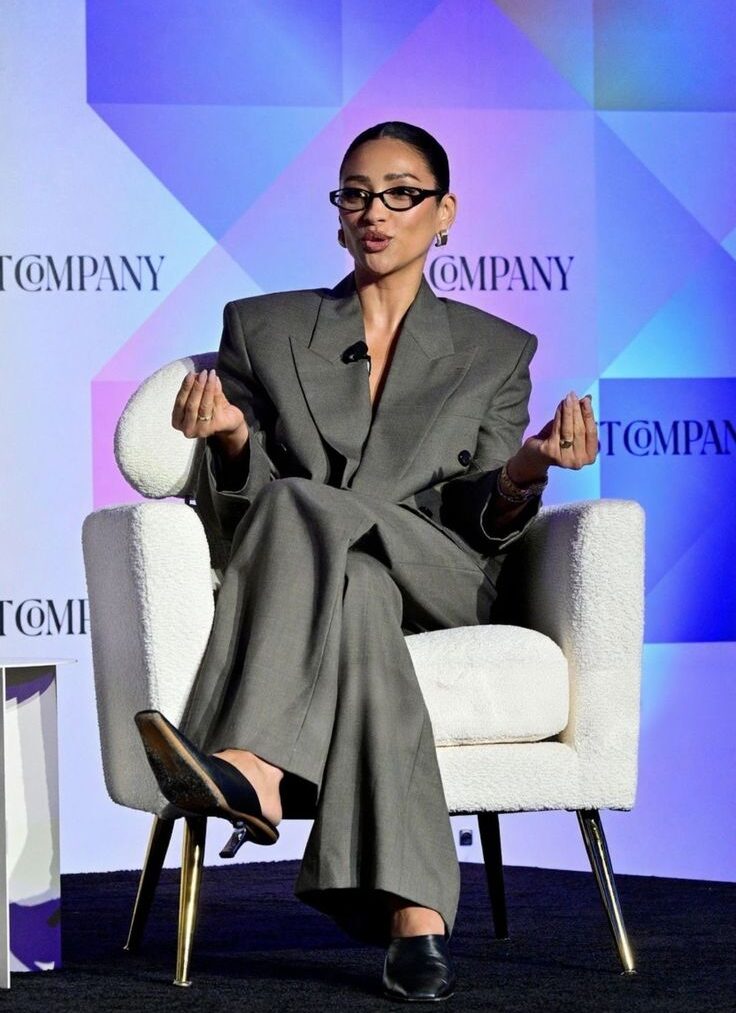
Has neutrality become the new trend?
At first, I noticed it more among women. We seemed to be succumbing to the ease of neutrality over the discomfort of having a solid opinion. Then men followed, and all of a sudden, it felt like we’d all been cast into some unspoken agreement: keep your convictions quietly planted somewhere deep inside you.
Could “I don’t know” be one of the nominees for the most ubiquitous phrase of the year?
What could possibly be behind that? And most importantly, how do we make it stop?
Having an opinion is intellectual labor. It requires curiosity, attention, and credible sources you can return to and trust. You can’t be truly opinionated unless you’re willing to cultivate yourself through different worlds of knowledge, including scientific, artistic, cultural, historical. To have a point of view is to have done some homework on yourself and on the world around you.

voicing that stance can be even harder.
It may come with collateral damage. You may be misunderstood. You may be criticised. You may even discover that you were wrong. But have you ever considered that silence, or perpetual neutrality, might be causing you more damage?
Most conversations, even media interviews, have turned out to be quite repetitive. Think of how many celebrities reply with “I’m neutral,” “I don’t take a side,” or simply “I don’t know” whenever they’re asked about a current situation or cultural crisis.
Meanwhile, when we hear a substantive argument, we’re rarely the ones turning away; we’re all ears.
I’m not going to pretend critics won’t be sharpening their knives for such a moment. They will. But perhaps that isn’t necessarily a bad thing. Young people, in particular, are opening themselves up to new perspectives, and disagreement can sometimes be the beginning of a much more interesting conversation.
Perhaps the equation balances itself out.

Women caught between neutrality and having an opinion
What if “I don’t know” became “I am not educated enough on that”?
Should we replace the familiar “I don’t know” with “I am not educated enough on that matter”?
At least that leaves room for curiosity. It leaves the door open to learning, researching, reconsidering, and eventually forming an informed opinion.
How can you be neutral about a thing anyway? It’s a silhouette that either fits or not.
Is our fear of judgement the reason for our sudden neutrality? Maybe we’re too conscious of our surroundings, constantly anticipating the reactions we might receive. The divergences you’ll encounter in the arguments you navigate can either make you more resolute in your POV, or illuminate a new path you’ve never explored before.
Because perhaps the real luxury today isn’t having the perfect answer. It’s having the courage to have a point of view. And allowing yourself to be heard.