 Sama Farrag
 A few weeks ago I was scrolling through TikTok and came across one that stopped me in my tracks: “Life is hard when suddenly all of the coming-of-age movies are not about you anymore.” It was one of those sentences that seems almost stupidly obvious until it lands on something you had not realised you were already mourning. I had been rewatching Skins and Pretty Little Liars, two coming-of-age stories I first encountered at an age when their characters felt close enough to me to pass, in my mind, as contemporaries. Somewhere between one episode and the next, I began noticing details that had never occurred to me before. Tony Stonem was seventeen. Anwar was seventeen. Effy, when she first appeared as Tony’s younger sister, was fourteen. Fourteen. I remembered watching her with the vague awe reserved for people who seemed to know something about life that I didn’t, and now, watching these teenage characters again in my twenties, I’m struck by how differently fourteen looks when you’re no longer fourteen yourself.
There is something strange about rewatching coming-of-age movies and TV shows as an adult. The stories have not changed, but you have. What once felt like an accurate reflection of teenage life can suddenly look like a time capsule of adolescence, nostalgia and everything we thought we understood about growing up. The characters who once seemed impossibly cool, mature or mysterious now look startlingly young, and the teenage dramas that once felt enormous begin to reveal something else: the messy, complicated process of becoming a person.
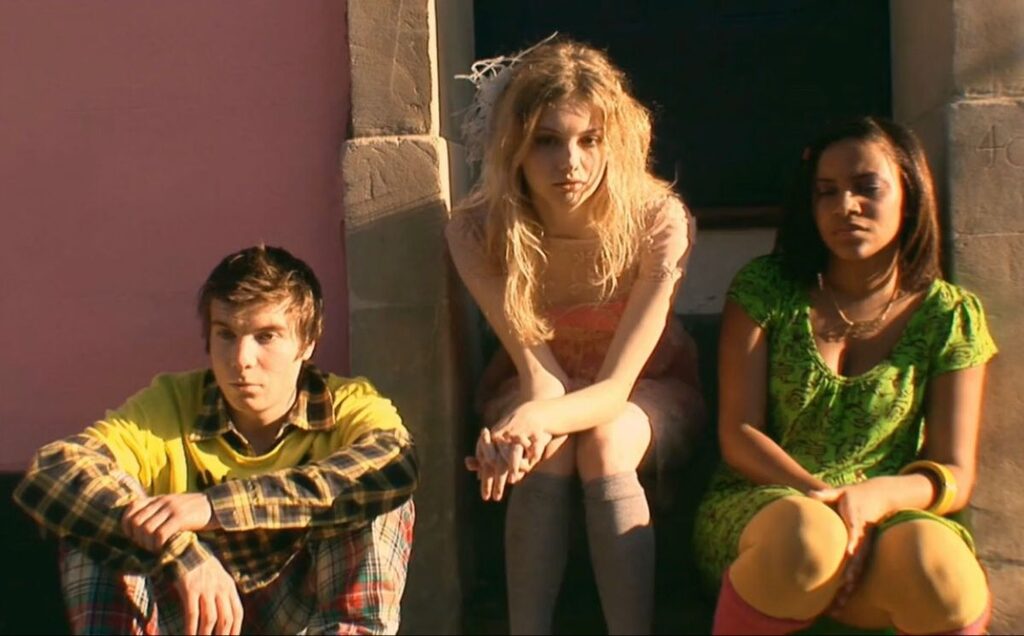
At twenty-six going on twenty-seven, I watch the same scenes and find myself looking at them differently, sometimes with amusement, sometimes in awe that these are literal children, and sometimes with an affection that I definitely did not have when I was younger. The confidence I once accepted at face value now appears to have been constructed with enormous effort. I can see people trying to look as though nothing embarrasses them, trying to become mysterious by saying very little, trying to make certainty look effortless when they have barely had enough time on earth to know themselves properly. Teenage coolness has a strange way of losing its power as you get older; the mystery, confidence and effortless detachment that once seemed so impressive become much easier to recognise as things teenagers are still learning to perform.
Perhaps that is because adolescence is one of the few periods in life when you are building a self while simultaneously being watched while building it. You are changing constantly, often publicly and sometimes in ways you will later find almost impossible to defend. You decide that you are one kind of person, then discover that version of you does not survive contact with a different group of people. You start dressing differently, listening to different music, speaking differently, becoming more interested in what certain things might communicate about you than you would ever admit at the time. There is experimentation involved, but there is also an audience, and the audience matters enormously because you have not yet developed enough confidence in your own version of events to dismiss everybody else’s.
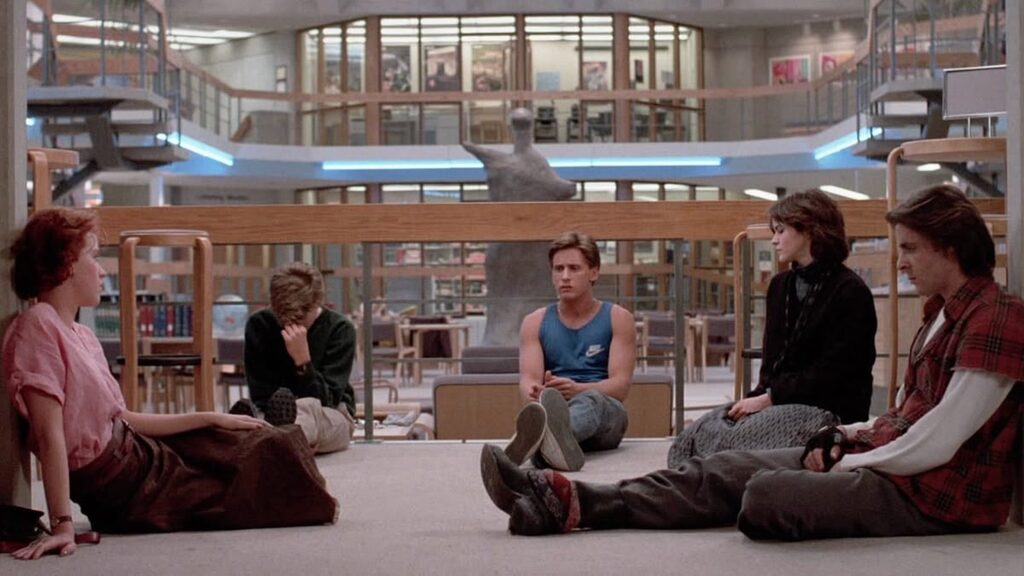
This is part of what makes The Breakfast Club so interesting when you are no longer watching it as a teenager. The five students sitting in Saturday detention are almost aggressively aware of the identities they have been assigned: the athlete, the brain, the princess, the criminal, the basket case. At sixteen, those categories can feel like personality types, almost permanent conditions. At twenty-six, they look more like costumes everyone has agreed to wear because having a recognisable role is easier than admitting you have no idea who you are yet. I went as John Bender for Halloween in the eleventh grade because I felt I identified with him the most. The film’s central revelation – that these supposedly incompatible people have more in common than they realise – is hardly subtle, but age gives it another layer. You begin to notice how desperately everyone wants to be understood while simultaneously doing everything possible to avoid being known too well.
That contradiction is everywhere in coming-of-age stories. Teenagers want privacy while making their entire emotional lives legible to everyone around them. They want to be treated like adults while possessing an almost supernatural ability to believe that whatever has happened to them in the last forty-eight hours is the most important thing that has ever happened to a human being. And, frankly, they have a point. When you have only lived sixteen or seventeen years, forty-eight hours represents a meaningful percentage of your total experience. The first humiliation really is enormous. The first friendship breakup really can feel like the end of civilization. The person who does not text you back can occupy more mental real estate than your potential future career.
Watching that now, I have considerably more sympathy for the melodrama than I did when I was living close enough to it to recognise it as my own. What once seemed embarrassing begins to look developmentally inevitable. There is something almost sweet about the intensity with which teenagers experience themselves, even when that intensity is objectively ridiculous. They have not yet accumulated enough evidence to know which disasters are temporary because at that point in life, every feeling arrives without a reference point.
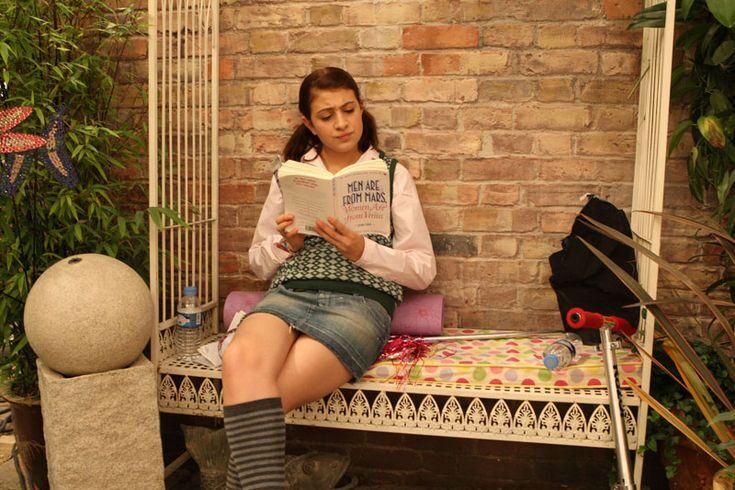
Angus, Thongs and Perfect Snogging also understands this particularly well because Georgia Nicolson is not presented as some polished miniature adult. She is awkward, vain, insecure, dramatic and convinced that everyone is paying more attention to her than they actually are. When I first encountered characters like Georgia, the embarrassment was the point. You recognised yourself in the humiliations and then immediately wished you didn’t. Watching her later, however, the embarrassment becomes secondary to the strange tenderness of seeing someone invent a personality in real time. She is trying on versions of herself – cooler, prettier, more desirable, more interesting – and rejecting them whenever they fail to produce the response she wants.
I vividly remember the particular cruelty of being young that adults tend to forget: I was expected to construct an identity before I had the information required to construct one. I was making choices about what kind of person I was based largely on what gets rewarded. Someone laughs at a joke, so I become a stand-up comedian. Someone compliments my outfit, so I instinctively dress the same way all the time. Someone ignores me, and suddenly I have decided that I’m just the sort of person people tend to ignore. A teenager can turn one bad day at school or at home into a definitive persona.
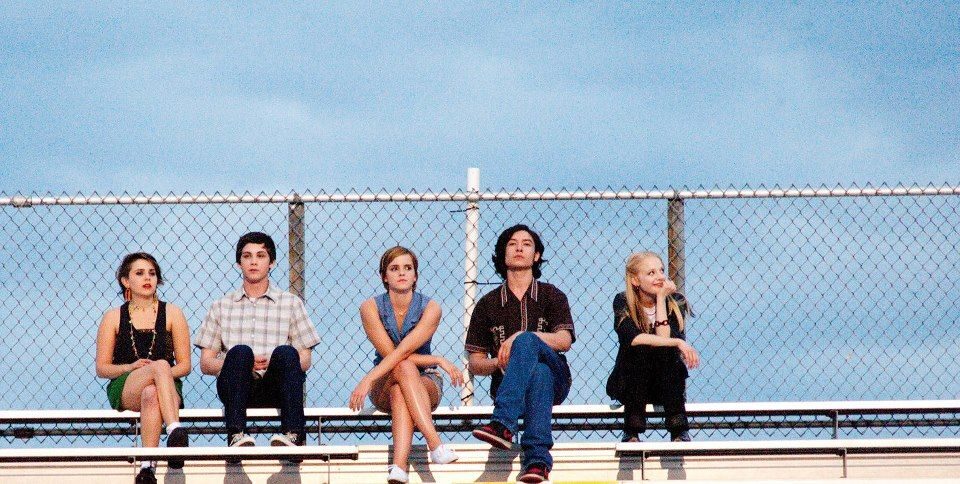
At some point in your twenties, you begin to understand that you were never nearly as “fixed” as you thought you were. The person you were at seventeen was partly you and partly circumstance, partly insecurity, partly imitation, partly whatever music you happened to be listening to when you decided you had finally figured yourself out. For me, it was My Chemical Romance and Nirvana. This is one reason The Perks of Being a Wallflower can feel so different with age. Charlie enters high school already observing everyone around him, convinced that watching carefully might somehow protect him from the chaos of participating. His friendships with Sam and Patrick gradually pull him into a world he had been standing outside of, and the film captures something that becomes easier to see once you are older: adolescence is not simply the period in which you discover who you are. It is the period in which you discover how much of yourself is still up for negotiation.
That is also why these stories can become unexpectedly sad in adulthood. When you are younger, you watch them forward. You are interested in what will happen to the characters because, in some abstract way, their future feels like yours. You assume there will be another party, another school year, another friendship, another version of yourself waiting around the corner. The ending of a coming-of-age film therefore feels like a promise. The characters leave school, kiss someone, repair a friendship, survive a humiliation, drive somewhere at night with David Bowie playing, and you think: okay, so this is what growing up looks like.
Then you actually grow up and discover that most of it is unfortunately less cinematic.
There are no orchestral cues when you outgrow a friendship. Nobody announces when you have become a different person. You simply wake up one morning and realise that the thing you spent six months thinking about has stopped bothering you, or that you have not spoken to someone in a year, or that the outfit you were convinced represented your entire personality now looks outdated and cringey. Adulthood is full of these tiny, almost invisible transitions, and because they rarely announce themselves, we tend to notice them only retrospectively.
Maybe that is why rewatching teenage films in your twenties can feel faintly voyeuristic. I’m watching people experience what I once considered the centre of the universe while knowing, with the smugness that only hindsight can provide, that the universe is going to keep going. The terrible breakup will become an anecdote, the humiliating party will eventually become funny, and the friendship that seemed permanent will probably not be. But hindsight can also be unfair. It is easy, from the comfortable distance of adulthood, to laugh at the emotional scale of teenage problems because we know that life contains bigger ones. What we forget is that adolescence is the first time most of those problems have ever happened. There is no perspective yet. There is only the event itself, happening at full throttle.
And perhaps this is where the shift from identifying with these characters to observing them becomes more complicated than simply realising that we have grown up. When I was younger, I wanted these films to reassure me that my feelings were normal and I wasn’t weird for feeling the way I felt. Now I am more interested in what they reveal about the strange process of becoming a person. The characters are often convinced that they are choosing themselves, when in reality they are negotiating between who they think they are, who their friends think they are, who their parents think they are and who they desperately yearn to become. The drama comes from that gap. At twenty-six, I can finally see that the gap never fully disappears.
You become better at understanding yourself, probably, but you also become better at recognising the ways you have been performing yourself all along. There are still rooms where you become a slightly different version of yourself, there are still people whose opinions matter too much, and there are still moments when one person’s silence can ruin an otherwise perfectly good day. The difference is that adulthood gives you a longer memory. You have survived enough versions of yourself to know that none of them were permanent.
That may be the real privilege of watching coming-of-age stories after the coming-of-age has, supposedly, already happened. You stop asking whether you are like the characters and start asking what you can now see that they cannot. You start to notice things that your teenage brain had otherwise been completely unaware of because they were irrelevant and not about you. You notice the parent who is trying and failing. You notice how often confidence is just fear with better posture. You notice that the loudest person in the room is not necessarily the least insecure, and that the person who seems to have everything figured out may simply have become very good at making uncertainty look like complete certainty. Most importantly, you begin to understand that being seventeen was never about knowing who you were, but about believing that you were supposed to know.
That belief is what makes these movies so powerful in the first place. They take an inherently unstable period of life and give it shape: three acts, an indie soundtrack you still listen to today, an iconic outfit, a party, a crisis, a resolution. Real adolescence is much messier. It twists and contradicts itself. You can feel completely grown-up on Monday and call your mother because you do not know how to turn on the dishwasher on Tuesday (guilty). You can be convinced that you have finally become confident and then spend forty minutes wondering whether a “hey” or a “heyy” in a text message from your boyfriend means that he is annoyed with you. You can be twenty-six and, occasionally to your dismay, still feel sixteen.
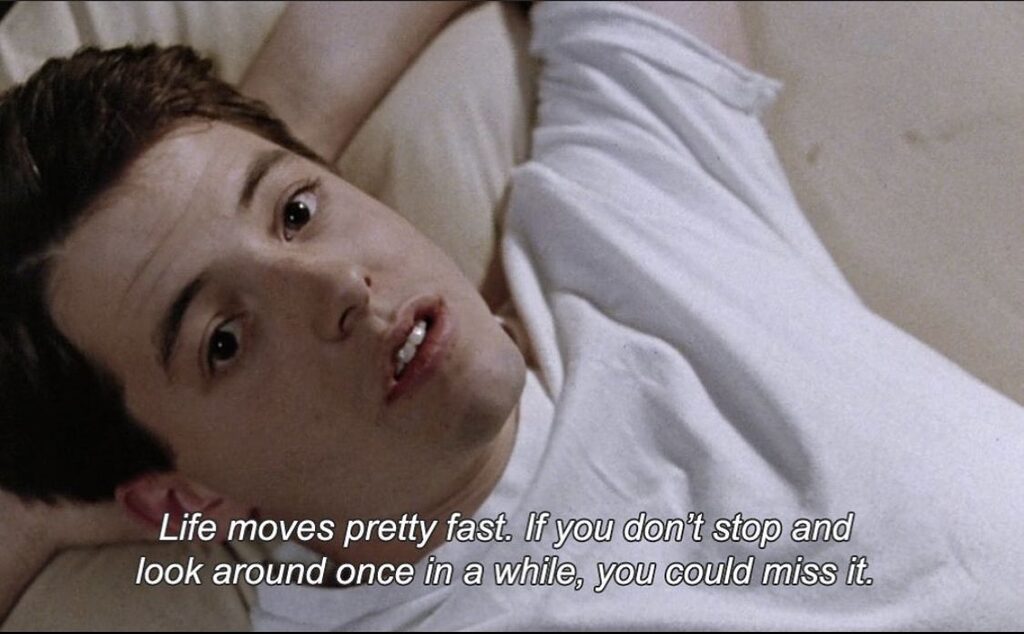
The difference is that now you know the feeling will pass. The characters are still seventeen, but I am the one who has changed. Maybe that is why realizing you’ve grown out of coming-of-age stories is kind of sad. You eventually realise that the version of yourself who watched them for the first time is gone, and there is no way to become her again simply by returning to the same film. You can remember her, recognise her, share a cigarette with her, even feel an embarrassing amount of tenderness towards the things she once believed, but you cannot give her back the certainty she had that everything happening to her was permanent.
And perhaps that is why we keep coming back. At twenty-six, I can watch a seventeen-year-old character completely unravel over something I know she will eventually laugh about and still feel it with her, because knowing that a feeling will pass does not make the feeling any less real while you are inside it. Coming-of-age stories give us the version of life before hindsight, when everything feels enormous because, to the person experiencing it, it is. Maybe we never really stop being seventeen forever and we just get old enough to realise that seventeen was never really supposed to last forever. Sometimes I wish it did, but I know better now. And wear my make-up much nicer.