 Hedayat Reda
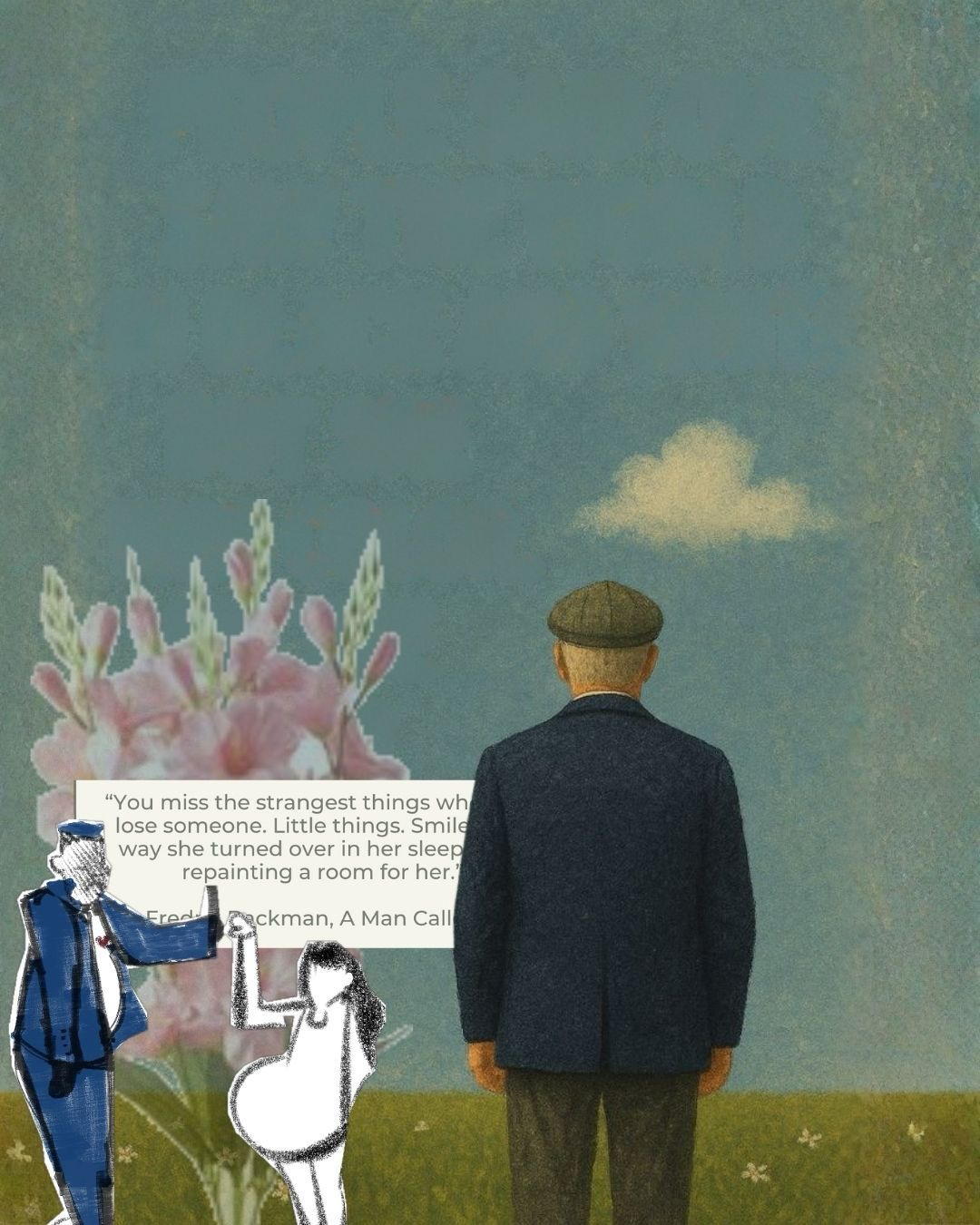
 In the crowded field of Swedish fiction translated into English, Fredrik Backman stands comfortably at the top. His novel A Man Called Ove became an international phenomenon and inspired two major film adaptations — the original Swedish “A Man Called Ove” and the Hollywood remake “A Man Called Otto” starring Tom Hanks. But long before the cinema tears and award nominations, there was simply Ove: a grumpy man with strong opinions about parking rules and very little patience for humanity.
On the surface, the book is about a widower who has lost his wife — and with her, his reason for living. In practice, it’s about a man who measures moral order through correct recycling procedures and proper use of Allen keys. Ove is the kind of person who files complaints about incorrectly sorted garbage, then alphabetizes the complaints.
Backman introduces him with characteristic deadpan precision:
“Ove is fifty-nine. He drives a Saab. He’s the kind of man who points at people he doesn’t like as if they were burglars and his forefinger a policeman’s torch.”
This is not exaggeration. Within the first chapters, Ove has inspected the neighborhood bike shed, berated a shop assistant for selling the wrong type of rope, and nearly started a philosophical war over radiators.
The Saab–Volvo rivalry with his former best friend Rune perfectly captures his worldview:
“Ove drove a Saab 96 and Rune a Volvo 244… Three years later Ove bought a Saab 95 and Rune bought a Volvo 265… And then the day came when Ove went to the car dealer to look at the recently launched Saab 9-3. And when he came home in the evening Rune had bought a BMW.”
To Ove, this scene is not just automotive betrayal. This is moral collapse. Buying a BMW is less a purchase and more a character flaw that plays an ongoing theme in the book and makes one question the topic of loyalty as a whole (I have never realized the importance of car makes so much).
Ove is a rule-stickler and a loner, a man with an unshakeable sense of right and wrong — even when the rest of the world has clearly decided to move on without him. He is also, inconveniently for his own plans, surrounded by neighbors who refuse to let him die in peace.
His repeated attempts at ending his life are interrupted by an increasingly absurd cast: a pregnant Iranian neighbor who treats him like a stubborn appliance, a man who cannot reverse a trailer (her husband), a stray cat who adopts him against his will, and a three-year-old who laughs hysterically when Ove accidentally punches a man dressed as a clown — arguably one of the funniest scenes in modern literary fiction. Ove, naturally, is offended by the child’s enthusiasm.
What begins as a story about “the neighbors” slowly turns into a story about Parvaneh, Patrick, Anita, Rune — real people with names and histories. One of Backman’s quiet triumphs is showing how community forms not through grand gestures but through borrowed ladders and emergency casseroles.
But the emotional core of the novel is Ove’s relationship with his wife Sonja, revealed in alternating past and present. Their love story unfolds with delicate restraint — less grand romance than steady devotion. Backman writes:
“He was a man of black and white. And she was color. All the color he had.”
It is this relationship that explains Ove’s stubborn decency — his refusal to cheat, cut corners, or accept injustice even when it costs him dearly.
There are moments in the book that feel almost like quiet superhero work — Ove climbing onto train tracks to save a stranger, defending neighbors against bureaucracies, fixing everything from radiators to broken lives, inspiring in an unanticipated way. Furthermore, Backman fills the novel with thoughtful details and everyday rituals that give one a real feel for this suburban life: coffee measured precisely, tools lined up like soldiers, inspections carried out at dawn. The ordinary becomes profound simply because Ove refuses to treat it as trivial.
However, the genius of A Man Called Ove is that it makes a loud statement without raising its voice. It is a book about grief, aging, masculinity, and community disguised as a story about a man who gets angry at people who are unable to use tools.
By the final pages, Ove — who began as a caricature of stubbornness — has become something much more complicated: a portrait of how love can survive loss, how family sneaks up on the unwilling, and how even the most irritable among us may secretly be holding the neighborhood together.
Unexpectedly moving, consistently funny, and sharper than it first appears, A Man Called Ove is one of those rare novels that manages to be heart-wrenching and family-friendly at the same time — a book that makes you laugh out loud and then quietly reconsider all the times your grandma told you about the importance of “saving 10% of your income” and “recycling your leftovers”.
5/5 stars.