 Hedayat Reda
 “I think there are some very important questions that we all must answer if we want to live a meaningful life: Who am I? Where am I from? Where am I going? … Why am I?
“Ana men mawalid Masr, ahli hagro men Masr when I was really young, at the tender age of 6. Kont lessa bakhod أ ب ت rahet alba ABCD.”
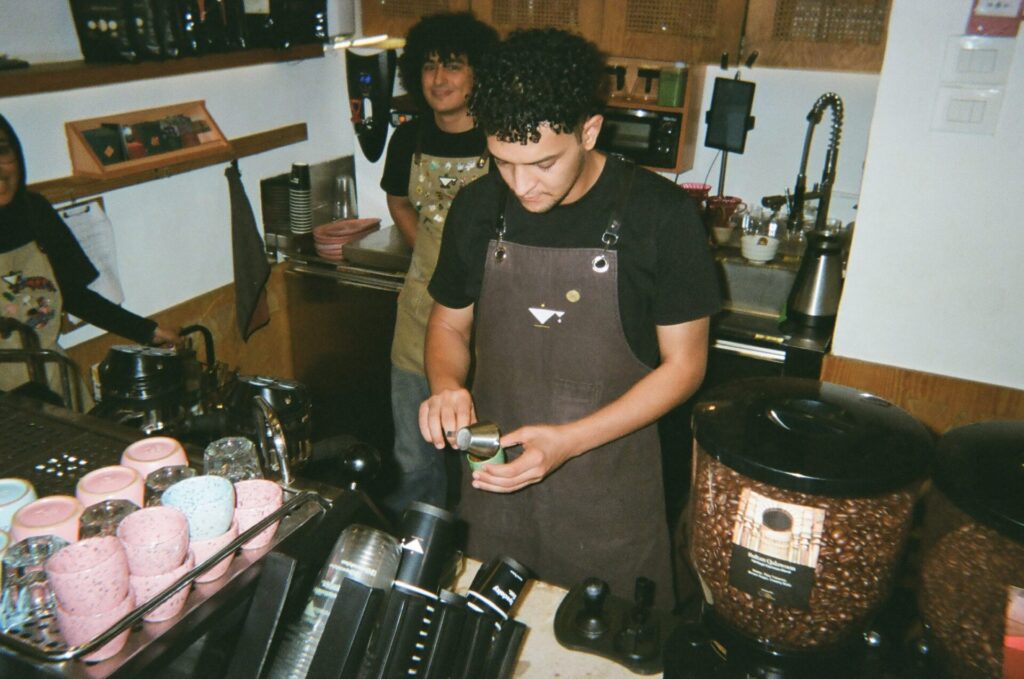
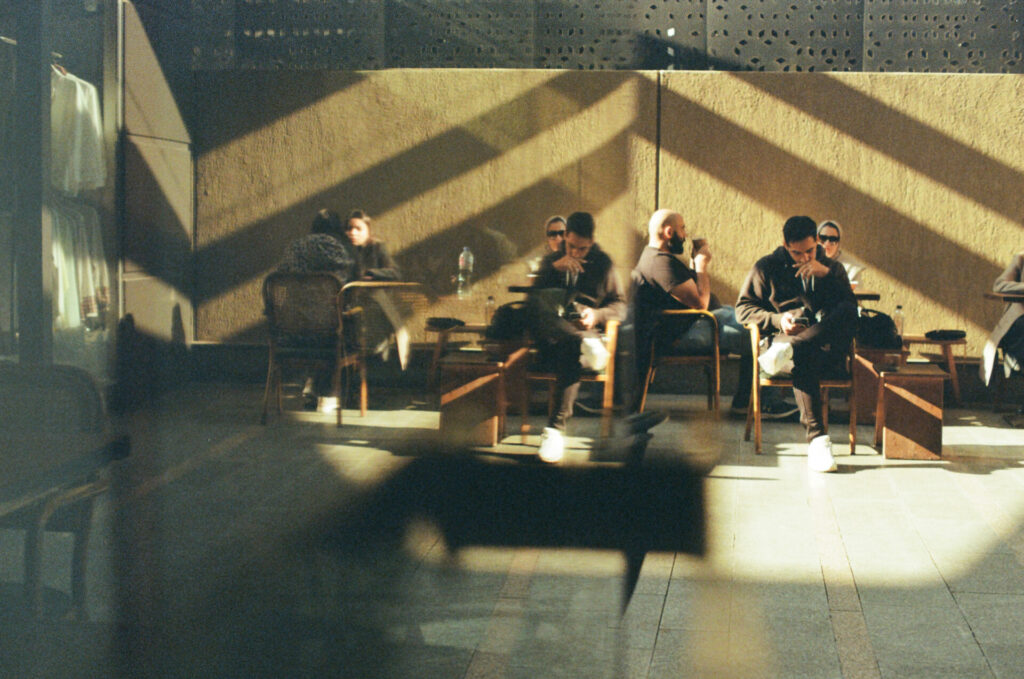
I am sitting under the rustic, factory-like ceiling of Specialty Būn cafe, listening to the café-goers mill around, exchange greetings, talk shop, and gazing out the window. I am in awe at the atmosphere of camaraderie and love—how everyone knows everyone, how those that don’t –want to. If you’ve never been to Būn, you may initially find it hard to spot. Tucked between KBs in Arkan and Plenty Deli (currently empty—it looks like it will be a new store), it is in a narrow passageway that is not on your typical Arkan route. However, you can’t miss the crowd that gathers around it, night or day. The warm interior is decorated with bronze hanging lights and a mix of low and high tables, and a preponderance of small personal touches litter the space—from artwork to employee photographs. On your left-hand side is a coffee bar that those who are not disposed to grab the charging stations often work from, enjoying the view to the outside world. Facing you is the barista station: coffee machines, V60s, and a Marshall speaker that blasts a mix of contemporary and classic Arabic and English music.The whole structure is under a dome-like ceiling with small triangular indentations, giving it a Hassan Fathy–like appeal (intentional), and there is a Polaroid camera station where you can take a photo of yourself and “join” the Būn family. Tens of Polaroids are arranged around it, showing the shop’s trajectory through the years and the versatile clientele that calls it home.
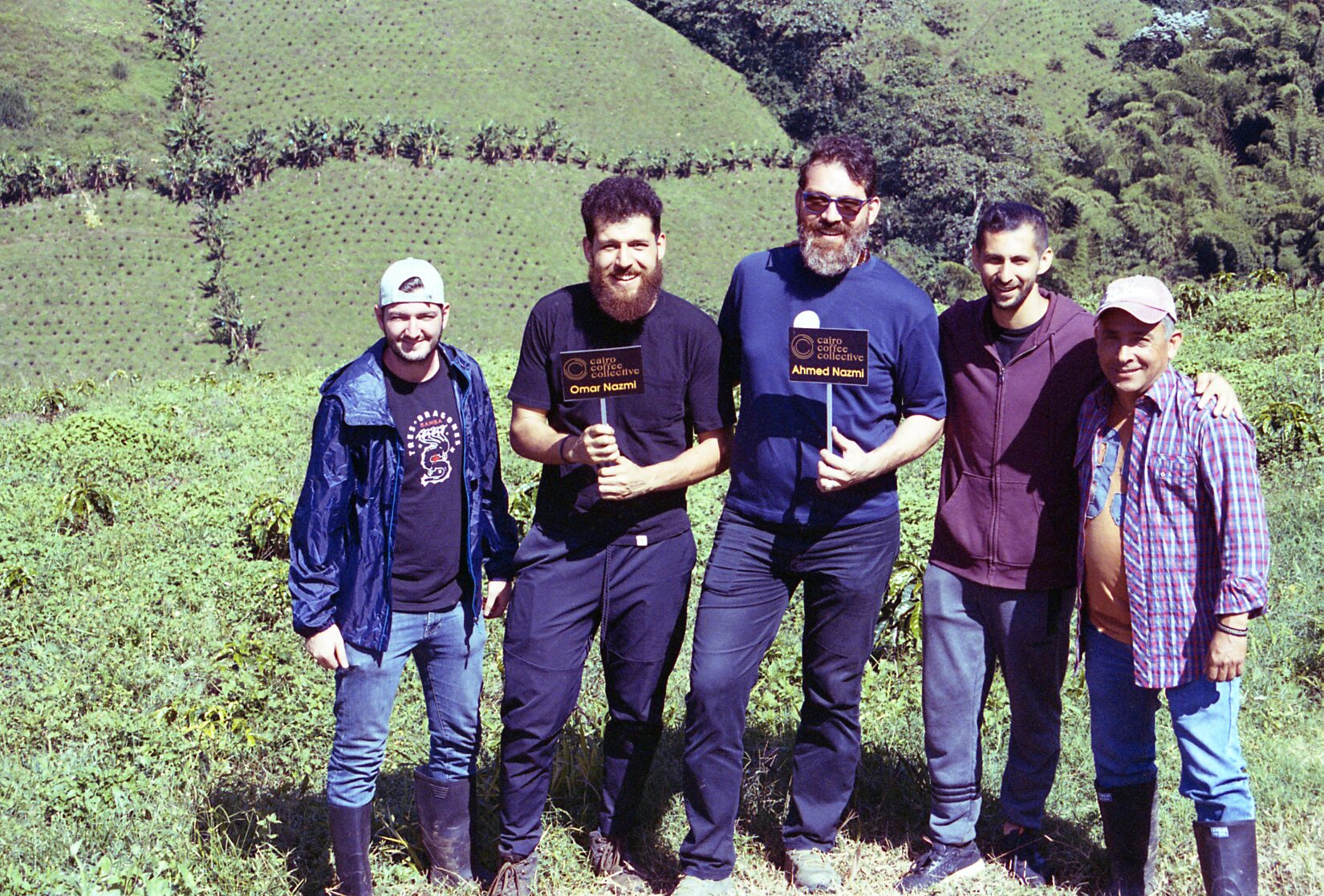
Omar Nazmi, founder and one half of the brother-duo that pioneered this specialty coffee movement, comes in and fishes me out from behind the bar; huge smile gracing his face, bearded features gentle. A few quick words with the barista, some directions I completely miss, and we move outdoors to relax on the rickety wooden chairs. It is still warm out, a perfect day for an interview—or, in Omar’s case, to officially propose to his fiancée.
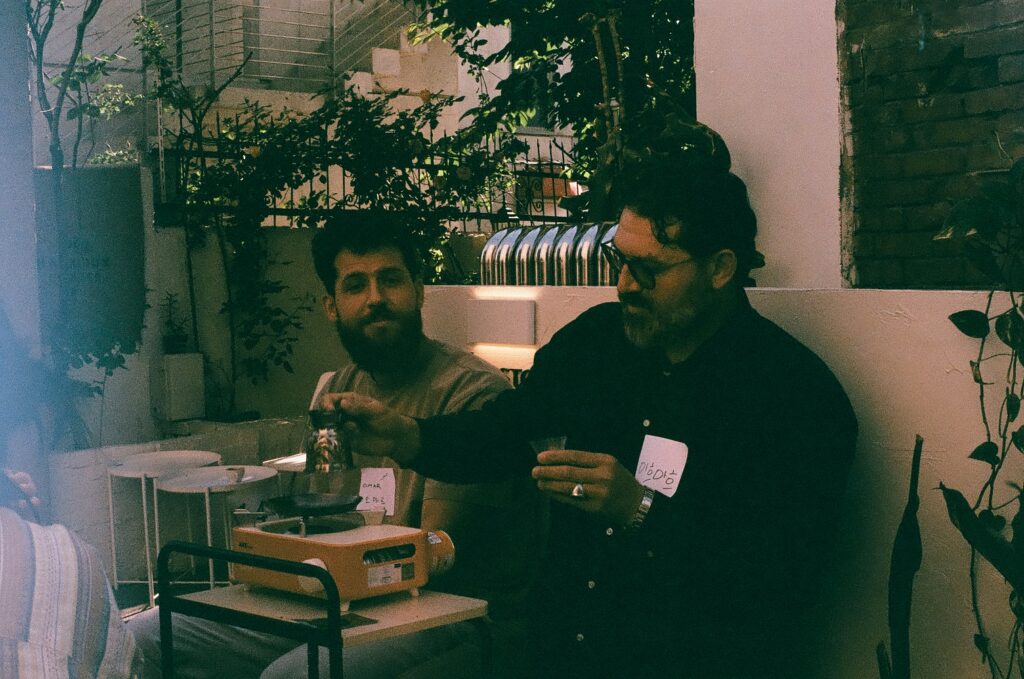
“I think there are some very important questions that we all must answer if we want to live a meaningful life,” Omar tells me, skirting the pleasantries and moving right to the meat of the matter: why we are here. “My love for coffee stems from asking these existential questions.”
“Al qahwa leeha osul arabeyya, wa moslema,” he begins. At 13 or 14, Omar made the decision to become an educated person, because that is a part of his heritage. After living in Egypt for the first six years of his life, Omar and his family—mom, dad, and brother Ahmed- moved to Canada, as many Egyptian families of the time did, to pursue a new life. For Omar, his journey to following his passion did not start—as that of many entrepreneurs does—with the opening of his business, but before then, when he began to look into his personal history as an Arab Muslim man.
“Coffee has Arab and Muslim roots. Back in my youth, my brother came home one day with a big blue book entitled 1001 Arab Muslim Inventions. Number one on the list was post-secondary institutions. Number two was coffee.”
“Al shagara, lama wogudat, wogudat fel Habasha. Coffee is an Ethiopian plant. All of the world’s coffee originates from Ethiopia,” Omar narrates, following the story of coffee to its naissance. From the University of al-Quarawiyyin in Fez to Al-Azhar in Cairo, Omar maps out the cultural impact of coffee for me—how all of the world’s coffee plants originate in Ethiopia, but then migrate towards Yemen: the first place where coffee was intentionally planted as a means of agriculture.
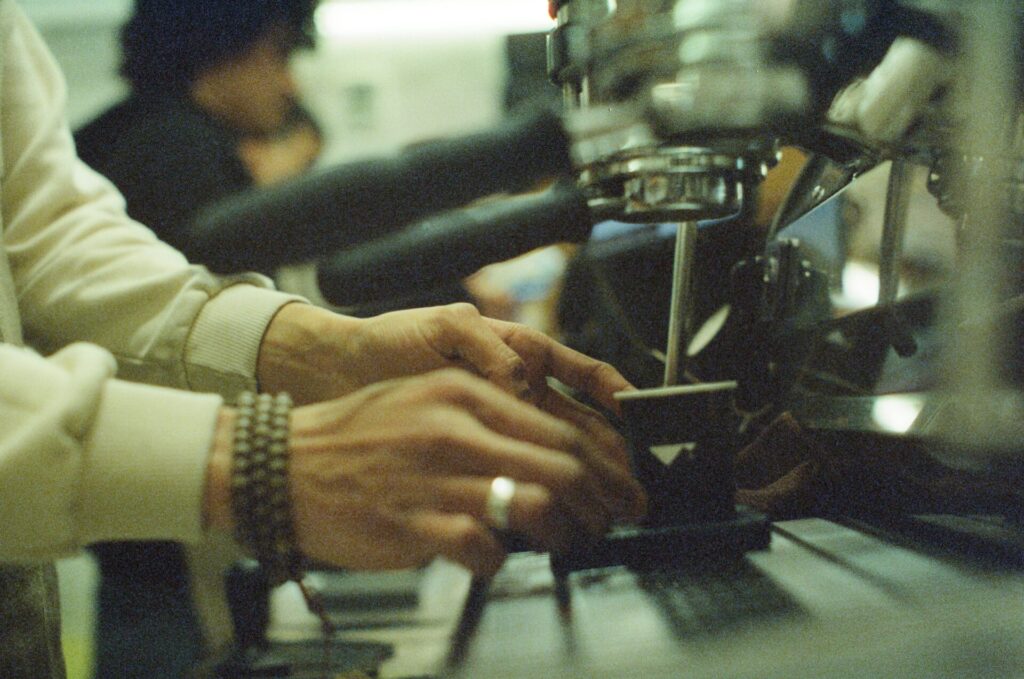
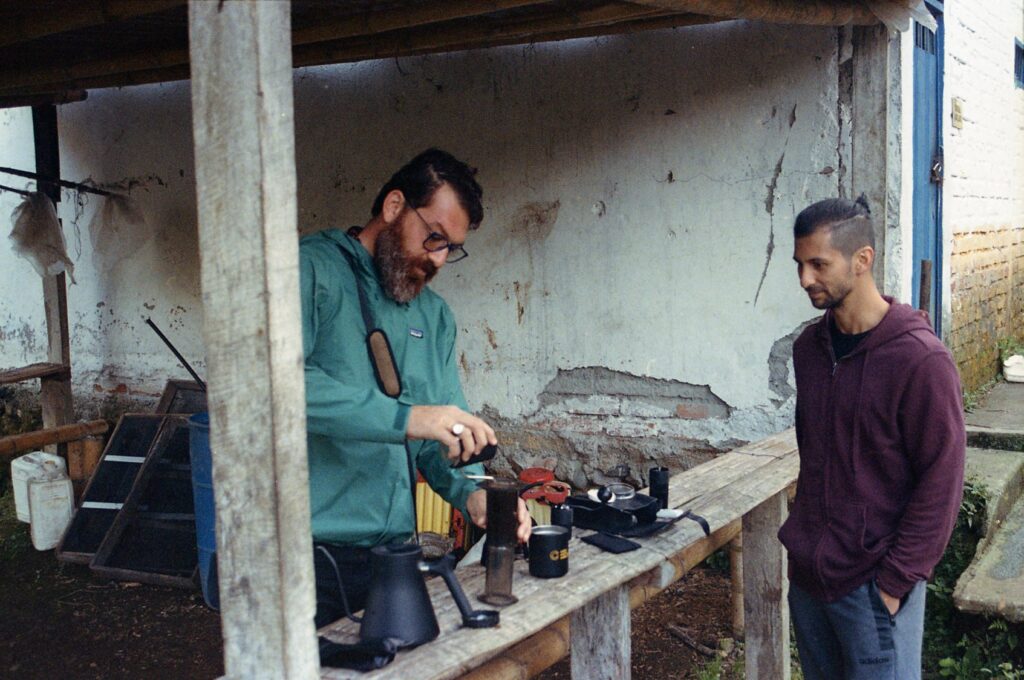
The staff mills around us, energetically serving coffees, dodging smiling regulars, passing by that one table of entrepreneurs that is always discussing deliverables, branding schemes, and/or website backends (“Have you visualized what a meeting with the CEO would be like?” “Can we move this tab to a different part of the page?” “Can we schedule a call for Thursday?”). Orders are shouted over the countertop, just loud enough to get me excited about all the different caffeine options on the menu, just interesting enough to arouse my curiosity as a goûter. Omar nods at everyone, continuing with his story, eyes alight.
“Yemenis would drink coffee in a very different format from the way we drink it. They would drink it in the third third of the night. Coffee was used in majales al dhikhr, and it was a very blessed drink. They would call it ‘khamret al mu’mineen.’ It was a saintly beverage.There were narratives of when the devil would hear the pestle and mortar of the mu’mineen, he would run the other way, because these people meant business,”
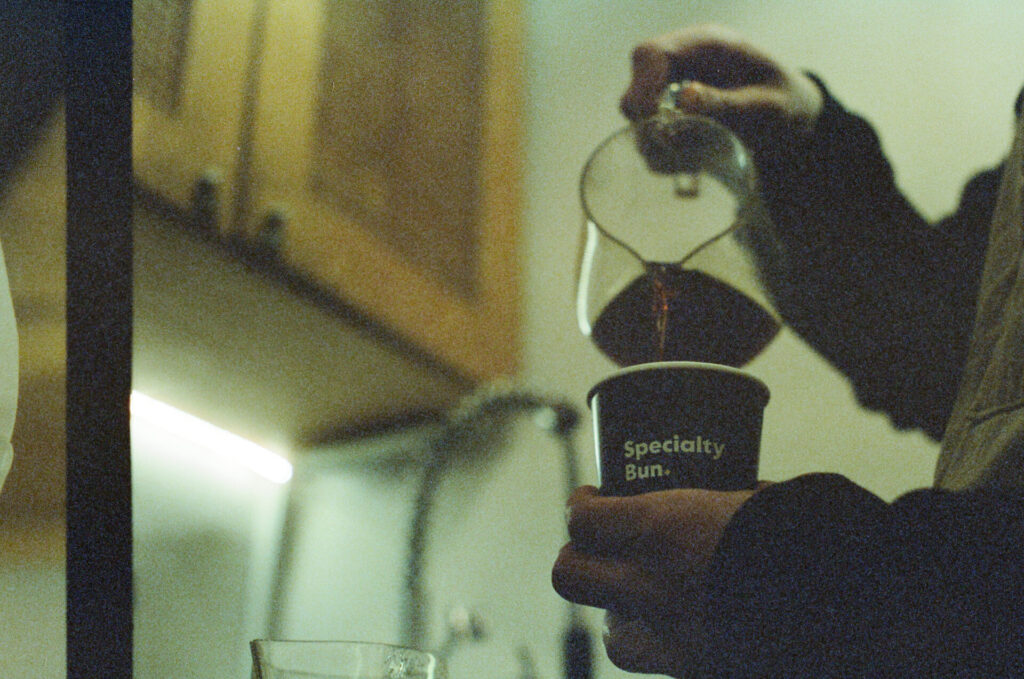
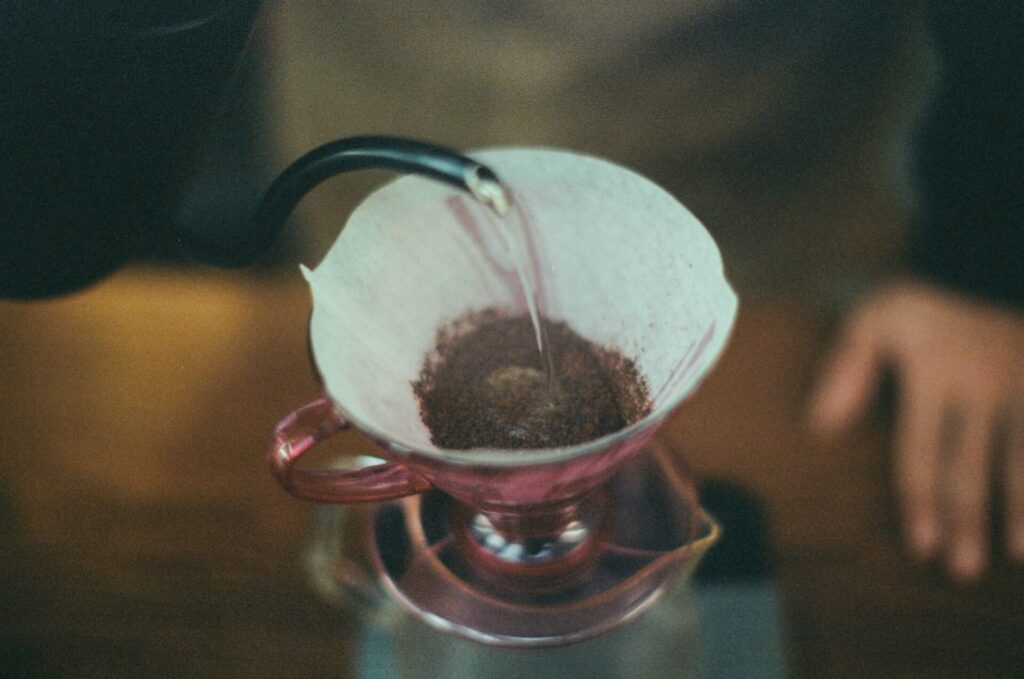
A freshly brewed pourover arrives for us on a small pink stone platter, a blend of Ethiopian coffee that has gone through a special washing process to become the smooth mocha beverage we all know and love.
“Five hundred to six hundred years ago, when these Yemenis wanted to pursue higher education, they would come to Cairo because we had Al-Azhar University, and they brought coffee with them. Al-Azhar is perhaps the world’s first coffee campus,” Omar says with a sly wink.
“Sweet,” I remark, picking up my mug and letting the hot brew linger on my tongue for a moment, savouring the taste.
“Yes. To me, it tastes like honey,” Omar interrupts his thought process to take in this moment with me—the Islamic practice of ikram al deif—one which he takes very seriously.
From Yemen to Cairo, studious Al-Azhar attendees would bring their beans to campus, and with that, the dissemination of coffee began. By opening beyut qahwa—coffee houses- or, as they are also dubbed, “penny universities”, Omar proclaims, every scholar and student gained access to the stimulant we have come to revere. “For the fractional cost of a caffeinated beverage, educated people would discuss sociology, anthropology, history, design, theology. Coffee is a catalyst—it makes the world go round. As Egyptians, as Arabs, as Muslims, we have a claim to the origin story of coffee. We are part of the narrative of coffee.”
When you walk into a coffee shop today, you know exactly what Omar is referring to. The air is charged with electricity; ideas are exchanged back and forth; warmth and greetings are shared with friends and strangers alike. On every level, you can tell there is deep thinking and analysis going on—the dissection of work, the asking of the “big” questions.
Until this sit-down, I had never before realized the effect that coffee might have played in the advancement of history, in particular in the field of the arts.
“With the fall of the Ottoman Empire, Europeans discovered coffee. What happens when you take an entire civilization off of beer or alcohol—a depressant—and give them coffee, which is a stimulant? You get the European Renaissance: art, culture, civilization. Think about it this way: if you want to have a conversation with a lover, you go for coffee. If you want to talk business, you go for coffee. If you want to connect with a parent—coffee. I decided I was going to love coffee because it’s part of who I am.”
Equipped with his love for coffee, Omar began to go out into the world, sampling different coffee shops until he landed on a specialty coffee place on Queen and Spadina in Toronto called Dark Horse. Omar and his brother would venture there early in the morning, before the sun was up, anxiously waiting for the café to open so they could sit together, brainstorm, and begin to “solve the world’s problems.”
“At the time, I remember my brother and I would meet two other sets of Canadian-Egyptian brothers to talk, drink six coffees, and tackle issues like world hunger, technological innovation, and war. We would have these amusing conversations with no real-world application, but they were fun, and remain some of my fondest memories.”
It is here, in this warm and safe environment, armed with the camaraderie of brotherhood, that Omar realized what he wanted to do professionally speaking. “Baba, I want to be a barista,” he passionately proclaimed to his father one day. His dad was shocked, but Omar was fascinated with the microcosm that is the coffee shop and the noble profession that it is to serve others.“Go for it,” his dad encouraged after some thought, opening the doors for what would be a lifelong love story and mission of continuous learning and self-improvement.
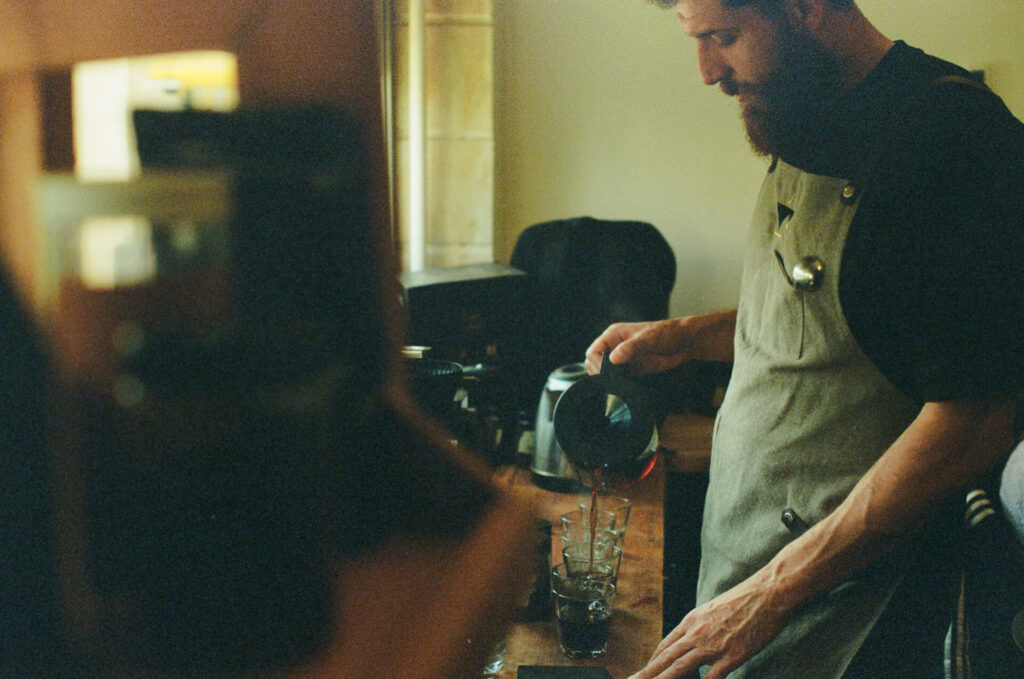
“Coffee is the seasonal seed of a tropical fruit. The amount of lives that coffee captures from crop to cup—whether it’s the landowners, harvesters, pickers, processors—so many hands touch coffee before you come into a specialty coffee store like Būn and order a cortado. Laysat boquleyat, wa laken heya thamret fakha estewa’eya.”
What brings all these disparate parts together, makes them run smoothly and convalesce, according to Omar, is an excellence in work ethic, or the Islamic concept of al-ihsan—an idea that covers the well-intentionality of all those concerned, and the conscientiousness that every worker puts into fulfilling his role and handing it over to the next part of the machine. It is clear that Omar is a philosopher at heart, someone who has rigorously deconstructed and reconstructed the small everyday concepts and actions we do on a daily basis, fitting them into an overarching metaphorical worldview.
“The café is an ecosystem that breathes. You get to learn guests and preferences and people. There’s a very social, human element—being a part of the café. And in it all, the barista is like the maestro; he is the conductor of the room and the music and the pace.”
After some foray into the business world as a consultant, Omar eventually visited his brother, who had moved back to Egypt, and they got to talking about pursuing passion and the happiest moments of Omar’s life: their early morning coffee conversations. Omar wanted to bring something like Dark Horse to Egypt.
“Bro, here’s the grinder, here’s the last bag of beans I have… go make yourself a coffee. What you’re looking for doesn’t exist here,” Ahmed Nazmi explained to him patiently, throwing the ball in his court.
And so it began.
In a funny tale of one brother telling another “let’s jump,” and the other responding with “how high?”, both founders set out to learn the ins and outs of coffee and coffee-making. What makes Būn different from any other coffee shop, what elevates the brothers’ retail business Cairo Coffee Collective beyond just a platform to source amazing coffee, what makes Seeds and Routes the most interesting coffee wholesale provider today, is the conscientiousness with which the brothers set out to learn the profession from A to Z.
In order to bring the specialty coffee culture to Cairo, they began to learn coffee as a trade, studying all forms of coffee and getting schooled in the CQI—the coffee mogawda grader—which they then brought to their lab to certify their roasting process.
“Imagine the CQI as the sommeliers of the coffee world. Coffee has varietals. Where wine has a little over 800 volatile aromatics, coffee has over 3,000. In terms of complexity of flavor, there is so much more to be had in coffee. All of this we had to learn in order to be versed in coffee.”
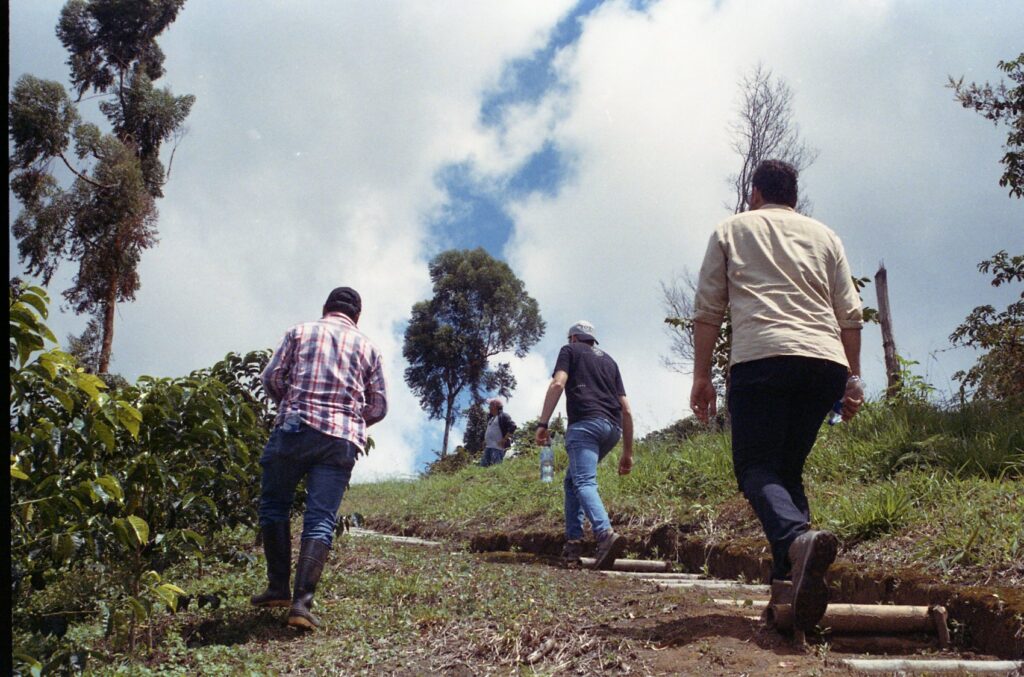
After getting certified, the brothers went on to push their product at every coffee connoisseur they knew in order to expand the reach of their coffee endeavoue. In the vein of “you’re only as good as your raw material,” the Nazmi brothers became obsessed with finding the perfect bean suppliers for their flat whites and macchiatos.They sourced coffee from Antwerp and London and eventually regularized their operation. At about the same time they opened their shop, Omar had a conversation with his brother on sourcing:
“Ahmed, look where Ethiopia is, look where London is—why are we not going directly to the source?”
It was an obvious question, but one that would change the authenticity of their product.
Thus, they found a supplier in Ethiopia that seemed promising and emailed him.
“We saw the farm and the people; the coffee tasted amazing, but we didn’t have money to buy a container, so we had to buy LCL (less than container load). We served it to our customers in Cairo, and they loved it. From that day on, we decided to buy coffee from a coffee-producing country and deal with the farmer himself. Otherwise, we will not serve it. It is good coffee because el masader fiha kheir.”
A piping-hot Mateo arrives, the second of our tasting quest.
“This one is more acidic; it has more punch to it. As it gets colder, it will open up. In general, as coffee cools, you can start to discern what is going on underneath.”
I taste it and am met by a classic, almost velvety flavor. More so than other coffees I’ve tasted, there’s an earthiness to it that reminds me of home. I note it as one of the best coffees I’ve had in a long time.
“Tell me about the logo.”
“As you can see, it’s a cup of coffee, but it’s also a V60 pourover set. It says bun ‘ب’ and ‘ن,’ and if you look at it closely, you can see they are inverse pyramids. In the negative space, it’s all a dot, which I think is quite poetic: the dot is the beginning and end of all things.”
Around five to six family members work with the Nazmi brothers, and the rest of the team is “like family,” he explains to me. “They’re all invited to my wedding.”
“Our goal with Būn was: if anybody walks in, let’s make sure they leave feeling good, and do whatever it takes to accomplish that.” Omar outlines his strong emphasis on customer care that goes into the training of each employee. This wasn’t institutionalized in a formal way, but happened through osmosis, he explains.
“Būn has less than a 1% rate of losing people, and many of the young team that started now hold big managerial posts. I would ask them questions like: ‘Smell this—what colors do you see? How do you feel when you smell this? What kind of emotion is tied to it? Does it remind you of a memory?’ They looked at me as if I was a crazy person…We’ve built a community. It’s become like Frankenstein’s monster—it’s much bigger than anything I’ve ever imagined it could be. I always say it’s ‘small shop, big dreams.’”
Omar was not good at formalizing training procedures—he is still learning to do this—but it is clear that his attention to detail and hands-on approach has greatly contributed to the intuitive and friendly culture in Būn. Whether you have only been there once or gone a million times, you will be treated to free coffee, testers, warm smiles, and a personal touch that cannot be quantified.
“Our hospitality manual—when I talk to new staff—the narrative that I lead with is this:
‘Imagine you are walking in the desert on a cold night. As you walk, you see a group of people gathered around a fire. You go, you say al-salam alaykum, and they invite you to sit down. When you sit down, the fire does not ask for your permission in order to keep you warm. By function of it doing what it does, you will be warm. That is how we want to treat people.’”
Other than Bun, CCC, and Seeds & Routes, the Nazmi brothers are also the brains behind the coffee offerings at Breadfast, the rising delivery startup.
“We used to sit in my parents’ basement next to the roasting machine and think about how we’re gonna take over the world and we would order makhbuzat in 2021 from a company called Breadfast. They always came on time. One day the guy came late and he wouldn’t take money for his order or a tip. So we wrote an e-mail to info@breadfast.com. You know what pairs really well with pastries? Coffee.”The CEO–Mostafa Amin–replied to us, and so we began to build their coffee program.”
The brothers had a lot of expertise and wanted to work, so they trained the first 30-40 Breadfast baristas and helped set up their first shop and coffee program (where the coffees will come from, what is in season…etc). Today, Breadfast delivers everywhere, with several Brick and Mortar chains.
“So, how do you make a really good cup of coffee?” I ask Omar finally, wanting a small dose of the secret to the trade.
“A good cup of coffee starts and ends with good intentions. I’ll go back to a great barista, attitude-wise, with shitty coffee any day, over a poor barista, attitude-wise, with the best coffee. If you happen to have both, I’ll always come back.”
My conversation with Omar has been illuminating and inspiring. As I reflect on it, I begin to see how big and small the world really is. How history, culture, and authenticity are interconnected.
“You wanna know a secret way to do things at Bun? You call the landline. You tell them I will be there in 10 minutes and they’ll have your drink ready for it. We never advertise it but people who know, know,” he shares conspirationally, ending the conversation on a light note.
You heard it here first.