 Hedayat Reda
 “Truly I say to you, unless you turn and become like children you will not enter the kingdom of heaven” (Matthew 18:3)
It is early evening. Lily Farid and I sit in the left wing of her sprawling white salon on a comfy leather couch in her apartment in Zamalek. I sip a cup of steaming green tea; she talks.
“God was with me throughout the whole process. You’re gonna do it. I’m gonna be with you, I’m gonna help you, I felt Him say to me. I learned to surrender and trust God. When you try to honour Him, He honours you.”
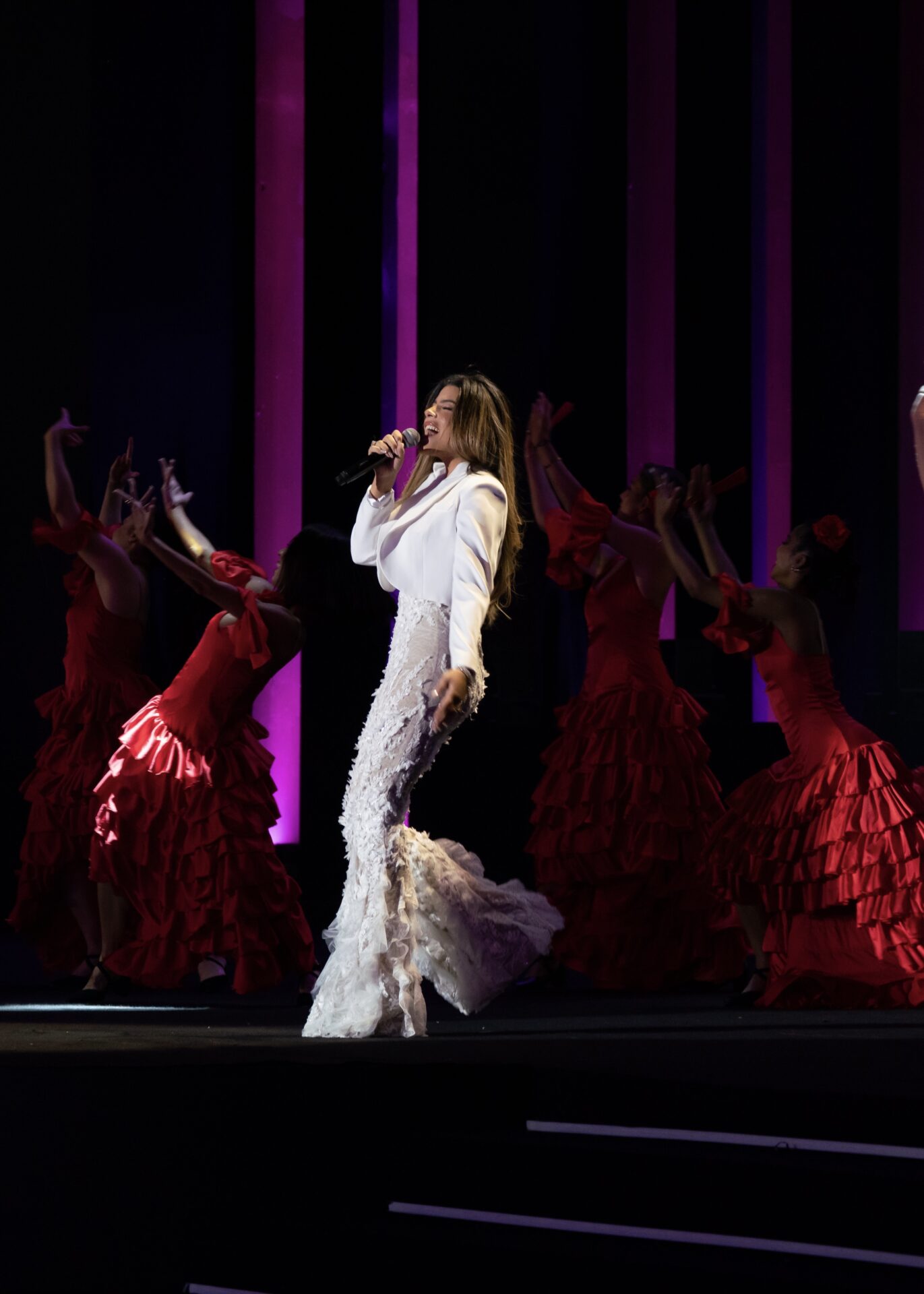
Lily is referring to her jaw-dropping and record-breaking musical performance at the 2025 El Gouna Film Festival—and the backstage blunder that almost ruined it.
“After all of these rehearsals my jumpsuit didn’t close. The zipper tore, leaving my whole backside exposed,” she recounts. “The whole time I was singing, I was dying on the inside. If there’s a camera behind me or an odd angle…I didn’t know what to do.”
But her crisis was invisible to viewers. None of us watching knew that this calm, radiant performer was inventing a whole new choreography on the spot—one without twirls or flips—to avoid exposing her back. Nothing in her smile or soaring vocals betrayed the quiet fear she carried while belting her heart out.
“But the show had to go on. The show must go on,” she declares steadfastly, embodying the resolve she personified on stage and the words her mother, Dr. Mona Zaki, supported her with throughout her career.
This relentless work ethic and instinctive adaptability are what make Lily Farid unforgettable—a daring audience enchantress and a powerhouse vocalist, she is unafraid to give everything to her craft. If you’ve seen her musical renditions, especially this most famous one at the 2025 El Gouna Film Festival Opening, you know that every second of the 13-minute show was charged with purpose and energy, the kind that makes you want to sing along and imitate her multilingual magic.
“If you’re gonna do something, either do it right or not at all. Don’t half-ass it,” she says, letting her perfectionism shine through to me, as she begins to recount how the groundbreaking performance came to be.
“I was approached by Amr Mansi—CEO of El Gouna Film Festival—for the opening ceremony. I knew I wanted the performance to be purposeful as well as entertaining, so I wanted a storyline that accompanied the music. I asked myself, What is the most important thing in life? That you find your purpose. And so the story began to take shape…”
The “story” follows a young girl who becomes corrupted by the modern world, enacted on stage by Lily and Aisha al- Suwaidi, as well as a host of dancers. Through love, friendship, and work, the protagonist becomes removed from her inner voice, and the most sacred connection with her child self. In a multilingual medley, she eventually finds her way back to herself, reuniting with her inner child and her true calling.
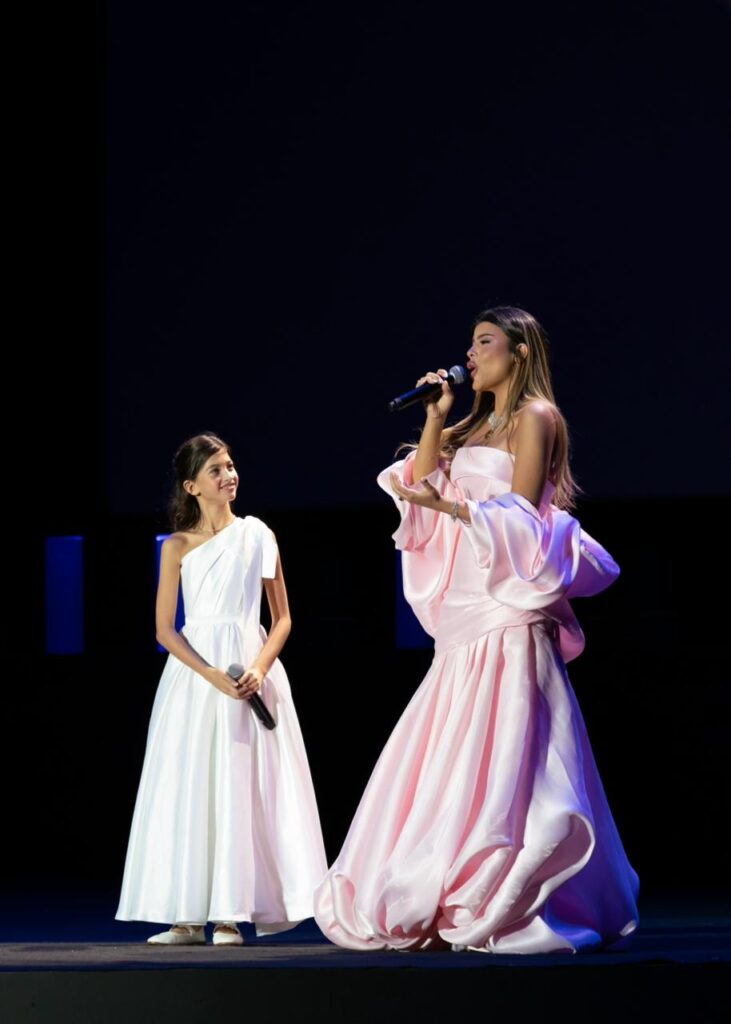
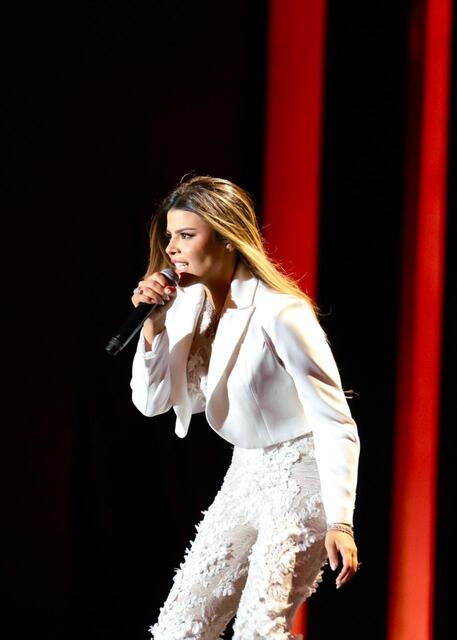
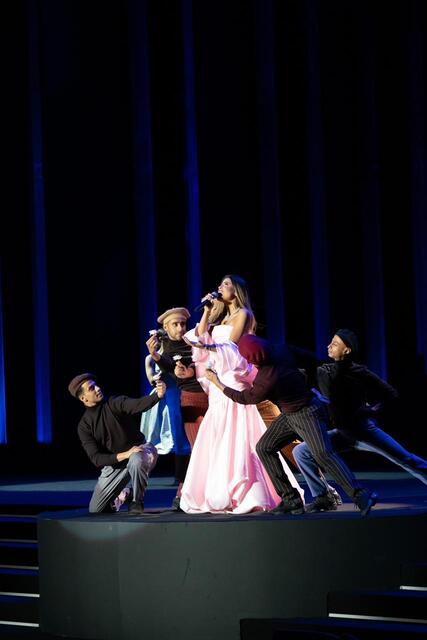
“Eight songs and seven languages make up the medley. From the Italian Nessun Dorma to the two Arabic songs—El Hekaya Mabtenteheesh and Zay Ma Heya, Hebaha,” Lily explains, breaking down the medley she built with master composer Mohamed Nawara . If you were watching, you’ll remember how Lily is swept up by love in a tender rendition of La Vie En Rose, then whisked into escapist joy in Volare and Magalengha, only to lose herself in the frenzy of work during Jai Ho. My personal favourite moment, however, is when she reunites with her child self in the iconic Shallow:
“Tell me something, girl
Are you happy in this modern world?
Or do you need more?
Is there something else you’re searchin’ for?”
The way her younger self joins her in this duet—hands meeting, voices merging—lingers with you long after the performance ends.
“When Lily first came to me, she told me she wanted to do a 10-minute track in different languages. The idea was very simple, but many challenges emerged,” Mohamed Nawara recalls. “One came when Lilly reached out to the Guinness World Record Team and was told she needed to add an extra language to qualify. This was two weeks before the event. We had already recorded the track, including the orchestra, and were ready to mix. We weren’t sure what we were going to do. Thank God, we found a Portuguese song similar to the Spanish one we had chosen and could insert it without disturbing what was already done.”

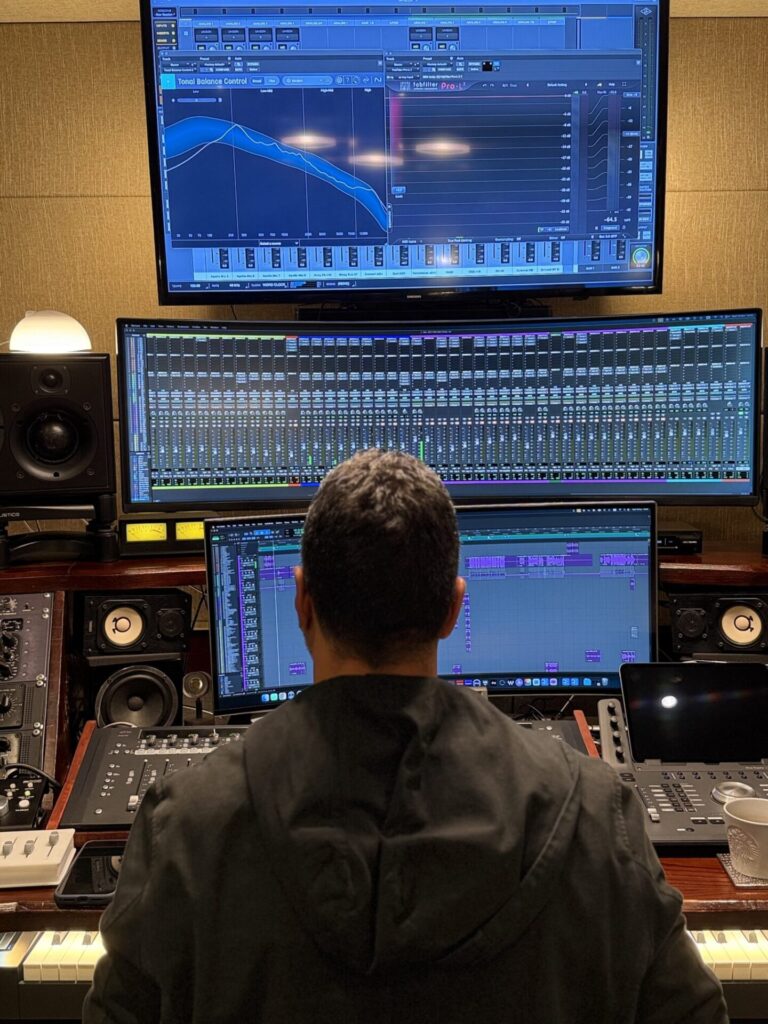
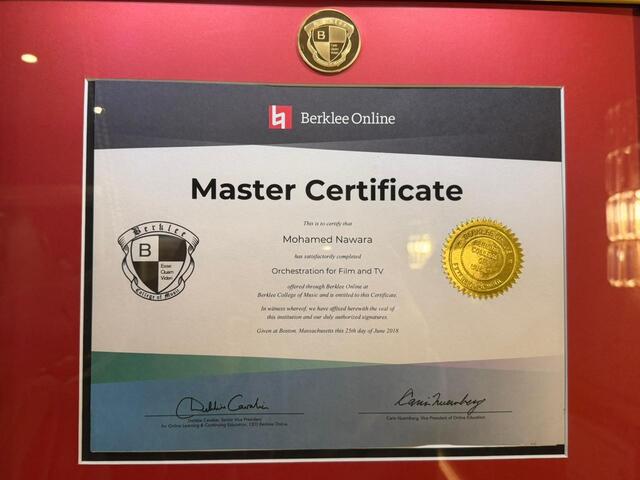
Nawara, who holds a Master’s Certificate in Orchestration and Film Scoring from Berklee—and whose work includes the PBS series Tutankhamun: Allies & Enemies and the Egyptian projects هو and الأيام—shows me what happens when two passionate artists collide, each pushing the other toward something extraordinary.
“Another big challenge was on the day of the performance,” he continues. “We had finished the track and mastered it in Spain, but during rehearsals in Gouna we discovered that the sound was a bit off, because of the wind. Then there was a moment when Lily had to change into her real performance dress, and she didn’t have enough time. So we had to cut and rearrange many parts of the performance.”
Through a mixture of wizardry, intuition, and sheer will, both of them, with support from stage director Amr Wadidi, worked to give the audience nothing but the best.
“We changed many of the arrangements for the songs. For example, in El Hekaya Mabtenteheesh we replaced the guitar with oud and added a beat. For the foreign songs, I added some kamanga and other sharqi influences.”
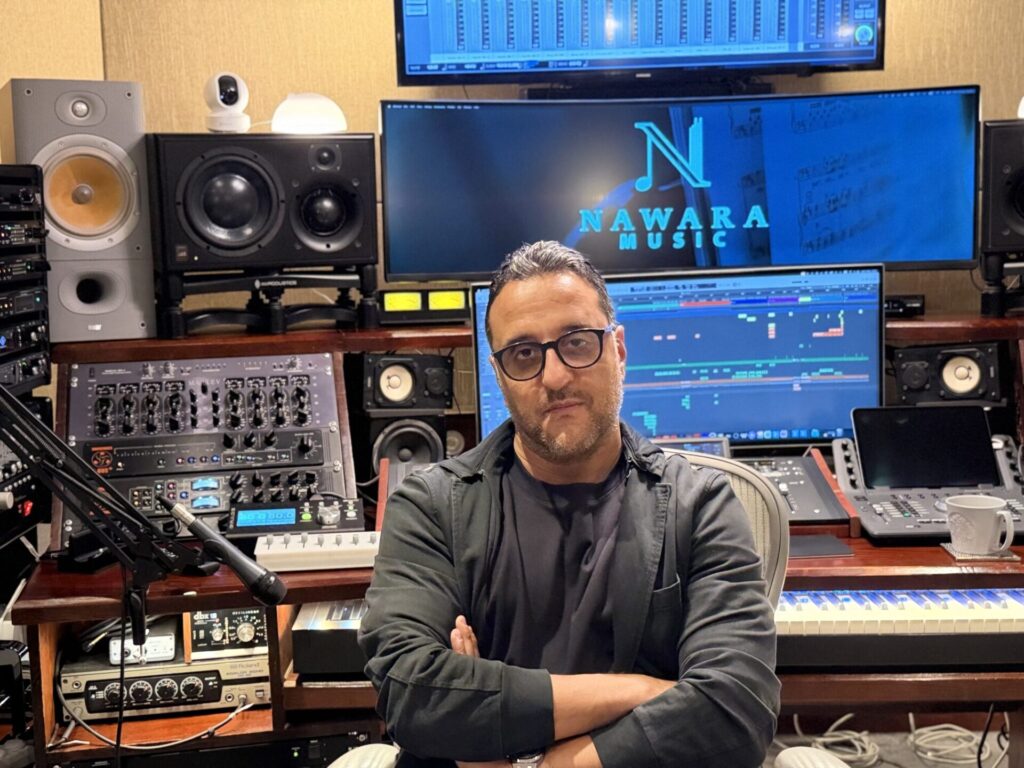
But the biggest challenge—the one they both feared—was how to ensure the audience wouldn’t lose interest over a 13-minute track.
“We added beat to a lot of the songs. Marco Edward, my assistant, really helped me tap into the younger generation’s pace and style, to keep everything energetic and lively. We wanted it to come alive,” Nawara says modestly.
For Lilly, the solution lay in emotion and choreography, making each phase of the narrator’s journey palpable—capturing the universality of film and the importance of GFF in Egypt’s cinematic landscape. Along with Hani Abaza, they worked tirelessly to bring life to the vision and wow the audience.
“I wanted this to push me to my limits. I was sick six or seven times during rehearsals, but I would still go to rehearsals even with a 39-degree fever.”
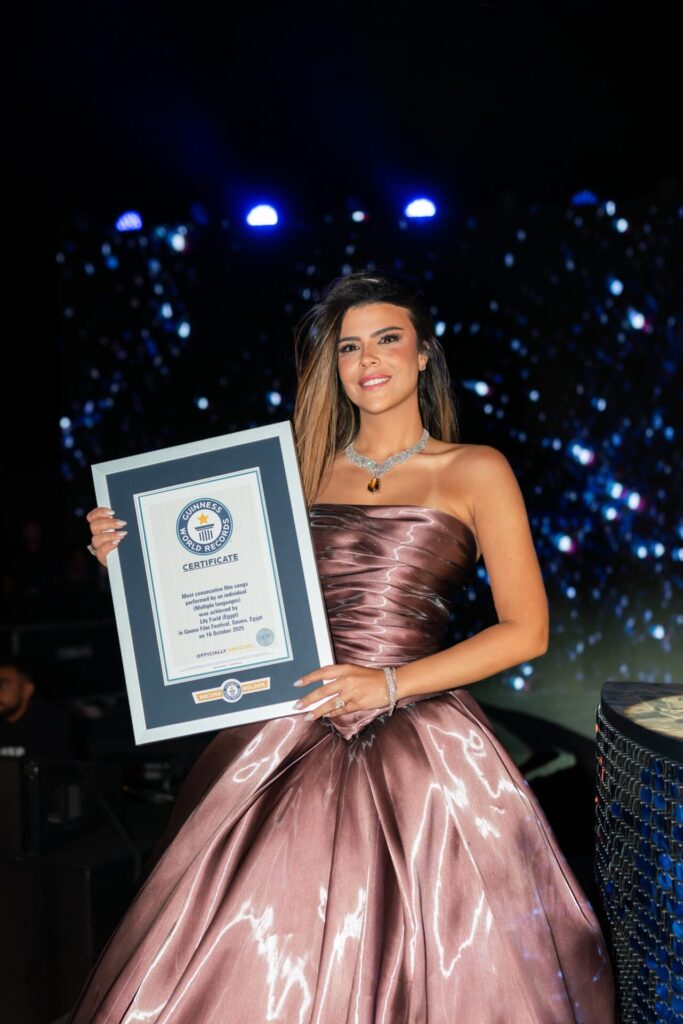
A team of more than 30 people—dancers, orchestra members, sound engineers, choir members, choreographers—came together to create the show that would go on to break a Guinness World Record for Most Consecutive Film Songs Performed by an Individual in Multiple Languages. Lilly’s performance at the GFF 2025 Opening Ceremony became one of the most talked-about shows of the year, a moment that cemented itself in the collective memory.
“Film is a universal language. I can watch a Korean movie where I don’t understand a word, or a Hindi film, or a silent film, and still feel moved and cry. It transcends,” Lily tells me, stating the deeper purpose behind the entire performance, one that resonated deeply with me.
“This performance opened up a new style of projects for me. I hope to one day leave a mark, a composer’s fingerprint, on the film industry– to be renowned for composing the soundtrack to an unforgettable movie, similar to one of my idols, John Williams. We have some stuff coming up for Ramadan and other fun things I’m very excited about,” Nawara adds, reflecting on how this collaboration has shaped what comes next for him and how it has brought him one step closer to realizing more of his dreams.
As I replay the scenes from the interviews in my mind, one message lingers long after our conversations end, like a truth I somehow always knew:
“When you look at the world through a child’s eyes you find what you truly love and what you truly want.”