 Flair Magazine
 By Menna Saad El Din
It was an unusually cool October night, and one of my best friends and I had just parked at the Pyramids and hopped onto the small shuttle bus that was going to take us up to Khufu’s Bistro. We were on our way to the latest edition of “The Kairo Sessions”, a creative séance orchestrated by the artist Kairo Lumumba and directed by the impresario Yassin Koptan. We were both, it must be said, quite excited.
“Do you feel the shift in energy?” my friend asked me, with an air of mystery in her voice, as the bus began its steady, slow crawl up the rise. A peculiar sort of magic began to assert itself. The Great Pyramids came into view, swelling against the horizon in an unimaginable vista, and as the sky was bleeding from a vivid azure into a deep, contemplative shade of dusk-blue, I had definitely felt something. It wasn’t merely quiet; it was as if someone had sucked out all the noise and bustle from the city around us. I felt a sudden, profound stillness, both outside and in.
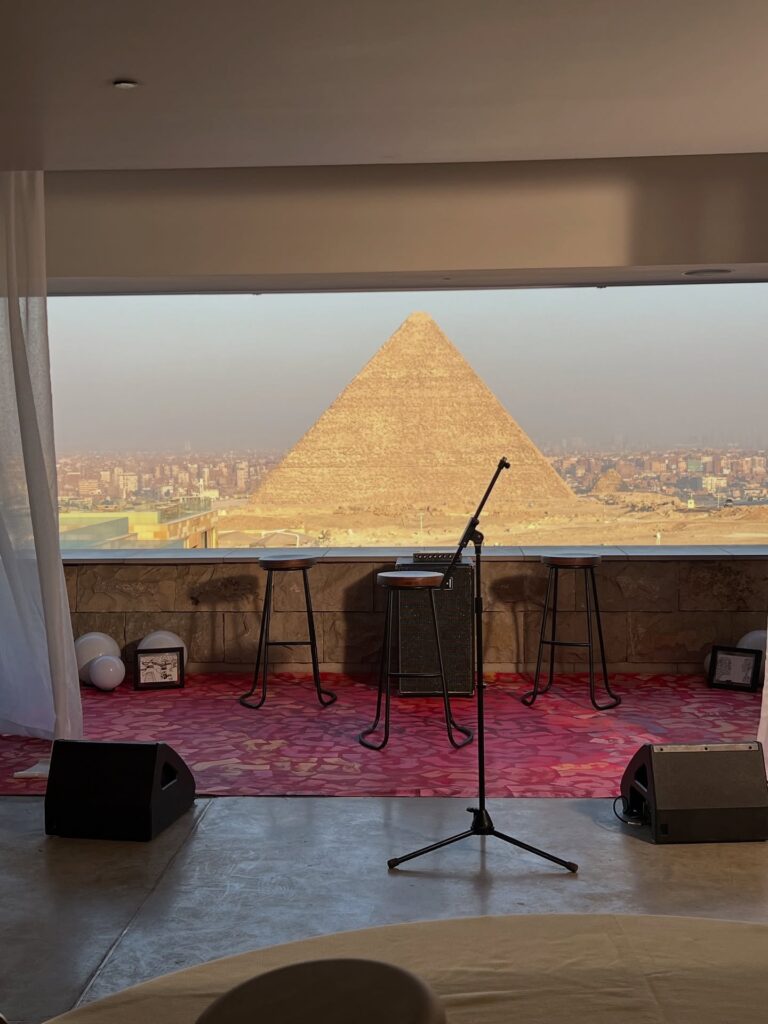
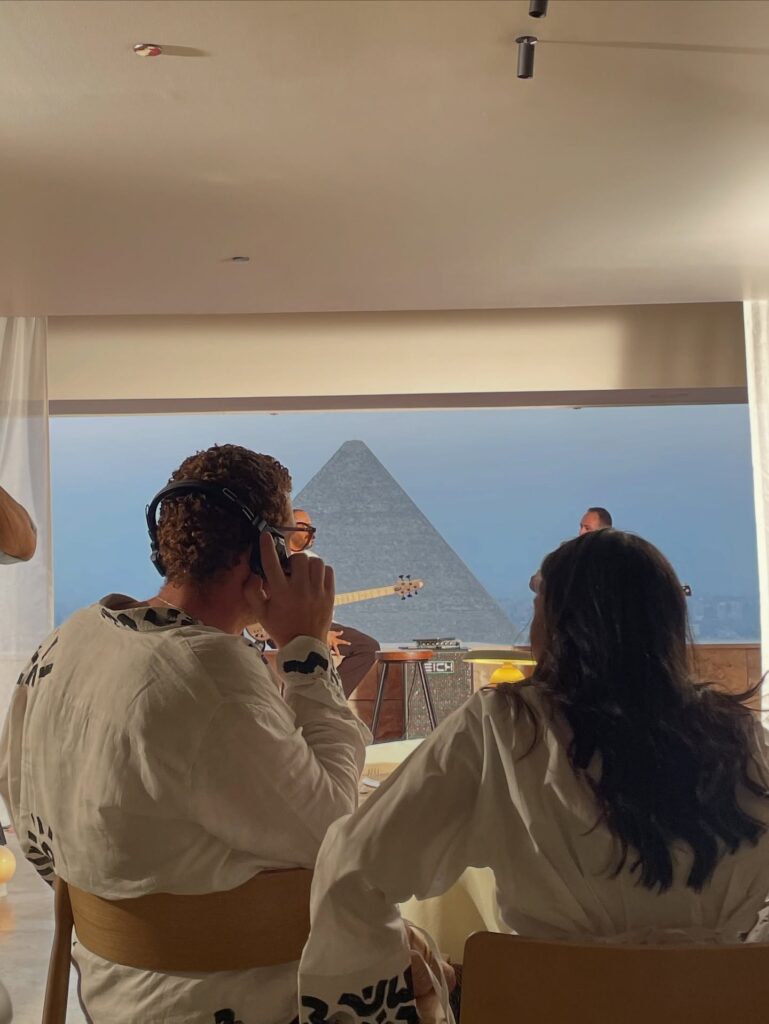
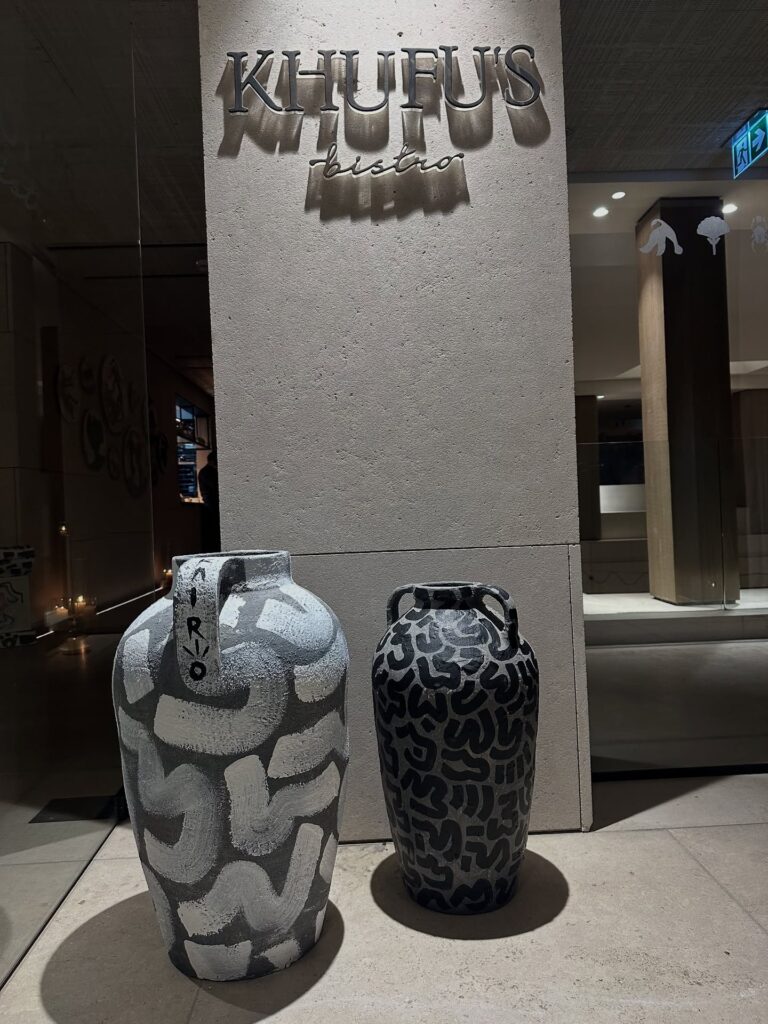
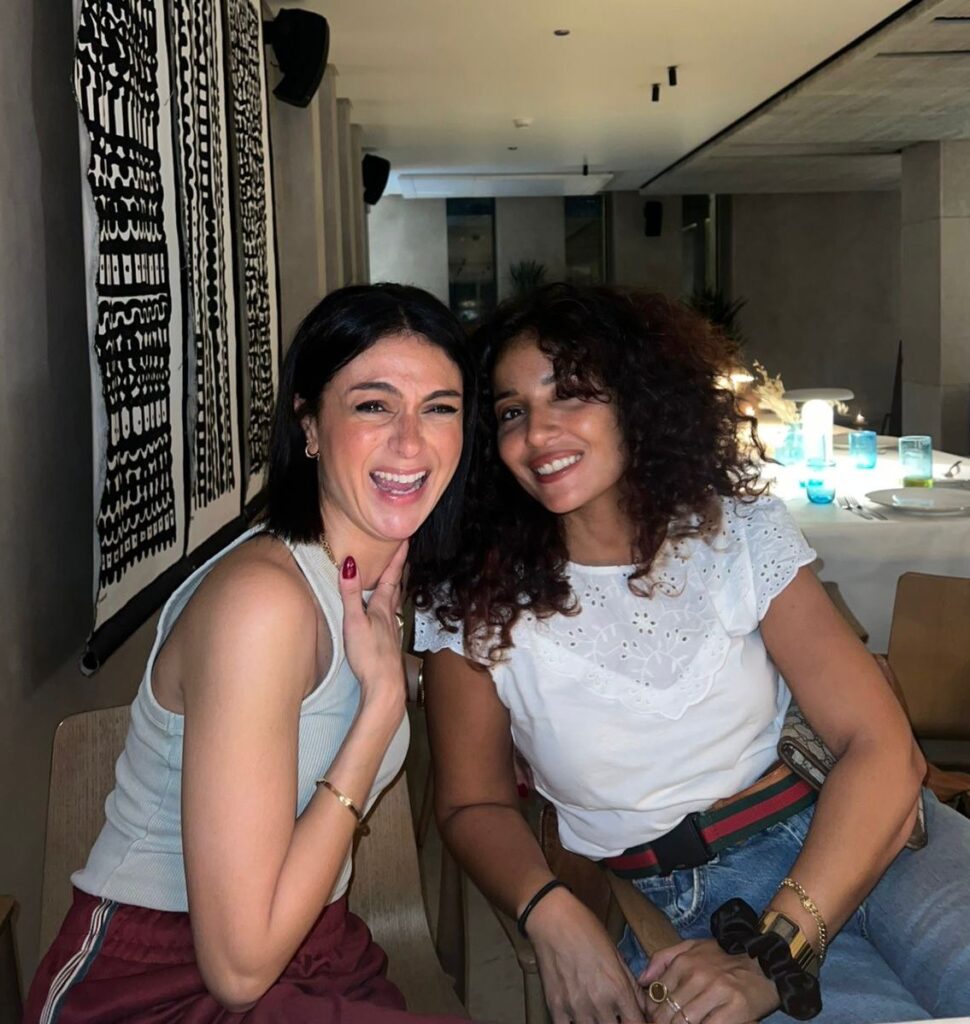
“Yes, I feel it,” I replied, settling my hand over my heart, the gesture perhaps a touch dramatic, but genuine. “A powerful quiet.” The Pyramids have always imposed a sense of mystical, ancient gravity, but tonight the feeling was amplified. It was the twilight hour, of course—sunsets are inherently theatrical, but sunsets framed by the eternal silhouette of these grand monuments are something else entirely.
“This is, after all, sacred ground,” I whispered, stating the obvious as if revealing a secret.
I had long admired Kairo’s evocative visual work, and my unfamiliarity with Khufu’s Bistro only heightened the allure. The invitation I had received also mentioned an acoustic set by a musician named Mira Bahgat, whose name I recognized, but whose voice I hadn’t yet been privileged to hear.
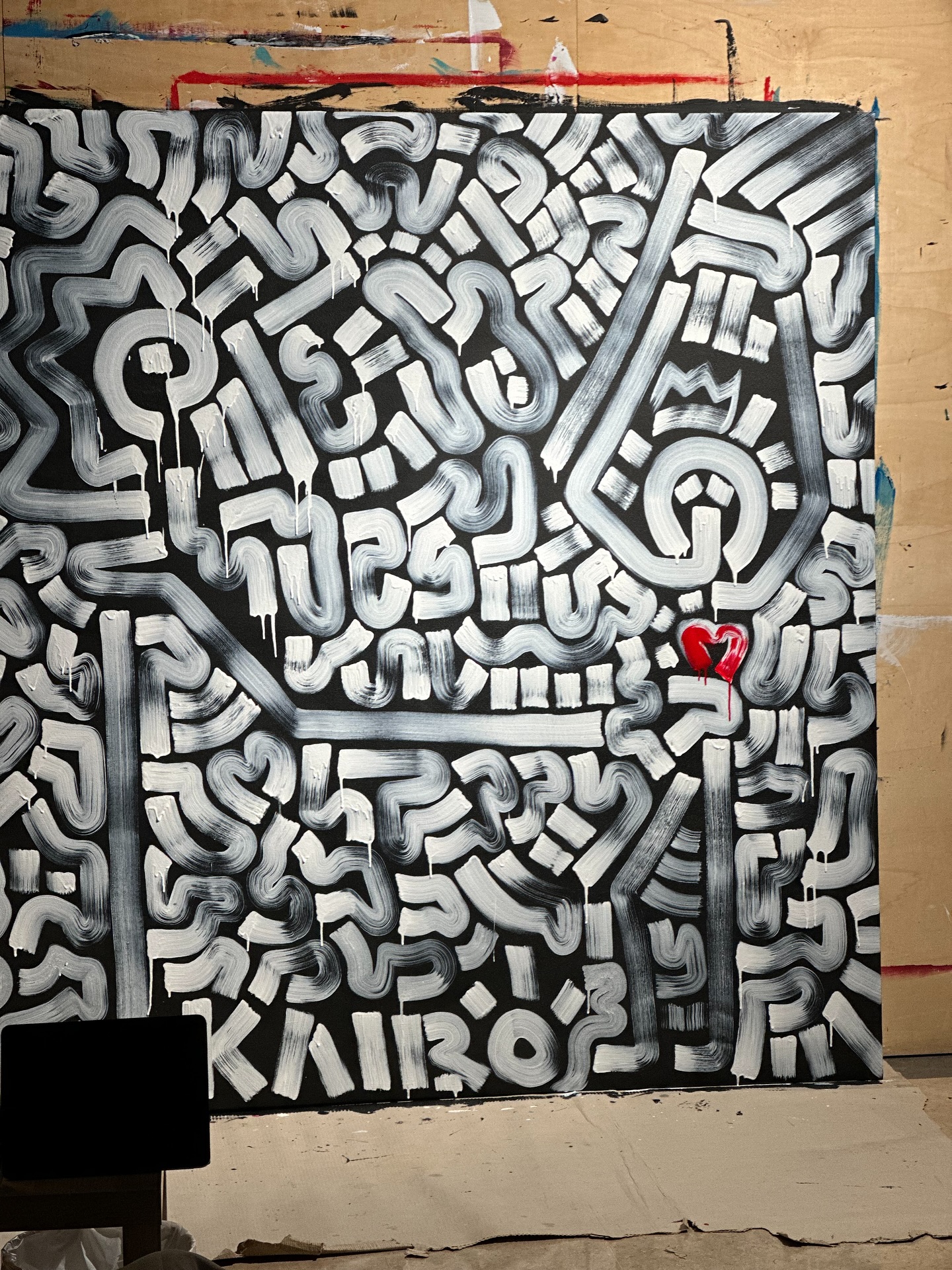
We finally arrived and stepped off the bus, beginning the final phase of our journey—inside the building and up the stairs, to the bistro’s uppermost level. As we walked in, we began to take in the set-up; the hallway leading to the main space was lined with candles, their flames trembling inside tall glass holders, casting a warm light. The artist’s work—from colourful canvases to smaller, glass-framed paintings and a series of hand-painted ceramic vases—was strategically placed throughout. The overall atmosphere was one of hushed, sophisticated intimacy, the tables illuminated by a soft, honey-toned light.
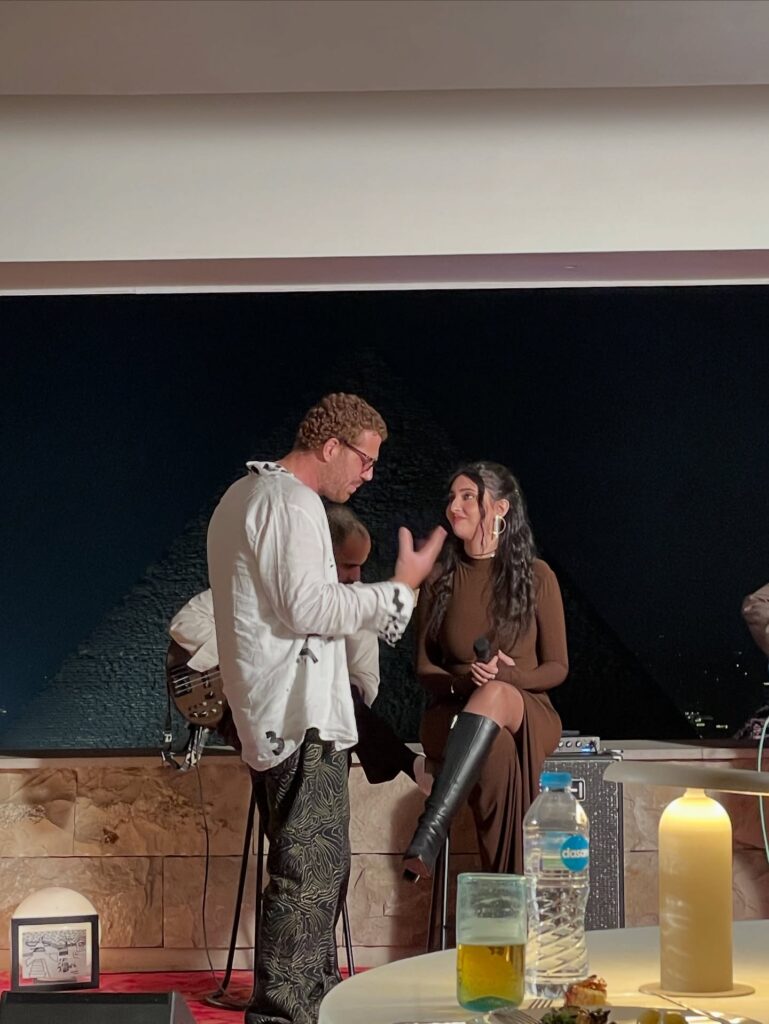
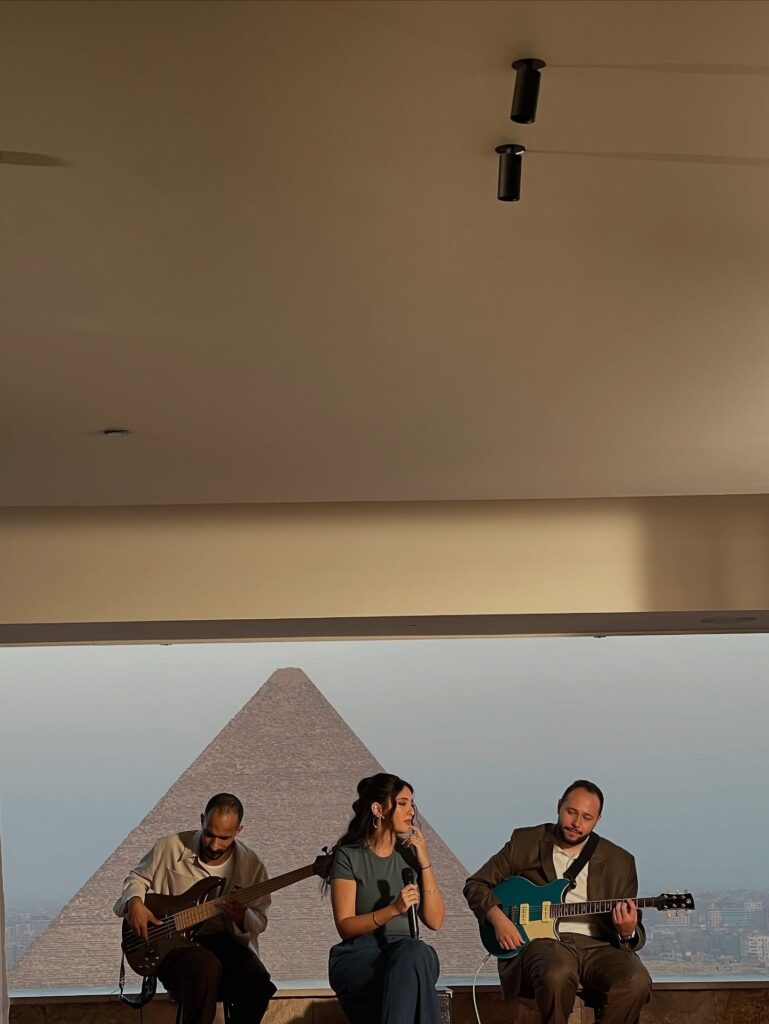
Inside, Mira sat poised on a wooden stool, her guitarist beside her, framed by a massive, unadorned window. The stage backdrop was the entire Giza plateau, a breathtaking panorama now shrouded in the deepening twilight. The scene was truly breathtaking.
As we were led to our table, Mira introduced herself to the room and began her set. She started with a song called “Send Me A Sign,” and the effect was immediate. Her voice—an exquisite cross between the wounded theatricality of RAYE (a musician she later confessed to idolizing) and the rich, complex depth of Yebba, with a certain haunting, raw-nerved quality reminiscent of early Jewel—was captivating. It dripped with emotional immediacy, carrying lyrics that felt shockingly vulnerable—like being handed the key to an unguarded diary.
After several of Mira’s soul-stirring songs, the musicians recessed, and the evening shifted to the culinary.
The dinner service was a parade of sharing plates, a thoughtful fusion of Mediterranean influences. They were accompanied by two types of excellent house-made breads, served piping hot: a golden, sesame-topped brioche, and a cloud-like, herb-dusted loaf, sliced like cake—both quite memorable. After a sampling round-table, the consensus favorites were the Black Baba Ganoush, a dark grey paste served with a marinated hummus and smoked harissa; the Greek Salad featuring a mound of warm feta cheese (a divine textural move); and the Ravioli, meticulously stuffed with beef brisket and served with a provocative roumi cheese foam—a brilliant local flourish.
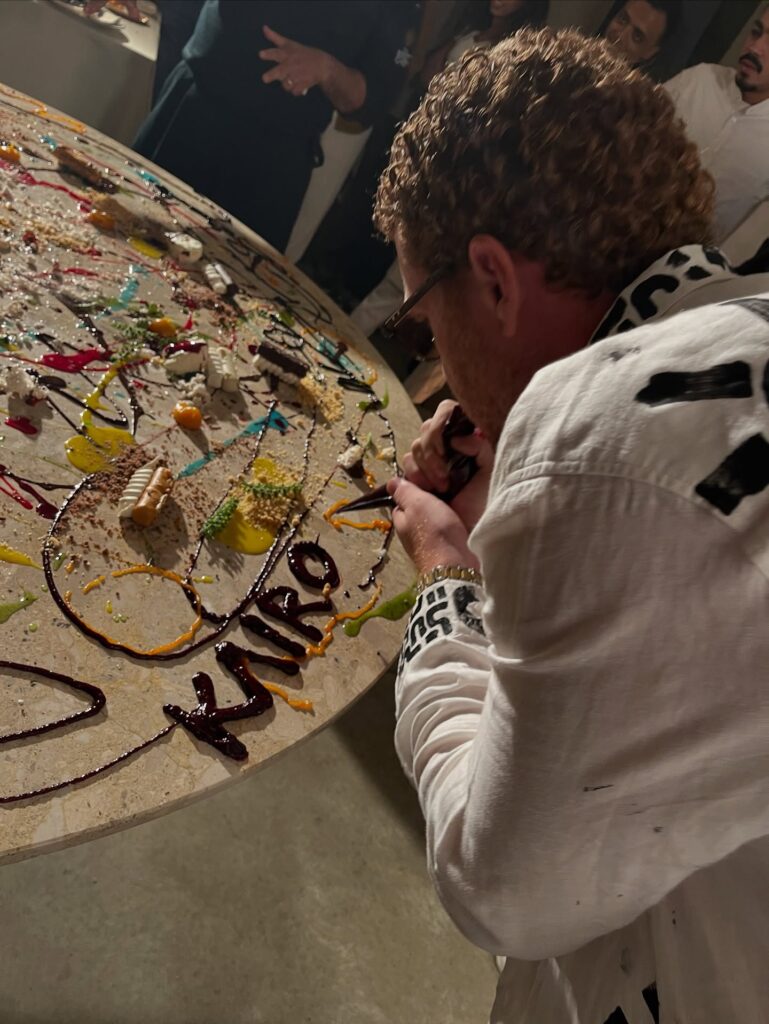
The final act belonged to Kairo. Taking the mic, he announced that, in collaboration with the world-renowned Executive Chef Mostafa Seif of Khufu’s, he would create an original piece of art from dessert—a first for both of them. Kairo then began to circle a large central table, treating it as a final canvas, “painting” with a variety of dessert ingredients precisely placed by Chef Seif. When Kairo finally stepped back, the large central table, formerly a pristine marble-top, had been transformed into a vibrant tableau: an expansive, edible topography where dollops of ice cream, in various shades, sat beside rivers of glistening syrups, and covered in crushed nuts alongside crystalline caramel pieces. The night concluded with Mira’s return, featuring more soulful originals, and a deeply felt cover of RAYE’s “Suzanne.”
My friend and I, our senses still humming with the evening’s symphony of sights, sounds, and tastes, said our farewells and began heading down. We caught the next shuttle bus, its familiar rumble now a gentle return to earth, as we began our slow descent off the plateau. The winding road unspooled before us, and once again, the colossal silhouettes of the Pyramids loomed, against the infinite velvet. This time, however, the sky was not bleeding twilight hues but was a deep, inky black, sprinkled with an array of shimmering stars. The city lights, a blur at a distance, began to become more defined as we approached.
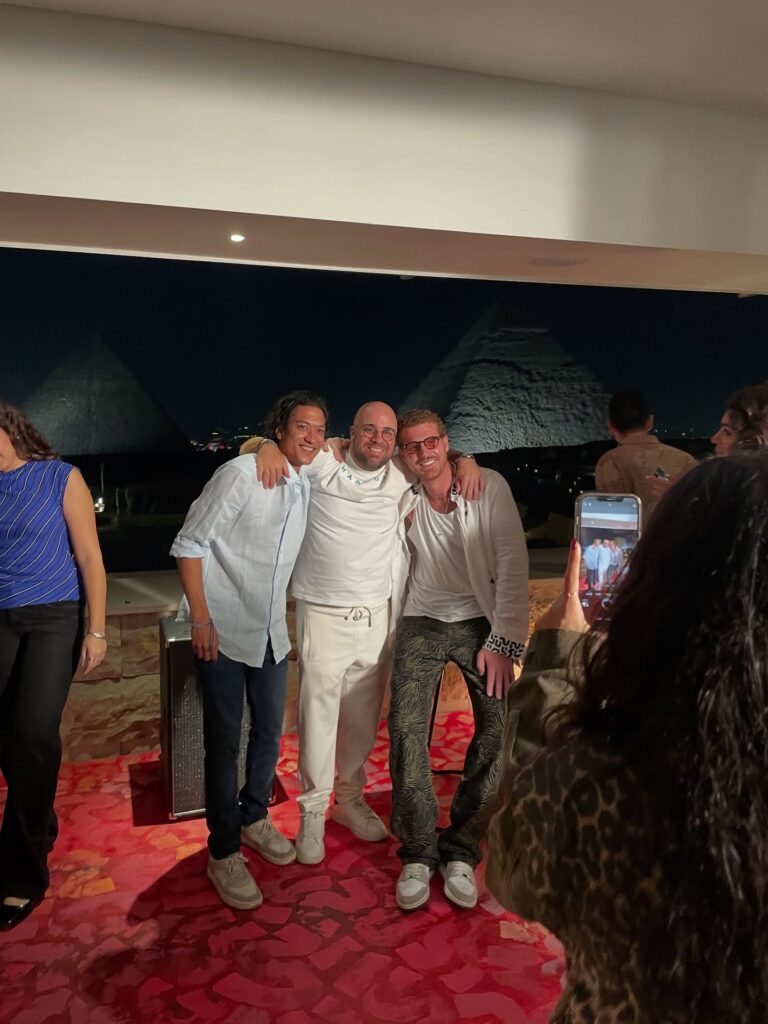
We settled into the car, the engine purring to life, and began our final journey back down to the city. The subtle hum of civilization, once muted and distant, began to press in, a low thrum against the lingering quiet of our recent experience.
“Do you feel the energy shift?” my friend asked me again, her voice a soft echo of our earlier ascent.
And I did. The noise and buzz, the restless pulse of Cairo, was indeed back on the outside, a familiar current regaining its full, vibrant force. But within, a strange, resilient calm persisted. While the evening was a louder, more colorful mixture of art, music, and cuisine, the stillness of the plateau and the ancient gravity of the Pyramids had left a lasting “do not disturb” in me, even if for a little while.
Mira’s song “Send Me A Sign” mentioned in the article is out on all streaming platforms: https://linktr.ee/mirabahgat and her new album will be coming out in January 2026.
You can follow their Instagram accounts: @kairolumumba @mirabahgat & @khufus.bistro