 Yara Lotfy
 At Milan Fashion Week, the handbag rarely plays second fiddle. For Spring/Summer 2027, designers pushed accessories beyond the role of finishing touch, experimenting with proportion, texture, color and unexpected ways of carrying them. Some houses revisited familiar signatures, while others treated the bag almost like jewellery: decorative, expressive and impossible to overlook.
This season’s message is less about one definitive shape and more about personality. There are bags to carry close, bags to pile together, bags that barely fit the essentials and others designed to hold everything.
Here are the styles that caught our attention across Milan’s SS27 runways.
Prada: A New Proportion
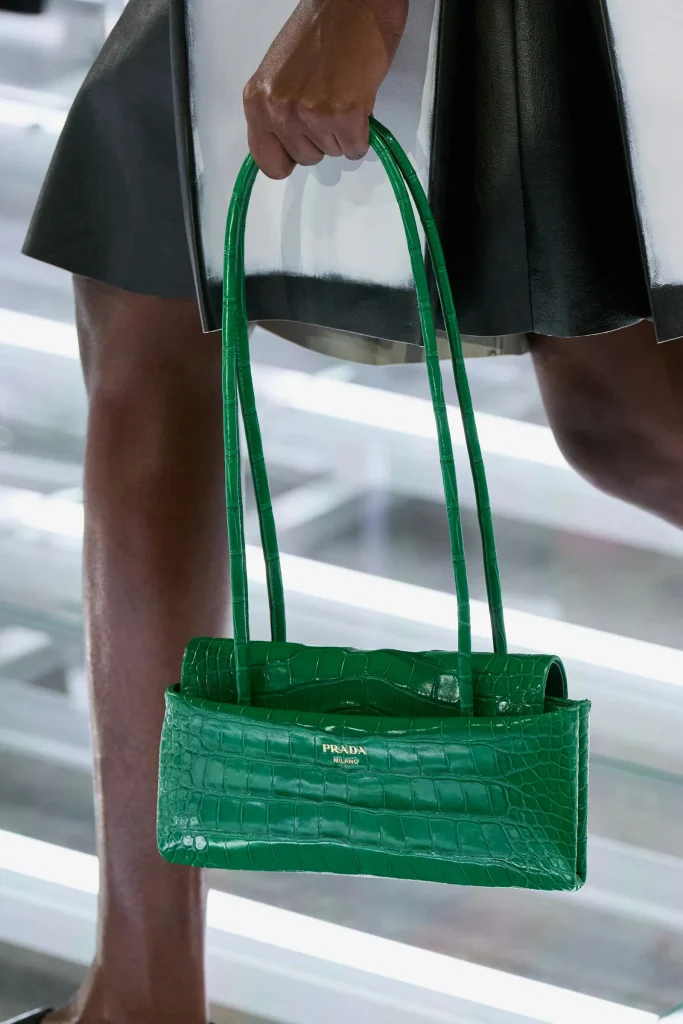
Prada opened Milan Fashion Week with a collection centred almost entirely around the skirt, but the accessories were equally deliberate. Miuccia Prada and Raf Simons played with elongated handles, flattened constructions and compact proportions, giving traditional handbag shapes a distinctly contemporary finish.
Colour also took a starring role, with vivid green, red and purple cutting through the collection’s more restrained tones.
Fendi: The Baguette Gets a Makeover
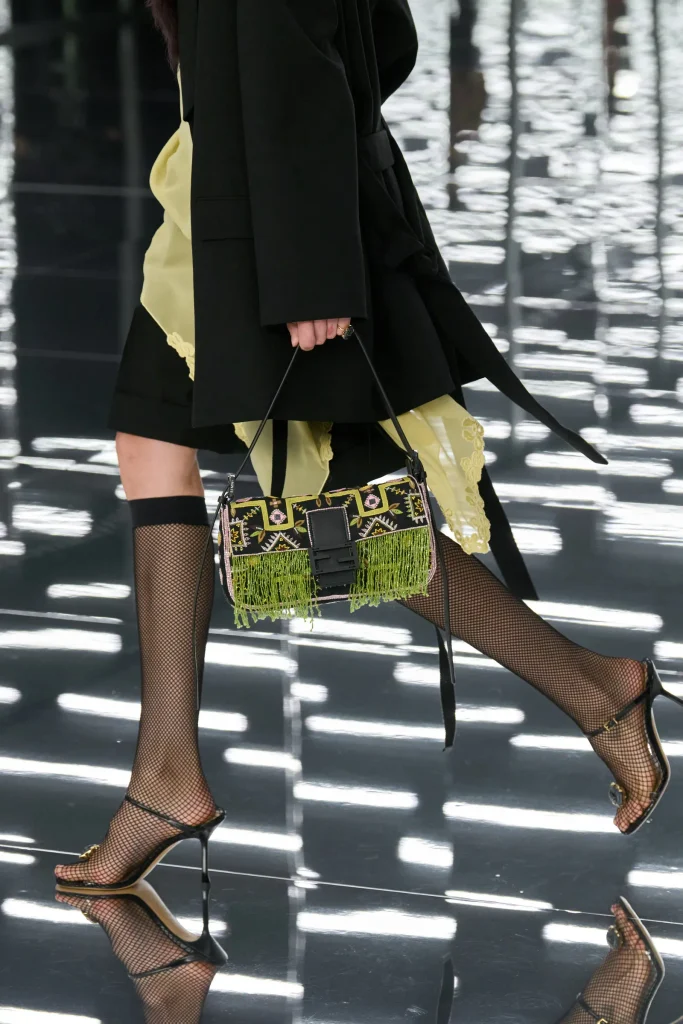
Few handbags have as much cultural currency as Fendi’s Baguette, and for SS27, Maria Grazia Chiuri gave the house classic a decidedly decorative treatment.
Fringe, embroidery, sequins and intricate surfaces transformed the familiar silhouette, while longer straps introduced movement. Rather than stripping the icon back, Fendi leaned into its expressive side, making a case for handbags that are meant to be noticed.
Marni: More Is More
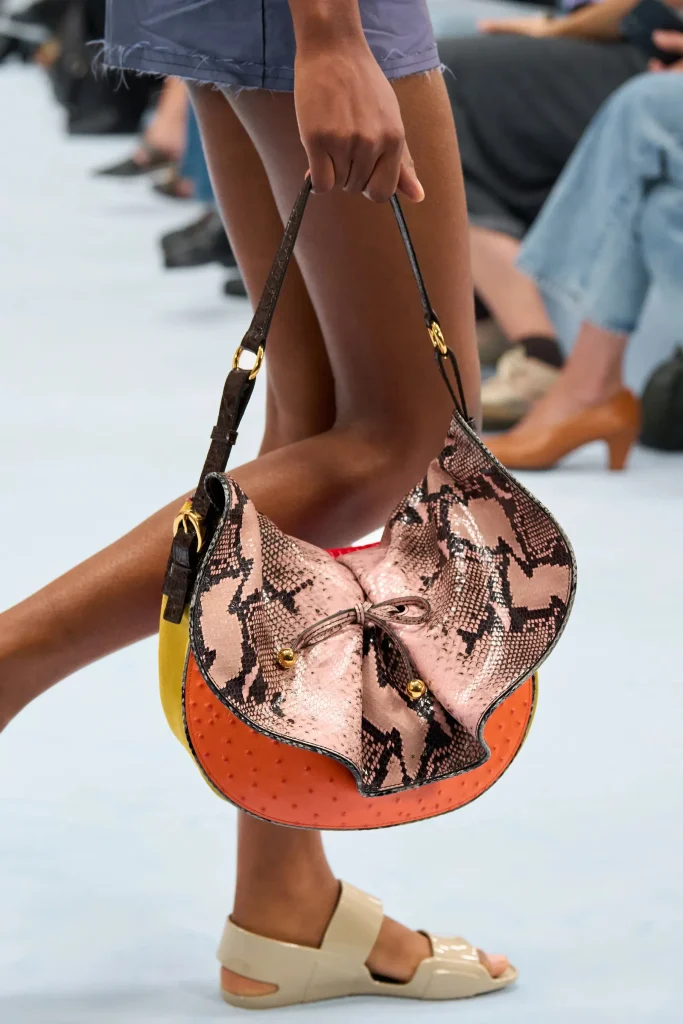
At Marni, Meryll Rogge approached the handbag with a playful instinct. Several smaller bags were grouped together and worn almost like oversized charms, creating a layered accessory moment where colour, texture and shape collided.
The idea feels particularly relevant for a season increasingly interested in styling rather than strict coordination: why settle for one when several can become part of the look?
Max Mara: The Bigger, The Better
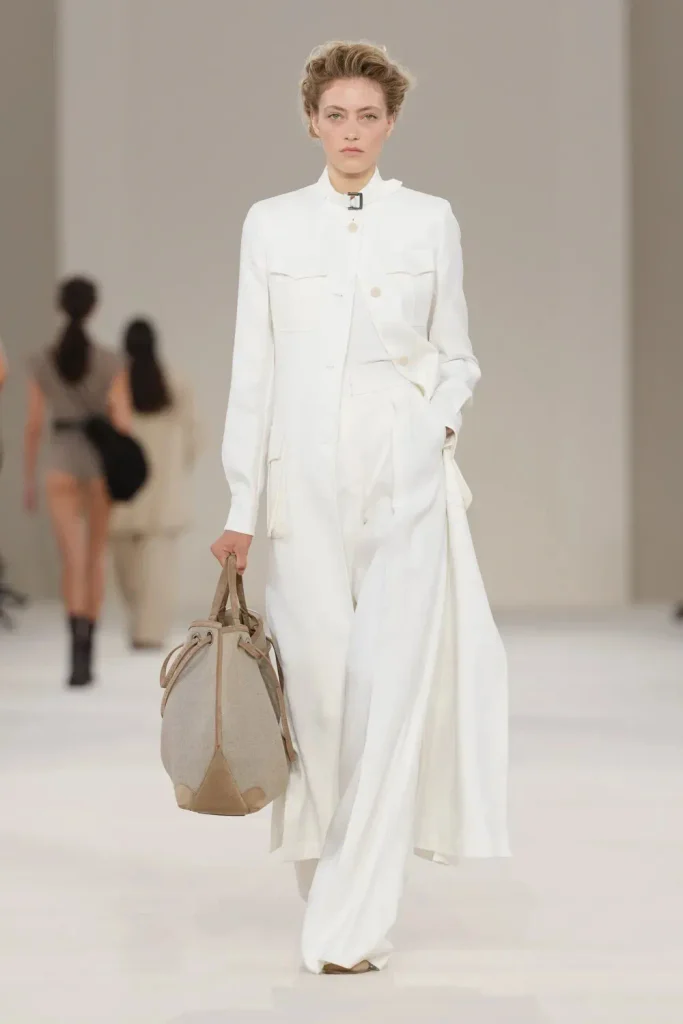
Max Mara took the everyday handbag and dramatically expanded its proportions. Soft, slouchy silhouettes replaced rigid constructions, appearing in shades of brown, black and sandy neutrals.
The result was practical without feeling ordinary, a generous bag that looks designed for real life, only considerably more polished. It sits comfortably within Ian Griffiths’s wider SS27 exploration of utility and refined functionality.
Roberto Cavalli: A Little More Drama
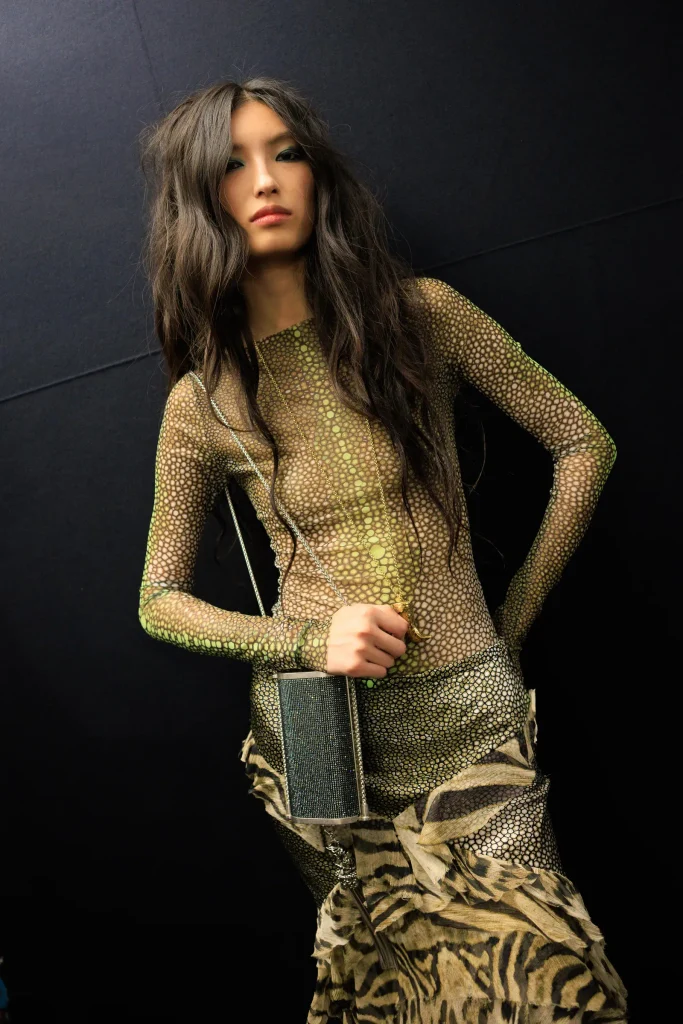
Roberto Cavalli had no interest in quiet accessories. Compact pouches were finished with animal-print straps, tassels and vivid details, echoing Fausto Puglisi’s larger celebration of the house’s exuberant vocabulary.
The collection itself drew heavily on Cavalli’s archive, revisiting animal prints, rich textures and the unapologetic glamour associated with the Italian house. The bags followed suit: small in size, but deliberately loud in attitude.
Gucci: Heritage, Reworked
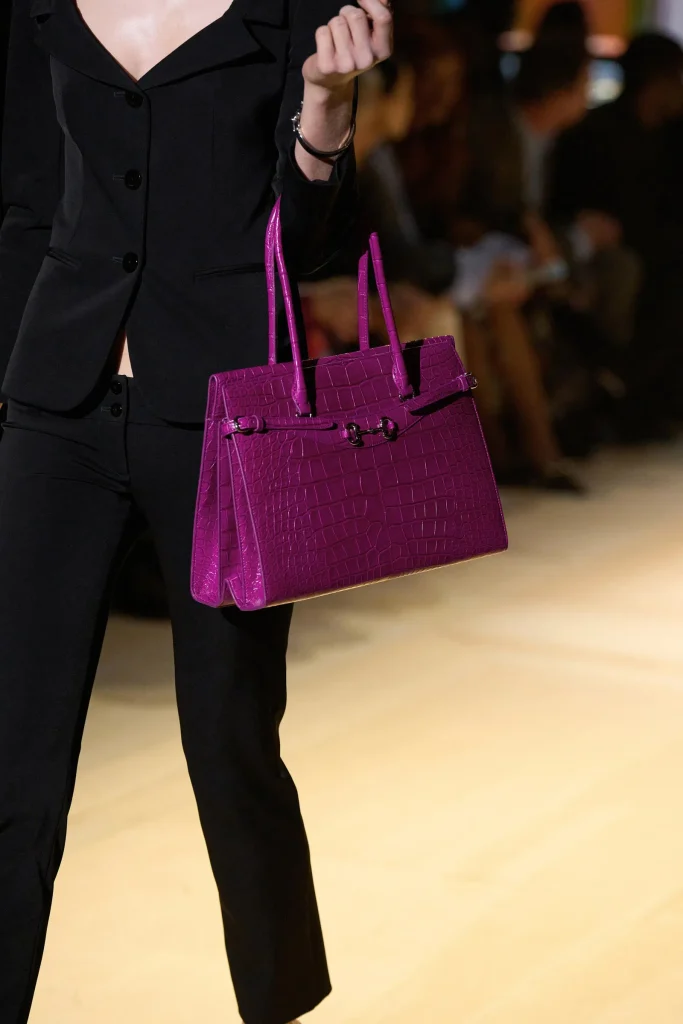
For his second Gucci runway, Demna looked deeply into the house’s visual vocabulary while continuing to reshape it for the present.
A striking fuchsia shade brought freshness to some of the more recognisable forms, proving that heritage does not necessarily mean looking backwards.
Bottega Veneta: Woven, Enlarged
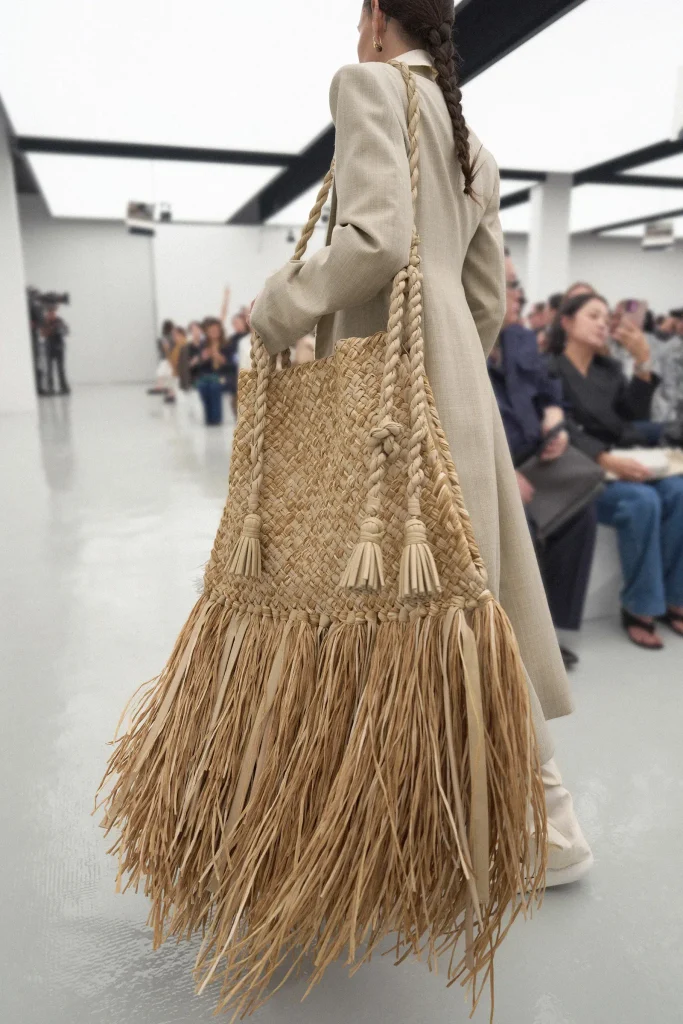
Bottega Veneta continued to explore the possibilities of its signature woven language, but SS27 brought a lighter, more relaxed interpretation. Oversized leather and raffia totes appeared alongside smaller woven bags and compact clutches.
The appeal lies in the texture. Rather than relying on heavy hardware or obvious logos, the bags let craftsmanship and construction do the talking, a direction that feels particularly at home with the season’s renewed interest in artisanal detail.
Dolce & Gabbana: A Wardrobe of Bags
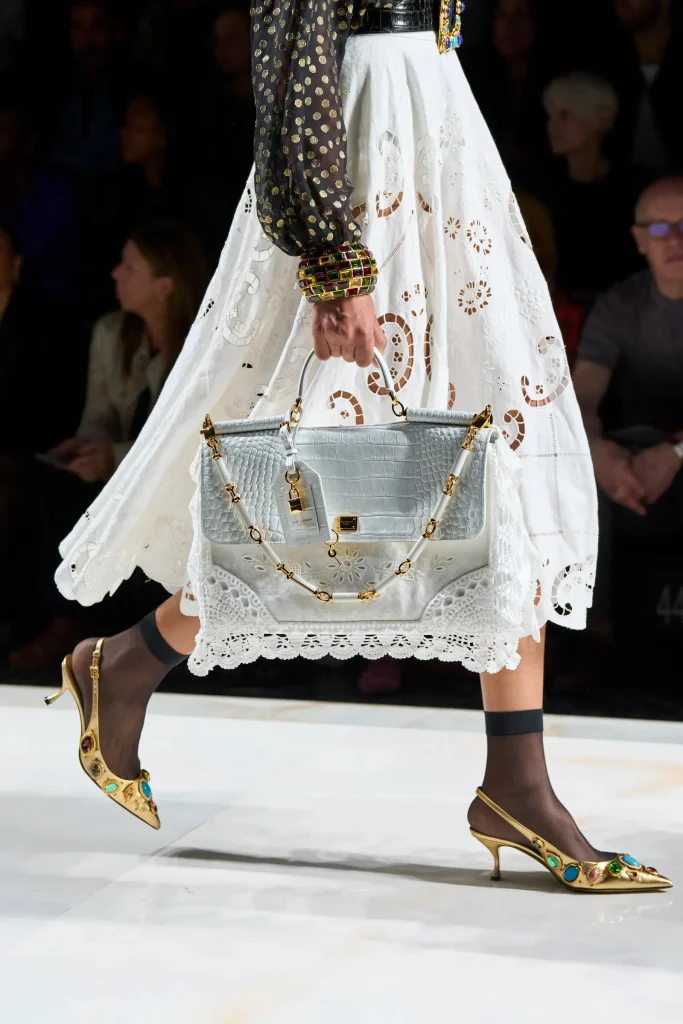
Dolce & Gabbana offered a varied accessory lineup, moving between structured top handles, the house’s recognisable Sicily bag, woven designs, raffia and crochet.
Instead of committing to a single handbag silhouette, the collection treated bags almost like pieces accumulated over time: different materials, different moods and different occasions, all sharing the house’s unmistakable Italian sensibility.