 Nahla Zayed
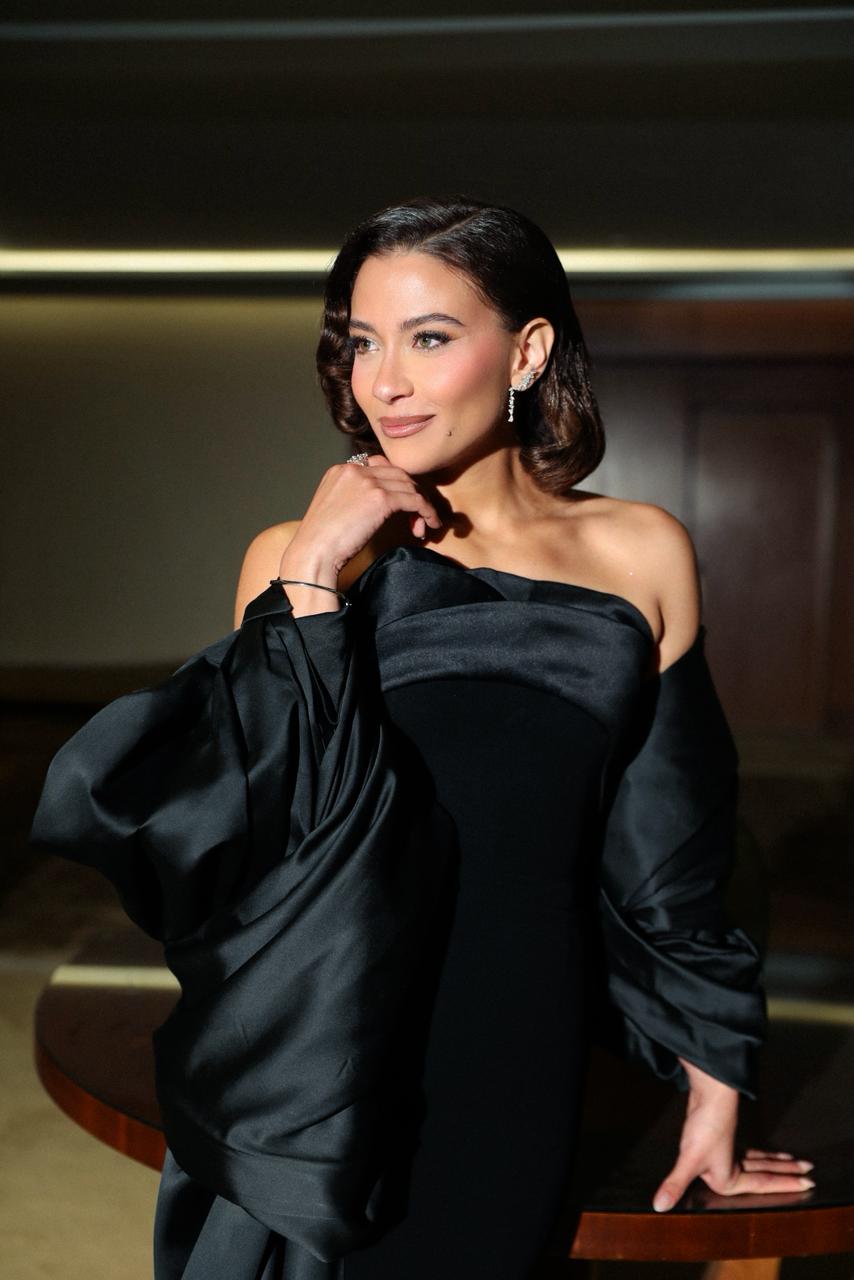
 Have you ever met someone who instantly lights up the room?
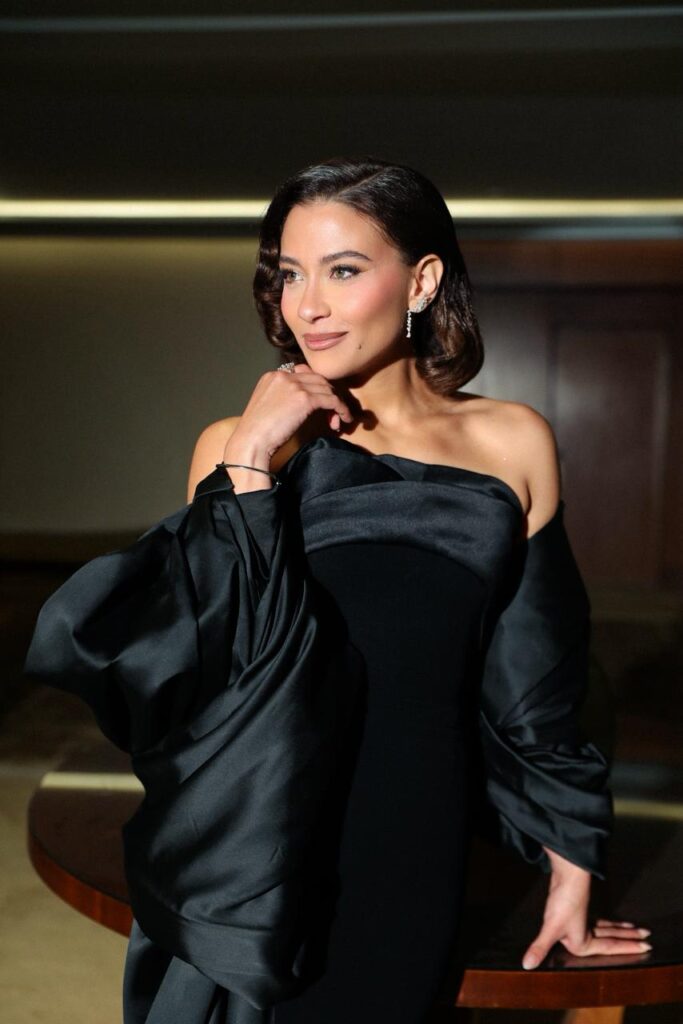
Jala Hisham is passionate, energetic, and refreshingly down to earth.
From acting and mental health to female representation and compassion beyond the screen. As she prepares for an exciting Ramadan season ahead, Jala opens up to Flair about purpose, passion, and the kind of stories she hopes to tell.
Before the cameras and Ramadan seasons, how did acting first find its way into your life — was it a conscious dream or something that slowly grew with you?
No, it was a very real dream. I knew I wanted to be an actress since I was four years old. I was at the cinema, looking at this huge screen and watching people laugh while they watched it, and I felt like this was almost heaven. I wanted to be part of that.
Since then, I’ve always known I wanted to act. I also grew up in a home where going out meant going to the cinema or the theatre, so in my mind, this was always the best thing in the world. Even my punishments were “no TV” and “no cinema,” so there was a very strong emotional connection between me and cinema, and how wonderful it felt to me.
As you grow older, you start realizing that life doesn’t always put you in situations that teach you things, but you see those situations on screen, and you learn from them. You also feel like you’re not alone. And that’s something very special — when you feel certain emotions and realize other people feel them too, you don’t feel alone.
So my love for cinema has been inside me for a very long time, from the very beginning.
Starting out can be overwhelming. Who was the first person in the industry who made you feel truly safe or supported on set?
If I’m talking about a director, then definitely Karim El Shenawy in Khaly Balak Men Zizi. I felt an unusual level of support from him. Whenever I felt nervous, I would immediately calm down because of the way he spoke to me.
He saw things in me that I didn’t see in myself, so naturally my mind started noticing those things, and I began bringing out the best in me. He was the first person who truly represented real support for me in my career.
Acting is deeply emotional work. Who are the actors you felt most comfortable sharing space with on screen — the ones who made the process feel easier?
So many. Among them: Taha Desouky, Salma Abu Deif, Yasmina El Abd, Ahmed Fahmy. But honestly, there are so many more — these are just the first names that came to mind.
You’ve been part of so many projects — Which role feels closest to who you were at that moment in your life?
I’m not sure why, but Midterm affects me deeply. Especially because of how it goes into the details of family life and dives deeply into emotions that we genuinely feel.
There were things I personally relate to and feel myself, so I was able to imagine them easily. I also loved the character Naomi because I understood her very well.
So I think my answer is Midterm.
Midterm felt like a turning point where audiences saw you differently. Did it change how you see yourself as an actress?
Yes and no — it changed how I see myself as an actress, but at the same time, it didn’t.
I already know how I see myself, but I really understood what it means when you have good writing and enough space in a role. That’s when I’m able to really stretch myself. Sometimes there are limitations because of the script or because the director doesn’t give you much room to experiment.
So I understood that when the script is very good, and the role gives me space, I can give much more than I even imagine.
It’s not just about what I can do as an actress, but also about other factors — what the role is, the space you have to stretch yourself, and how much these factors affect what you end up presenting. I got that depth of understanding from the Midterm experience.
Ramadan projects carry a different emotional weight. What kind of responsibility do you feel knowing millions are watching you every night?
I don’t really like to call it a “responsibility,” but I always try to do something from my heart so that people enjoy it, see themselves in it, feel something while watching it.
I try to do the work sincerely, without thinking about it in the literal sense of responsibility, because that would make me nervous. I just focus on doing something from my heart, and I trust that it will reach people.
Either they will enjoy it, or at least they will feel something. And I’m confident that this will happen because I genuinely do the work from my heart.
You’re part of highly anticipated Ramadan projects like Regal El Dhel: Amaleyat Ras Al Afaa and Kan Ya Makan. What excites you most about this upcoming season?
I’m very happy because Kan Ya Ma Kan talks about separation in general and how it affects families, which is something we see in our homes and in other people’s homes too. I’m also very happy because this is Maged El Kedwany’s first Ramadan project.
As for Ras El Af’aa, it’s one of those series that if I weren’t in it, I would really, really want to watch it. I’m very excited for it, and very happy that I’ll be working with Ahmed Ghazy and Amir Karara.
Most of my scenes are with Ghazy because there’s a love storyline between us. I’ve been excited to work with him for a long time because he’s very talented, and I imagined that we would have strong chemistry on screen.
So I’m very excited, and I hope people enjoy it
You often talk about women being strong and feminine — not one or the other. When did you first realize that strength doesn’t have to be loud?
“Strength does not have to be loud.”
The strongest people I’ve seen were the most contained and calm. Strength in men is different from strength in women. There’s something very particular about femininity, and about being “slow receiving” — being present, listening, being in the moment, not trying to perform, but being confident in your actual presence.
For girls especially, this is very important. I never understood the idea of weakness being associated with women. On the contrary, I think it’s just a different type of strength.
Sometimes you do need to be loud in certain situations. But in most situations, you don’t.
I feel that strength is a huge aspect of femininity, but it doesn’t have to be aggressive. As long as you are confident, your voice doesn’t have to be loud.
Have you ever turned down a role because it didn’t feel true to how you believe women should be represented?
Thankfully, up until now, no — I haven’t seen a role that made me feel that way.
In action roles, especially, women are often pushed into masculine stereotypes. How do you envision strength and femininity coexisting on screen?
This is actually something that really bothers me. We don’t really have strong action genres here for the females yet, but hopefully that will start to happen.
I would really love to do action — I’m looking forward to working on something like this. However, I would love to see that if there are action roles, women are portrayed as very strong yet very feminine.
Because I think this contrast is what’s attractive — the contrast between looking very feminine and being very strong.
And by “very feminine,” I don’t mean in a cheap, objectifying way that focuses on a woman’s body. I mean that she doesn’t have to look like a thug or overly rough to be strong. I feel like that’s a very silly connection people make.
Actually, the contrast between a woman’s beauty and her strength is very attractive to see, both on screen and off screen.
So hopefully, moving forward, we can fix that.
Mental health has become an important topic in your conversations. How has therapy or self-awareness shaped you as both a person and an actress?
I have this belief that your flaws and strengths as a human being are the same flaws and strengths you’ll have as an actor.
If you’re selfish as a person, you’ll be selfish as an actor. If you’re someone who listens, you’ll be an actor who listens.
Therapy developed so many things in my personality, and that made me better in acting in very specific ways. It made me more empathetic. I listen more. I don’t judge quickly. I look at things from different perspectives.
I’m not overly emotional anymore, but I’m very considerate and aware. It’s not just my heart working — my mind has to work too.
Because actors who only act from the heart sometimes end up looking like they’re doing an emotional purge on screen. That’s not always the best thing. It might work for some roles, but if everything is like that, it’s not good.
Having the mind present in the process creates balance and makes the performance feel exceptional.
So yes — therapy helped me so much to develop as a person, and that’s why it helped me as an actress.
That’s why I believe it’s extremely important. Regardless of your job, if you develop as a human being, you will automatically develop in your career, with your family, and in everything you do.
Your love for animals is something you’re very open about. When did animal welfare become such a meaningful cause in your life?
I feel like in life, different people choose to care about different things.
I choose to care for the voiceless — because they can’t say they’re hurt, hungry, or tired. I really love being kind to gentle, harmless beings that can’t express their pain. Honestly, this is one of the most important things in my life.
How do you balance a busy acting career with actively supporting animal rights initiatives?
It’s not impossible as we don’t work 24 hours all the time.
In our free time, we can do these things. If we can donate money, we can do that. If we can spend time with them, we can do that too.
I believe you’re never too busy to do something you truly care about. You can always find time.
We just spend too much time on our phones and feel like time disappears. But actually, you might scroll for two hours a day. If you use just one of those hours to do something meaningful to you — go to the gym, volunteer with animals, visit a hospital, visit an orphanage — you will find the time.
You’re never too busy for something you care about.
If you’re not working, you can do this more than once a week. If you are working, you can still do it once a week.
You’re never too busy for something you care about. That’s just how I see it.
You speak openly about mental health. Was there a moment when you realized it was okay not to be okay?
Since I was very young, I was diagnosed with a personality disorder. I was very shocked by how intense my emotions were all the time, how impulsive I was, and how hard it was to deal with that.
Then I realized — it’s okay. There’s nothing wrong with not being okay. We’re human. No one is okay all the time. We’re not in a utopia. We’re not in a cartoon.
Actually, over time, you learn. Your “skin gets thicker,” you gain more space inside yourself to observe what bothers you, write it down, understand what it says about you, and figure out how to fix it.
I really appreciate the moments when I wasn’t okay, and my moments of anxiety, because they helped me grow.
As much as I appreciate the good times, I don’t think anything in my life helped me grow as much as the times when I wasn’t okay.
That’s why I’m very appreciative of those moments.
Finally, what kind of legacy do you hope to leave behind — not just as an actress, but as a woman in the industry?
At some point in our work — not just for women, and I’m not obsessed with women’s rights as much as I’m obsessed with human rights — I would love for us to portray human beings, whether women or men, as vulnerable as they really are.
To talk about things as they are, without beautifying them just to please people, and without exaggerating them just to create an unnecessary issue.
I love balance. I want us to talk about the issues that truly matter.
I would love to do more action. I’m very interested in creating a narrative where women being physically strong is important — not bodybuilding, but the idea that longevity in life comes from being physically strong.
I want to be part of creating a narrative where girls care about their health, play sports, and see that being strong and capable is attractive, sexy, and feminine.
And I would also love my impact to be related to mental health — encouraging people to recognize their emotions, deal with them, and work on them instead of hiding behind labels.
I want us to be progressive — to understand what’s wrong and work on it.