
 Mariyam Meeran
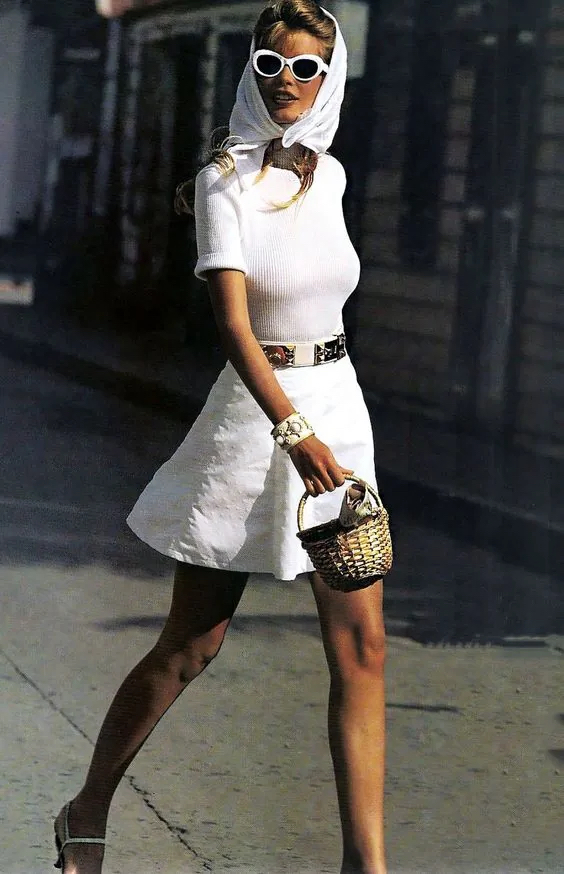
 Ask someone to describe themselves now and you’ll increasingly get a label before a sentence: clean girl, coastal grandma, dark academia, old money. Not “I like tailored, muted clothes” or “I gravitate toward vintage.” Just the category name, delivered like a fact about who they are rather than a description of what they wear. Somewhere in the last few years, aesthetic identity stopped being something people arrived at and started being something handed to them, fully labeled, before they’d had much say in it.

That’s the real shift worth sitting with: the direction of the arrow has flipped. It used to run one way. You had a personality, tastes formed slowly through friends, environment, trial and error, and your closet was the evidence of it, assembled after the fact. Now the arrow runs the other direction. An algorithm notices what you linger on for half a second longer than the rest of your scroll, feeds you more of exactly that, and within days has quietly assigned you a category, before you’ve consciously decided anything about who you are. The feed decides first. The closet spends the next few weeks catching up.

You can see the mechanics of this most clearly in how fast a label can now form. Add “-core” to almost any noun and, within a single platform cycle, a global micro-community can materialize around it, sorted and scaled by the same system that decided the aesthetic was worth pushing in the first place. Older subcultures, punk, goth, prep, took years to cohere, built through shared physical spaces: a scene, a record shop, a friend group testing out an identity together in real time. What replaced them didn’t need years, or a room full of other people. It needed an algorithm noticing a pattern in your attention and closing the loop before you’d fully noticed it yourself.

Researchers studying this have pointed out something telling about what’s missing from the new version: identifying as “dark academia” or “old money core” isn’t built around community the way older subcultures were. It’s built around buying the specific objects that visually signal the label, an individualistic, transactional kind of belonging rather than a communal one. Which raises the uncomfortable part of the reversal. If a feed can assign the identity before a person consciously chooses it, then the closet isn’t really expressing a self that already exists. It’s performing catch-up, purchase by purchase, to a self the algorithm proposed first and the person simply agreed to.

None of this makes the impulse illegitimate. There’s a real, understandable appeal to a shortcut this fast in a culture that otherwise makes identity feel slow and effortful to build, and some younger users describe hopping between aesthetics, mob wife one day, coquette the next, as a low-stakes form of play rather than a permanent claim on selfhood. But play built on borrowed time doesn’t stay play for long once money and self-image are involved. A belonging assembled this quickly, by a system optimizing for engagement rather than truth, tends to be exactly as durable as it sounds: gone the moment the platform decides to push something else instead.
The question this leaves behind isn’t whether people still use fashion to express who they are. It’s whether they’re still the ones doing the expressing, or whether they’ve quietly outsourced the decision to something that was only ever trying to keep them scrolling.