 Sama Farrag
 I was a former Tumblr kid. I grew up during the era of Halsey, Skins, Lana Del Rey, and flannel everything. My teenage years were defined by reblogged black-and-white mood boards, direct-flash photos of crushed cigarette packs, and an absolute obsession with looking artfully exhausted. My room was a sanctuary of unmade sheets and posters, and my laptop screen was a relentless, 24/7 stream of American Horror Story, oversized vintage coats, and lyrics typed in typewriter font. Spoiler alert: it was not in fact a phase, Mom, and this is the real me.
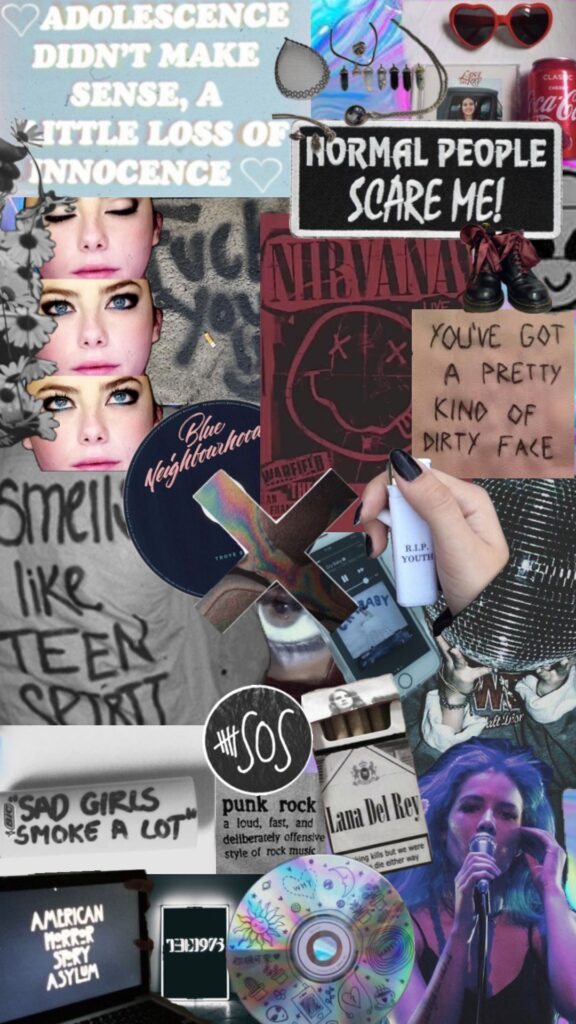
So when my feeds recently began shifting away from pristine, matcha fueled minimalism toward something far messier, I felt a jolt of recognition. The internet is nursing a massive case of late-2000s and early-2010s nostalgia. Tumblr fashion – specifically that hedonistic, unpolished subculture often wrapped under the retrospective banner of “Indie Sleaze” – is everywhere again.
Watching the fashion world dust off point-and-shoot cameras, battered Doc Martens, and ripped tights feels surreal. But as someone who lived through every second of it, I couldn’t help but wonder: Are we witnessing a genuine cultural rebirth of Indie Sleaze, or is a subculture built on uncurated chaos inherently impossible to revive today?
To understand why a true revival feels so complex, you have to understand the holy trinity that kept us awake until 4:00 AM: the wardrobe, the soundtrack, and the dashboard.
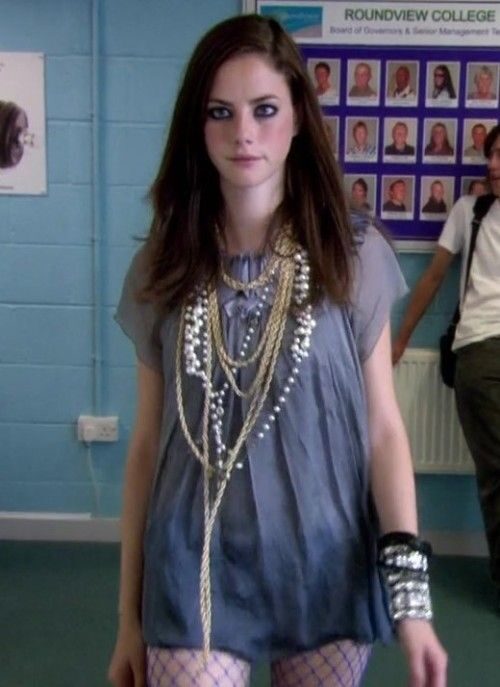
The Wardrobe: The fashion back then was a collision of high and low, trashy and chic. We didn’t buy pre-distressed clothes off fast-fashion algorithms, but we shredded our own tights with safety pins, stretched out necklines on purpose, and doodled aimlessly on our Converse with permanent markers. The undisputed queen of our dashboards was Alexa Chung, with her blend of vintage fur coats, Peter Pan collars, and lived-in Barbour jackets. We worshipped Sky Ferreira’s dark, smudged eyeliner, and we copied Effy Stonem’s sheer dresses layered over mismatched tank tops. I picked up my smoking habit back then purely because I saw Effy doing it on screen, puffing away in a band tee while staring into nothingness. It looked like the ultimate statement of cool, and back then, that was all that mattered.
If you opened my closet in 2012, you’d find the exact Indie Sleaze starter pack:
The Flannel: An oversized flannel shirt from American Eagle that I literally begged my mom to buy, worn open over everything or tied around the waist.
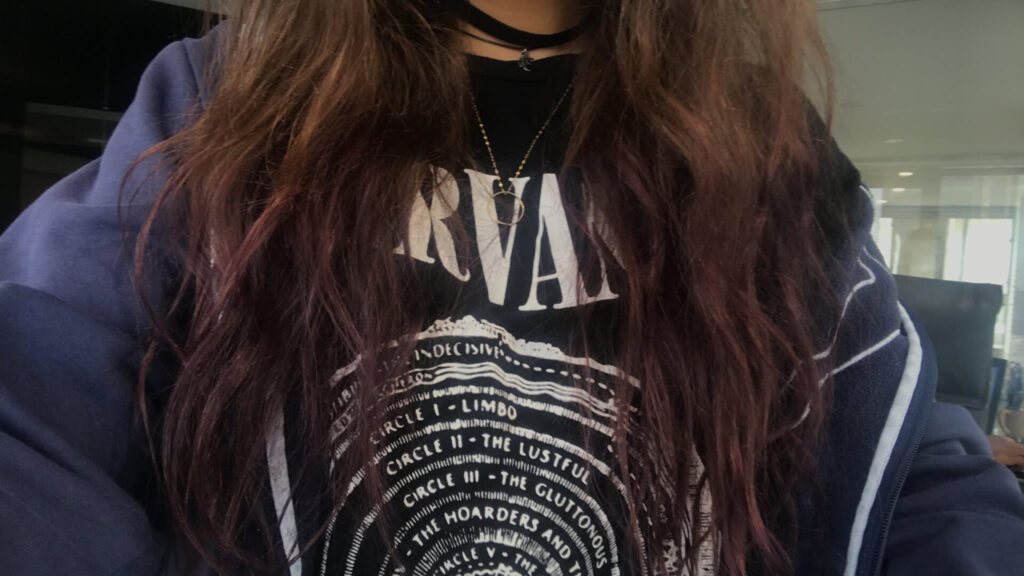
Band Shirts Galore: Nirvana, Pink Floyd, The 1975, Led Zeppelin. Only bands I actually listened to, because there was an unspoken, ruthless law of authenticity on Tumblr. You didn’t wear the shirt unless you knew the discography cold.
The Footwear: Heavy, beat-up Doc Martens that weighed more than the rest of my outfit combined, worn until the leather cracked and scuffed.
The Makeup: Dark, brooding lipstick was non-negotiable. MAC Sin and MAC Cyber were my absolute go-to shades, applied heavy, rarely touched up throughout the night, and bleeding slightly into the corners of my mouth by midnight.
The Neckwear: Velvet or plastic tattoo chokers stacked on top of silver chains.
The Soundtrack: You couldn’t separate the clothes from the music. The fashion existed purely as an outfit to wear to a crowded venue or a dark bedroom with albums playing on loop.
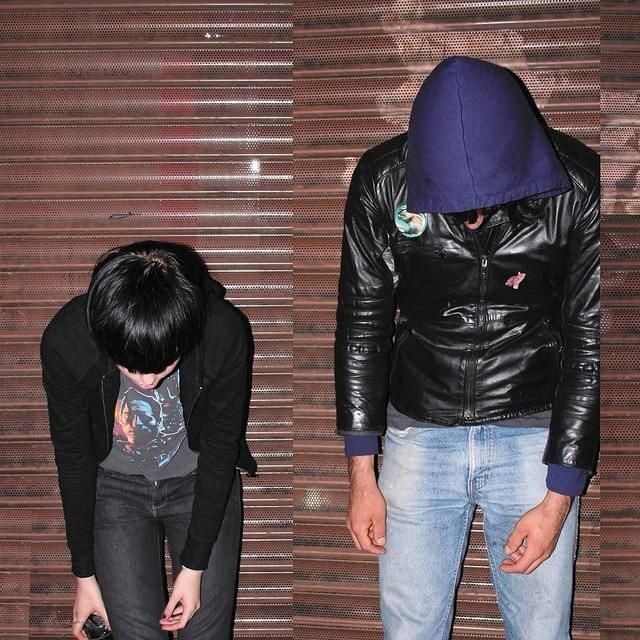
We were listening to garage rock revival and distorted electro-pop. The Strokes, Arctic Monkeys, The Libertines, and Yeah Yeah Yeahs provided the guitar riffs, while Crystal Castles, MGMT, Justice, and Passion Pit gave us the frantic electronic beats. Then Lana Del Rey dropped Born to Die and Halsey released Room 93, shifting the mood into a darker, cinematic, melancholic pop space that defined the later Tumblr years. Music was our entire identity, and the songs were the glue holding the aesthetic together. You reblogged the audio post, made a GIF set of the music video, and wrote a lyric on your forearm in Sharpie.
The Dashboard: And then there was Tumblr itself – the digital holy land. Before Instagram algorithms forced everyone into cohesive, monetized grids, Tumblr was a lawless, dark paradise.
We customized our blogs with HTML code, auto-playing music widgets, and cursor effects and spent hours finding the right theme code, tweaking hex codes for background colors, and choosing the perfect side image. We reblogged grainy GIFs of Effy Stonem smoking with a quote that was definitely not from the show, scanned polaroids, low-res party photos, and handwritten lyrics from Marina and The Diamonds’ “Teen Idle”. Tumblr was where we built our identities in secret, away from parents and high school classmates who didn’t get it. It was raw, emotional, deeply aestheticized, and entirely unmonetized.
By 2014, the wave had washed over Egypt in full force. Cairo’s youth completely bought into the culture, translating a Western subculture into our own local nocturnal routine.
We spent hours scrolling through random Instagram pages (Shoutout to the girl who ran @radoutfitters, I think of you everyday) back before Egyptian local brands were born. They weren’t actual businesses or commercial shops – they were just pages run by teenagers who spent way too many hours on Tumblr importing random oversized flannels, vintage graphic tees, and leather jackets to resell to the rest of us. We’d show up to hangouts with smudged eyeliner, oversized layers, deep wine-colored lipstick, and heavy Doc Martens, completely ignoring the Cairo heat.
People actually used “you’re so Tumblr” as a genuine compliment. It wasn’t sarcastic or mocking but it meant you had that specific, moody, effortless look down to a science. We were all quietly competing to look like we stepped out of a 3 AM photo shoot in a dark parking lot, pretending we didn’t care while caring immensely about every single detail.
Fashion always moves in cycles, but the internet has sped everything up to a dizzying degree. The timeline has collapsed so much that we didn’t even have to wait two full decades before the pendulum swung violently backward.
For years, the dominant online aesthetic has been exhausting in its precision. We were sold the “clean girl” look: slicked-back buns, neutral matching sets, flawless skin, and ultra-curated capsule wardrobes. Everything became beige, functional, optimized, and deeply corporate. It was an aesthetic that demanded constant upkeep, expensive skincare, and performative wellness. Naturally, deep cultural burnout set in. You can only maintain the illusion of a perfectly organized, green-smoothie-drinking life for so long before you want to smudge black eyeliner across your eyelids, throw on an oversized coat, and breathe.
French electronic musician Kavinsky summed up the skepticism felt by those who were actually there when he remarked on the current nostalgia: “It’s a bit beyond me all that, the revival stories… Nowadays, it would not be possible at all to party so much… We’re too old to be as stupid as we were back then.”
Reflecting on why that wild energy is being idolized again, artist Uffie offered a warmer take on why people look back at her generation’s old party photos: “It was a fun time, with a great feeling of freedom, a naivety, even if the looks weren’t always great. People went out all night as if there was no tomorrow.”
Here is the central paradox: Indie Sleaze was never a fashion trend you could simply package off a rack. It was more of an ecosystem. And that ecosystem is, to my dismay, permanently gone.
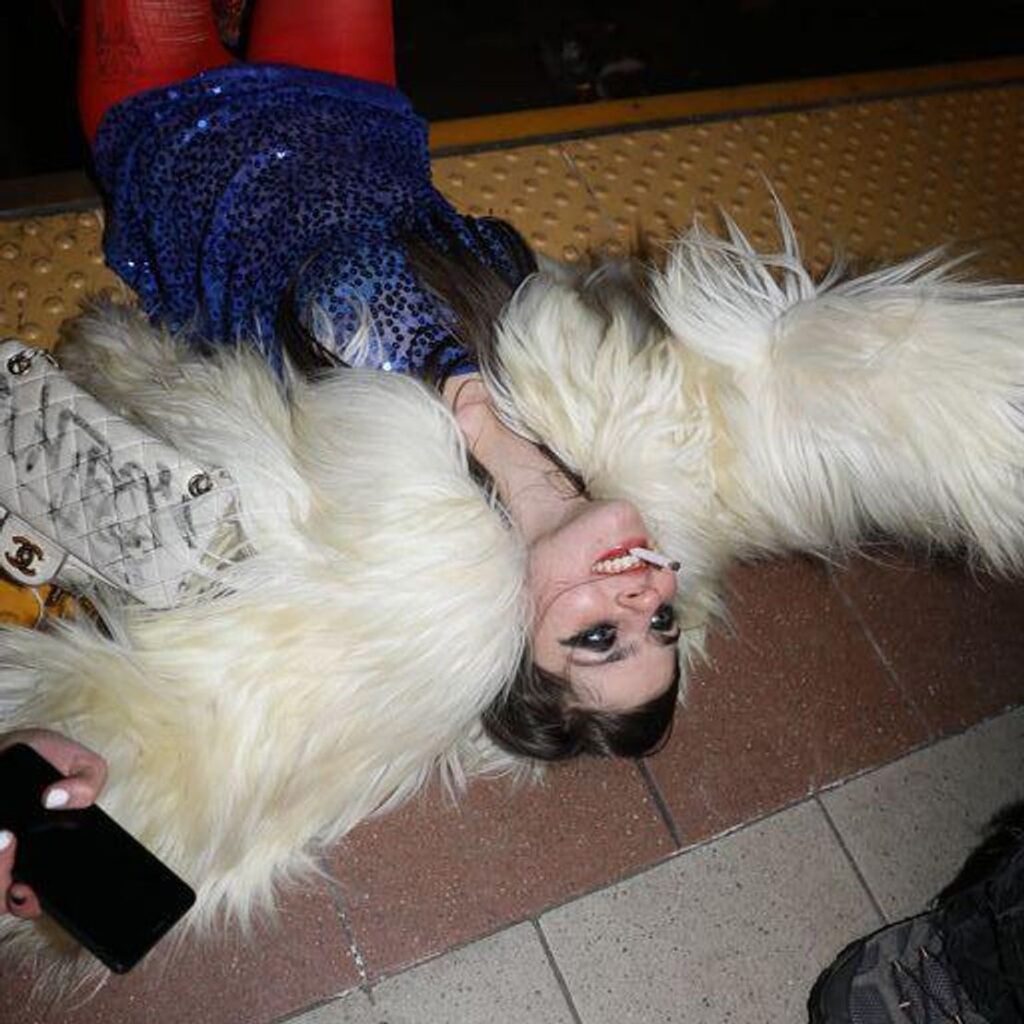
The original era worked because it was rooted in genuine subculture and an anarchic, pre-algorithm internet that perfectly captured the zeitgeist of that era. We didn’t post photos to maximize engagement, feed a brand sponsorship, or optimize a personal brand, but posted because Tumblr was our secret space and, believe it or not, it was actually cool to post meaningless photos on Instagram. Our clothes were falling apart because we bought them off those Tumblr-obsessed Instagram kids or dragged them out of old closets and wore them to death. The photos were blurry and flash-blown simply because we were shooting on iPhone 4’s and 5’s in pitch-black rooms, holding devices that barely knew how to handle direct light. There was no intentionality behind the grain; it was just the hardware we had in our pockets. I still dust off my old iPhone 4 sometimes just to take pictures, and don’t even get me started on the music stored on there – mp3 files downloaded from Limewire back in 2009, a concerning amount of My Chemical Romance, and playlists that feel like a literal time capsule of my teenage soul.
When a subculture built on anti-perfection gets distilled into a step-by-step TikTok tutorial on “how to get the messy Tumblr look,” something vital dies in translation. Buying mass-produced “distressed” clothing off a fast-fashion site completely misses the point. You can buy the flannel, smudge the eyeliner, and carry an old device, but you can’t buy the unscripted freedom that made the original movement matter to those of us who lived it. Recreating the outfits today is ultimately just costuming; the underlying spirit remains trapped in a specific moment in time that I find myself revisiting more than I care to admit.
So the question is this: Is Indie Sleaze actually back? The clothes have returned, but the movement itself is impossible to revive.
We live in a different digital architecture now – one where youth culture gets immediately cataloged, aestheticized, and commercialized by algorithms before it even has room to breathe organically. We’ll never fully recover the chaotic, uncurated freedom of early Tumblr because the modern internet simply won’t let us be genuinely unpolished anymore. Your Instagram dumps are carefully curated, you airbrush every blemish, and the art of posting anything and everything has simply died out.
And yet, looking at my closet today, I can’t bring myself to be cynical about it. If digging through this era gives people permission to drop the exhausting pressure of looking perfect, to embrace a little unrefined edge, and to realize that a messy, lived-in life is far more interesting than a color-coordinated feed, that’s fine by me.
After all, my faded Nirvana shirt never left my closet. It wasn’t a phase then, and it certainly isn’t now.