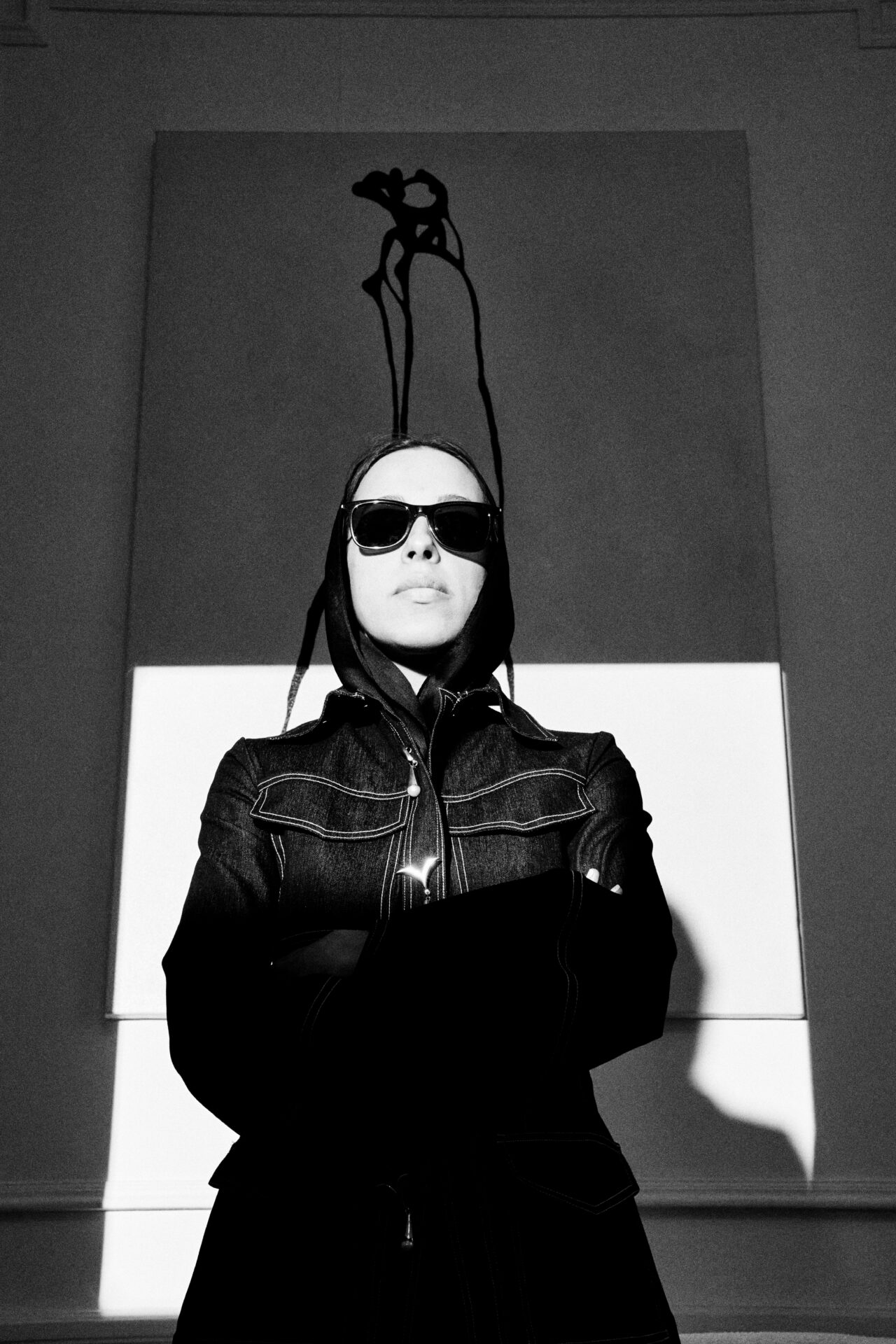
 Yara Lotfy
 Rooted in craftsmanship but never bound by nostalgia, Shahira lasheen, founder and creative director of SHAHIRA LASHEEN, approaches heritage as something to be translated rather than simply preserved. Her collections turn memories, emotions and symbols into silhouettes, textures and intricate handwork, creating pieces that feel deeply personal yet leave room for the women who wear them to make the stories their own.
As the house enters a new chapter, Lasheen reflects on the evolution of her vision, the emotional language behind her collections, the importance of Egyptian craftsmanship, and what it means to build a fashion house whose identity extends far beyond the gown.
1. Before Shahira Lasheen became a fashion house, who was Shahira the woman? What first drew you to fashion and, more specifically, to the world of couture?
Before there was a fashion house, there was simply a woman who was deeply drawn to beauty, detail, emotion and the way things are made.
I have always been fascinated by objects that carry the trace of the human hand, fabric, embroidery, craftsmanship, texture, the small imperfections that make something feel alive. Couture gave me a world where all of these things could exist together.
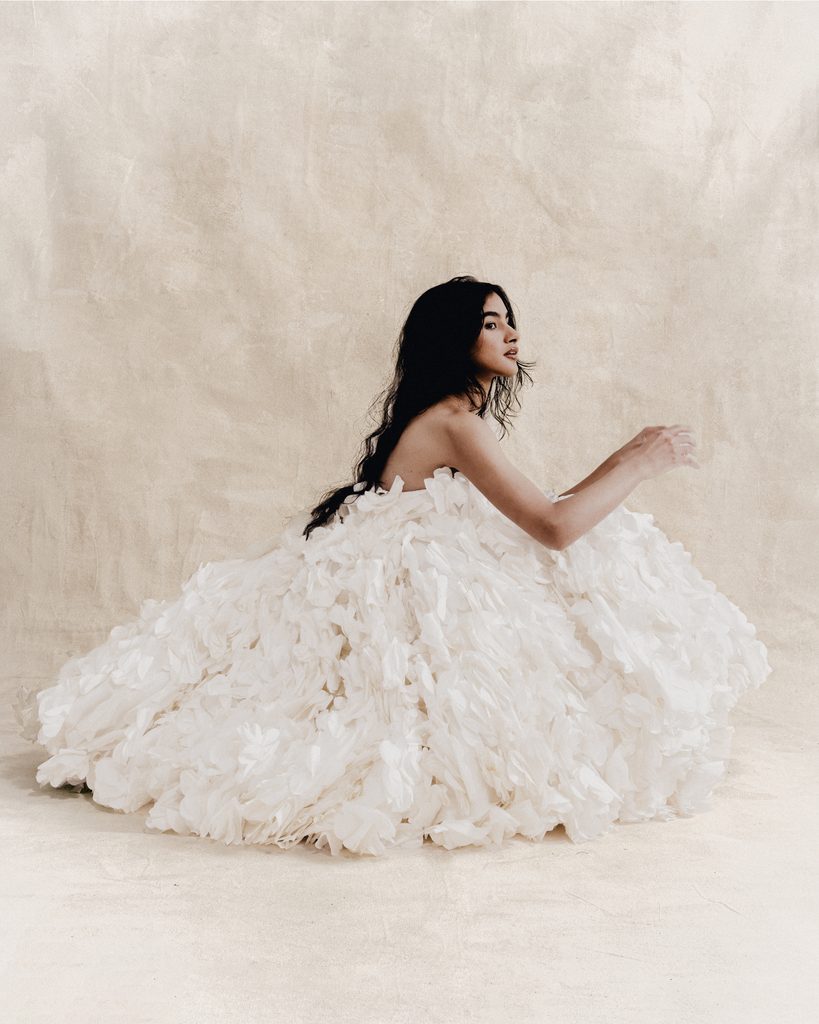
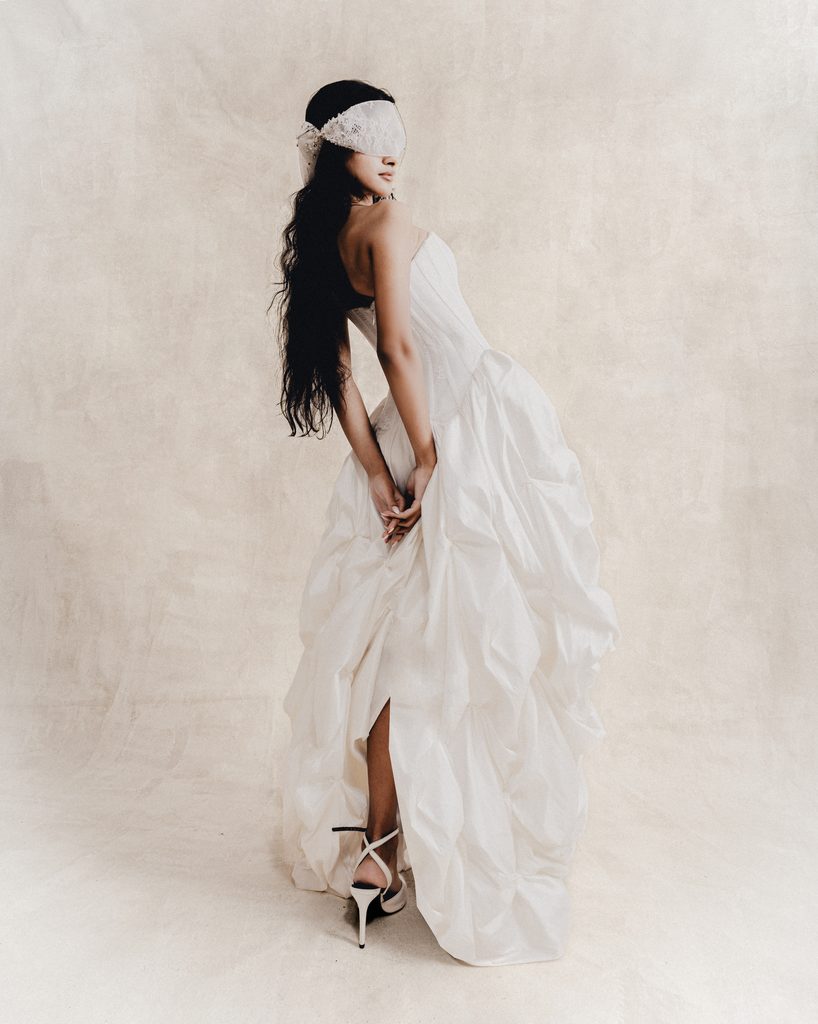
What drew me to couture was never only the dress itself. It was the idea that emotion could become form, that a memory could become embroidery, that something deeply personal could be translated into something another woman could wear and make part of her own story.
For me, couture has always been less about fashion in the conventional sense, and more about creating something that carries a soul.
2. Looking back at the beginning of your career, what has changed most about the way you see fashion, and what part of your original vision has remained untouched?
What changed most is that I stopped seeing fashion as an object and started seeing it as a relationship.
At the beginning, I was naturally focused on the piece itself, the silhouette, the beauty, the construction. With time, I became much more interested in the woman inside the piece: who she is, how she wants to feel, what she carries with her, and what the dress allows her to express.
What has never changed is my belief that design must mean something.
I have never been interested in creating beauty for beauty’s sake. I want a piece to have a presence, a point of view and an emotional reason to exist.
3. Your work feels deeply personal and often rooted in storytelling. How much of your own personality, memories and experiences find their way into your designs?
Probably more than I consciously intend.
I find it almost impossible to separate what I create from what I have lived, felt, remembered or questioned. Sometimes a collection begins with a very personal emotion; sometimes with a memory, a place, a symbol, or even a feeling I cannot fully explain at first.
But I never want the story to become too literal.
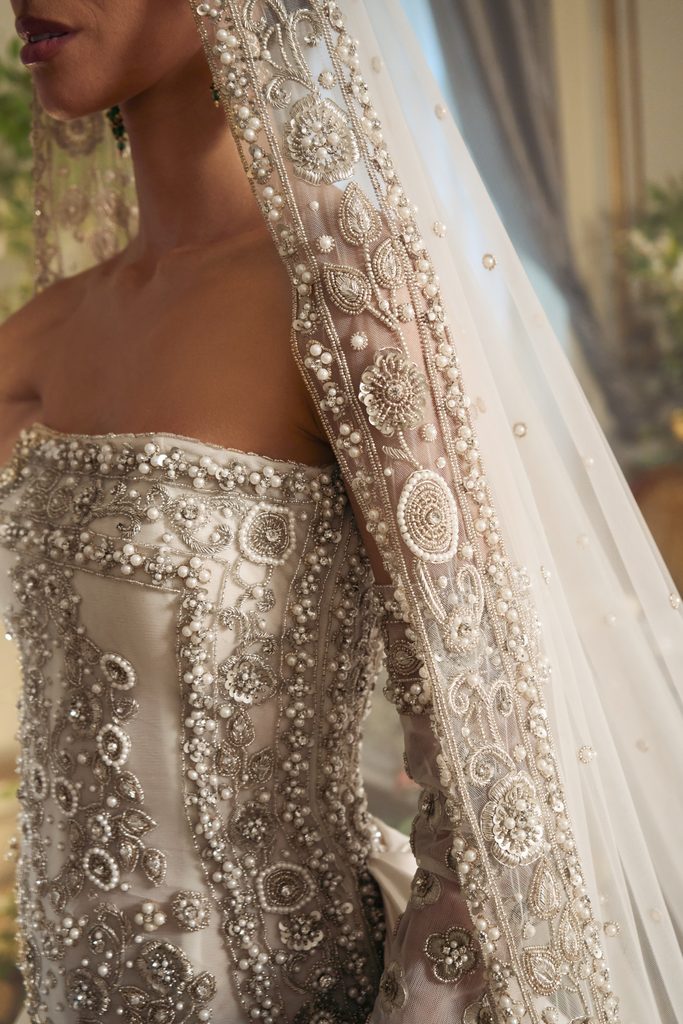
I prefer to transform personal experiences into a language of silhouette, texture, embroidery and symbolism, so that the final piece is no longer only about me. It becomes open enough for another woman to find her own meaning in it.
That is when I feel a piece becomes truly alive.
4. Your collections move between femininity, structure, romance, craftsmanship and drama. What are the elements you consider unmistakably “Shahira Lasheen”?
I think the strongest contrast in my work is between softness and strength.
I love femininity, but never in a fragile way. The woman I design for can be romantic, sensual or delicate, but there is always something grounded and powerful underneath.
Structure is very important to me, especially the corsetry, the way the body is shaped, and the architecture of the silhouette. Then there is the handwork: embroidery, texture, layers, and the details that sometimes reveal themselves only when you come closer.
And there is usually a certain sense of drama, but I never want drama to exist without purpose.
Ultimately, I think a Shahira Lasheen piece should have character before it has a label. You should be able to feel its identity before you are told who designed it.
5. Fashion is constantly moving toward the new, yet your work often finds beauty in heritage, craftsmanship and timeless silhouettes. What makes something timeless to you? And how do you personally approach trends?
To me, something becomes timeless when it has a strong identity beyond the moment it was created in.
I do not think timelessness means classic or safe. A piece can be bold and still be timeless if it has proportion, intention and emotional depth.
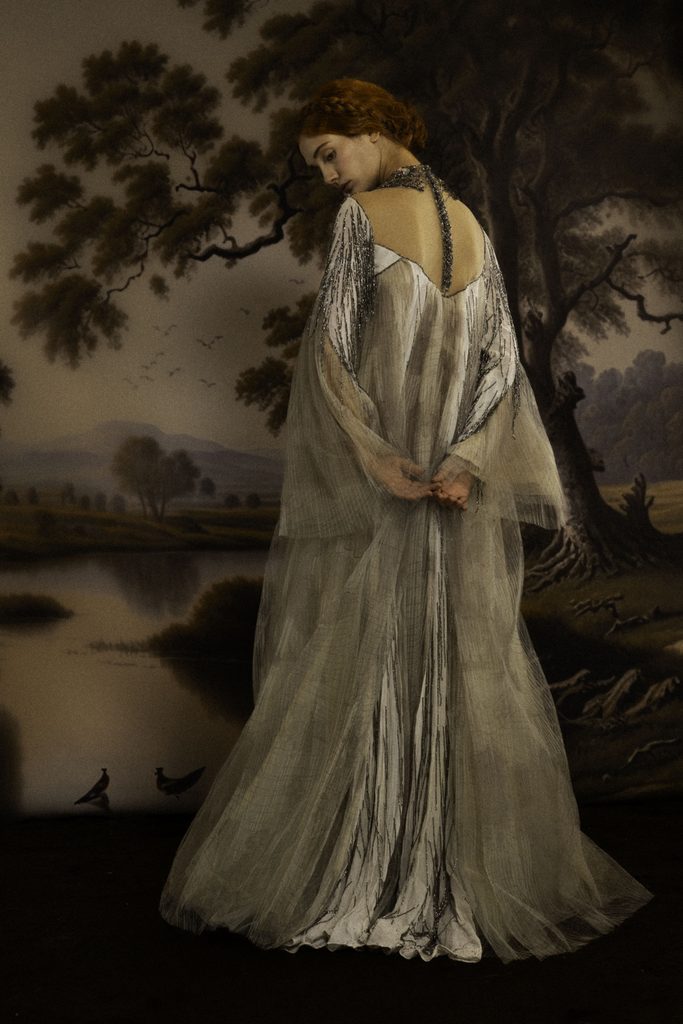
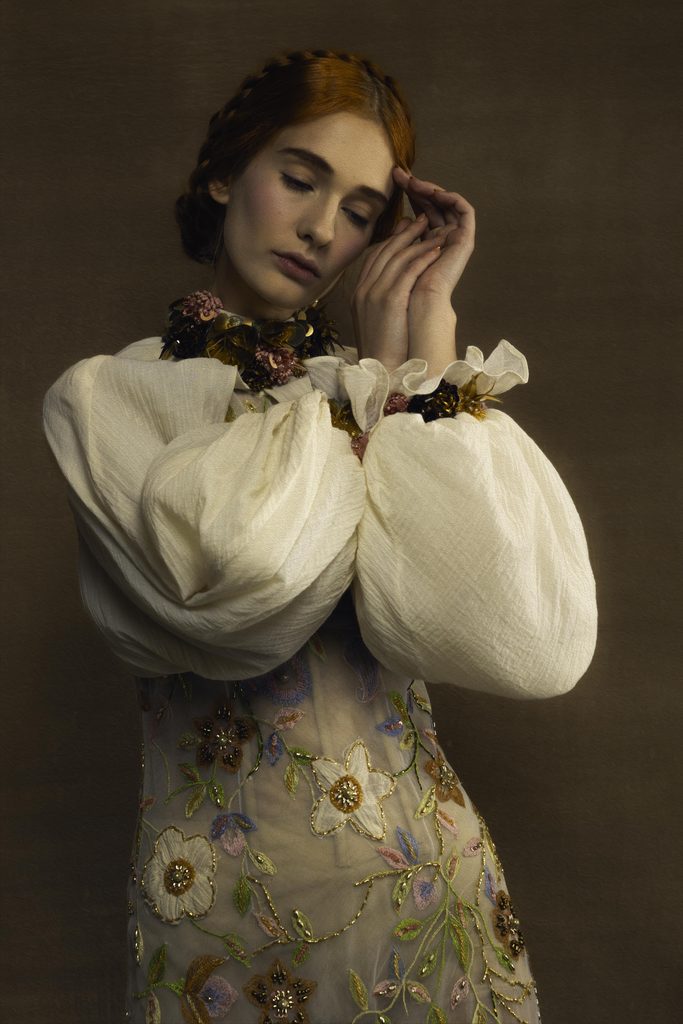
Of course I look at trends. As a designer, you cannot completely separate yourself from the time you live in. But I do not like to follow them literally. I prefer to understand what they say about the present, then filter them through the language of the house.
Heritage is very important to me for the same reason. I never want to treat heritage as nostalgia or decoration.
For me, the most interesting question is always: how can something ancient feel completely contemporary?
6. Today, the Shahira Lasheen universe extends beyond Couture into Prêt-à-Couture, Bridal, Showroom and Accessories. How do you make sure each category has its own identity while still feeling unmistakably part of the same house?
Each category serves a different woman, moment and rhythm, so naturally each one needs its own character.
Couture gives us the greatest freedom for experimentation, complexity and handwork. Bridal is incredibly intimate because the piece becomes connected to one very personal chapter in a woman’s life. Prêt-à-Couture translates the same level of design thinking into something more immediate and flexible. The Showroom and Accessories allow the identity of the house to exist in different forms and different parts of a woman’s life.
But the foundation is always the same.
There is a certain attention to construction, craftsmanship, detail, proportion and storytelling that connects everything.
I do not think of them as separate worlds. I think of them as different expressions of the same language.
7. Your collections have explored very different narratives, from Little Women to La Reine de la Vie and Al Qahira 20’. What usually comes first for you: the woman, the story, the fabric, the silhouette or the emotion?
Almost always, the emotion comes first.
It can begin with something very small, an image, a memory, a sentence, a woman I imagine, or simply a feeling that stays with me.
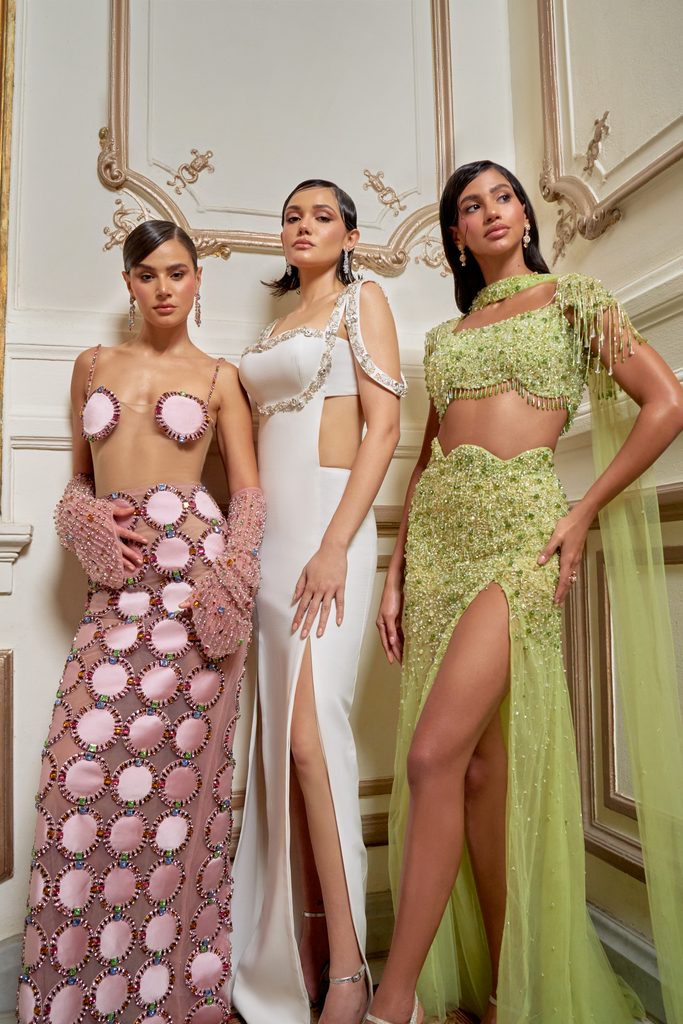
Then the story starts to form around it.
After that, the silhouette, fabric, color and embroidery begin to appear almost as a response to that feeling.
I rarely begin with a dress and then try to give it a story. For me, it is usually the opposite. The emotion already exists, and the dress becomes the language through which I can express it.
8. Your first couture bag collection takes the craftsmanship traditionally reserved for the gown and translates it into something a woman can carry every day. What inspired this shift, and what did you want the bags to express that a couture gown perhaps cannot?
The bag came from a desire to take the language of the house somewhere more intimate and more constant.
A couture gown often belongs to a very specific moment. It enters a woman’s life in a powerful way, but usually around an occasion. A bag lives differently.
She carries it, touches it, travels with it, keeps it close to her. It becomes part of her everyday life in a much more personal way.
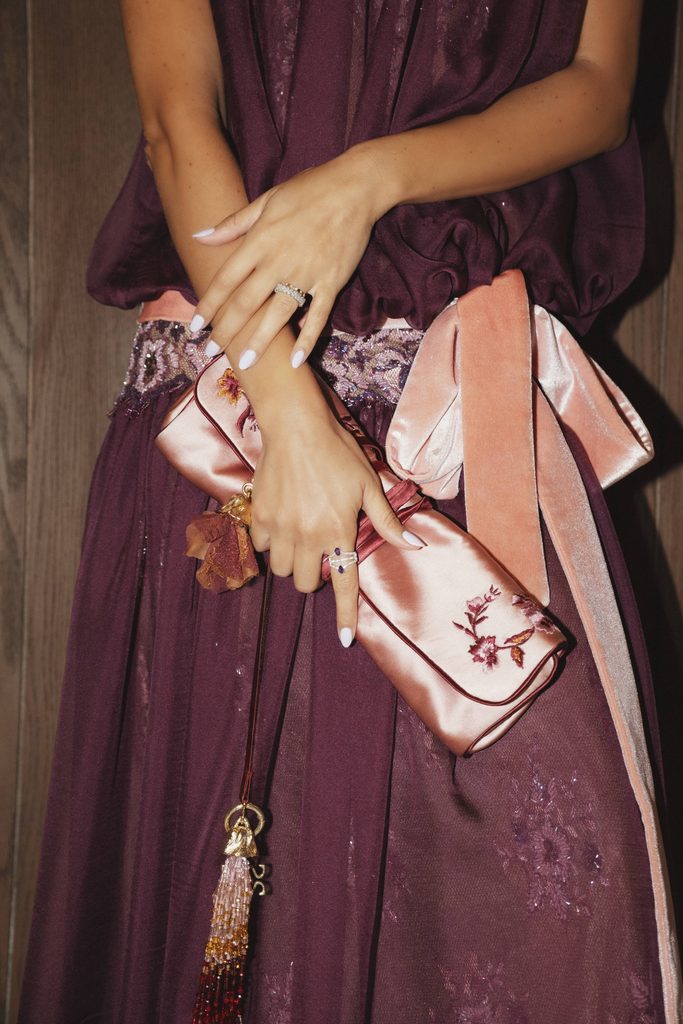
I wanted to bring the same level of craftsmanship, handwork and attention to detail into an object that could stay with a woman for years.
And because the scale is smaller, every detail becomes even more important. There is nowhere for the craft to hide.
9. What do you think Egyptian craftsmanship can offer the international fashion conversation today?
Egypt has an extraordinary visual and craft heritage, but what interests me most is not simply looking backward. I believe our real opportunity is in translation.
We can take craftsmanship, techniques, symbols and ways of making that belong to our culture and reintroduce them through a contemporary design language.
The goal should never be to make something look “traditional” for the sake of identity. It should feel relevant, refined and global, while still carrying something unmistakably rooted in where it comes from.
I do not think Egypt needs to imitate the international fashion conversation.
It has something meaningful to contribute to it.
And for me, one of the most beautiful outcomes is when someone sees a piece as contemporary and international first, and then discovers the depth of Egyptian craftsmanship within it.