 Hedayat Reda
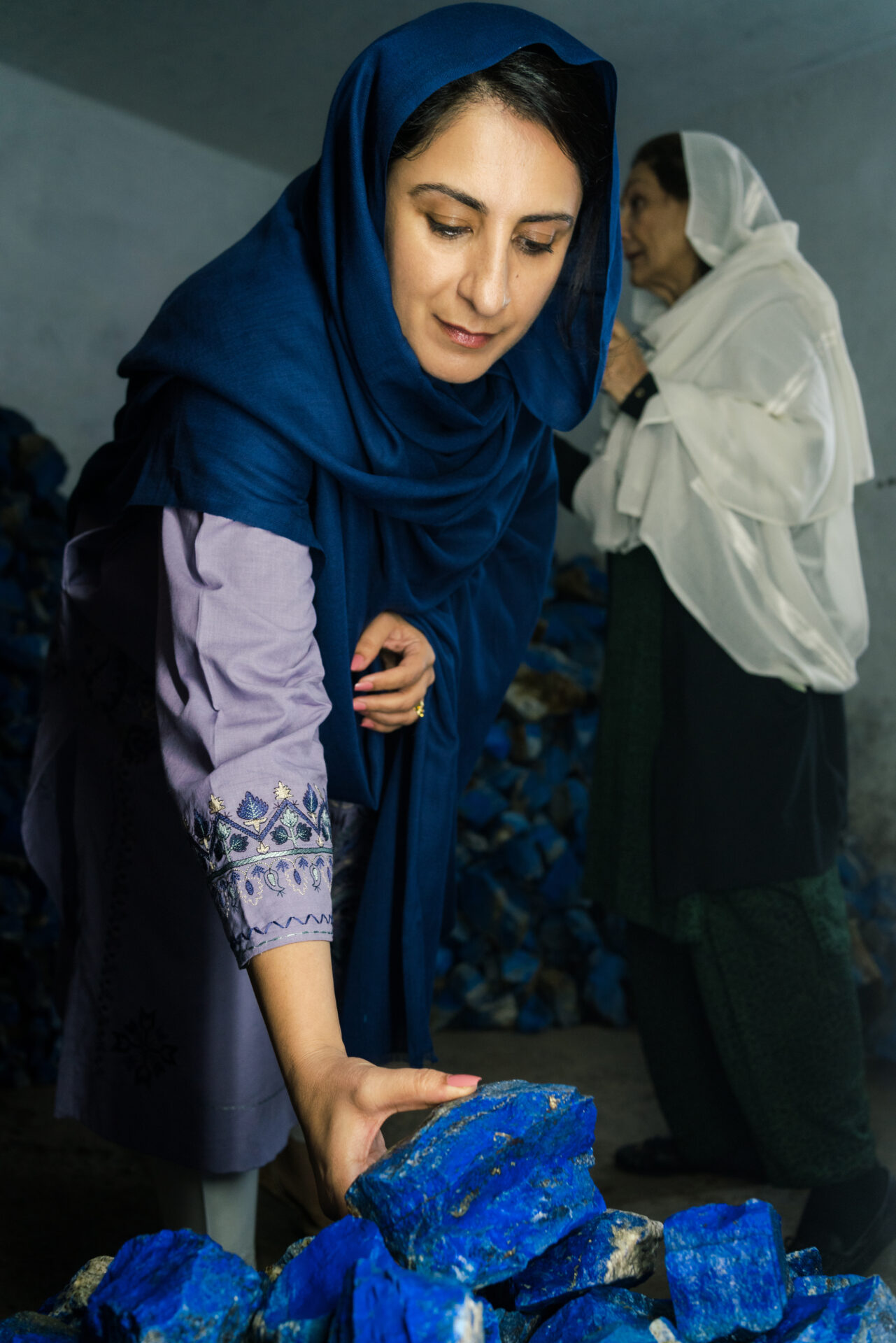
 In the wake of Art d’Égypte’s Forever is Now exhibit, a remarkable new force enters our creative orbit — Meherunnisa Asad, a Pakistani artist whose presence feels both rare and inevitable. Born in Peshawar and based in Cairo, she is a true artisan and storyteller, breathing life into age-old traditions with striking sensitivity. A devoted advocate of craftsmanship and collaboration, Meher has reawakened the ancient art of pietra dura (Florentine mosaic), infusing it with contemporary resonance and carrying it gracefully across cultures and time.
After weeks of immersing ourselves in her work and being carried along by her vision — the monumental site-specific installation 99 Butterflies, inspired by Mahmoud Darwish and shown as part of the Wild Uplands programme at Penistone Hill Country Park; the intimate War Gardens series, a portrait of craft, memory and the atelier legacy of her Studio Lél; and the lyrical documentary Heart of Stone, filmed by Oscar-winner Sharmeen Obaid-Chinoy — we finally sit down with her in conversation. In her own words, this is Meher’s behind-the-scenes story:
How did you become an artist and how did you find your way into making these pieces and learning the craft?
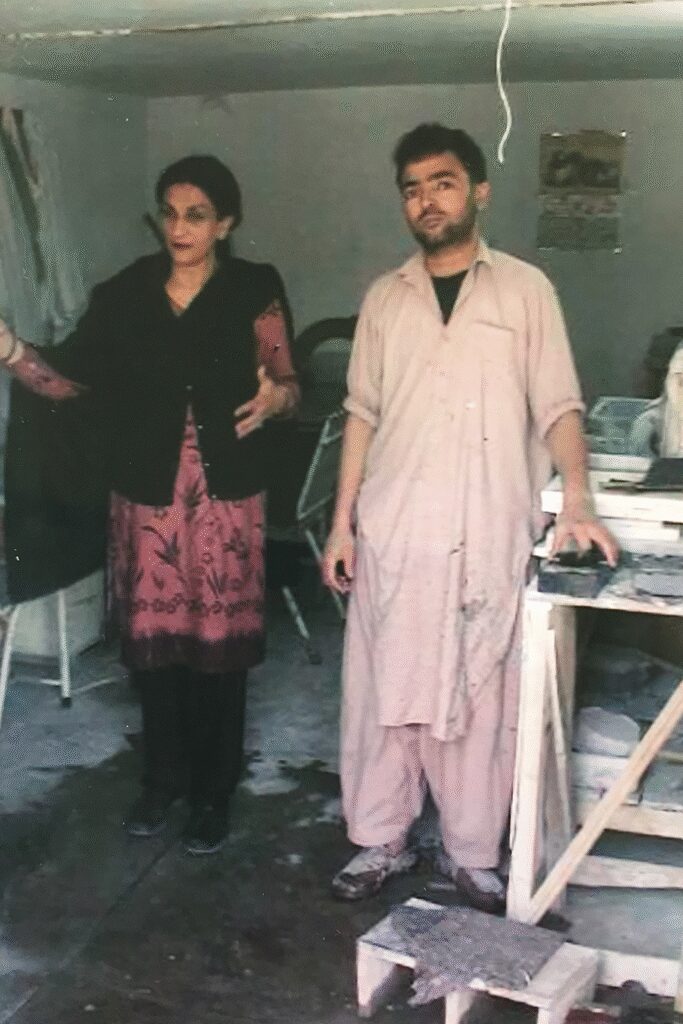
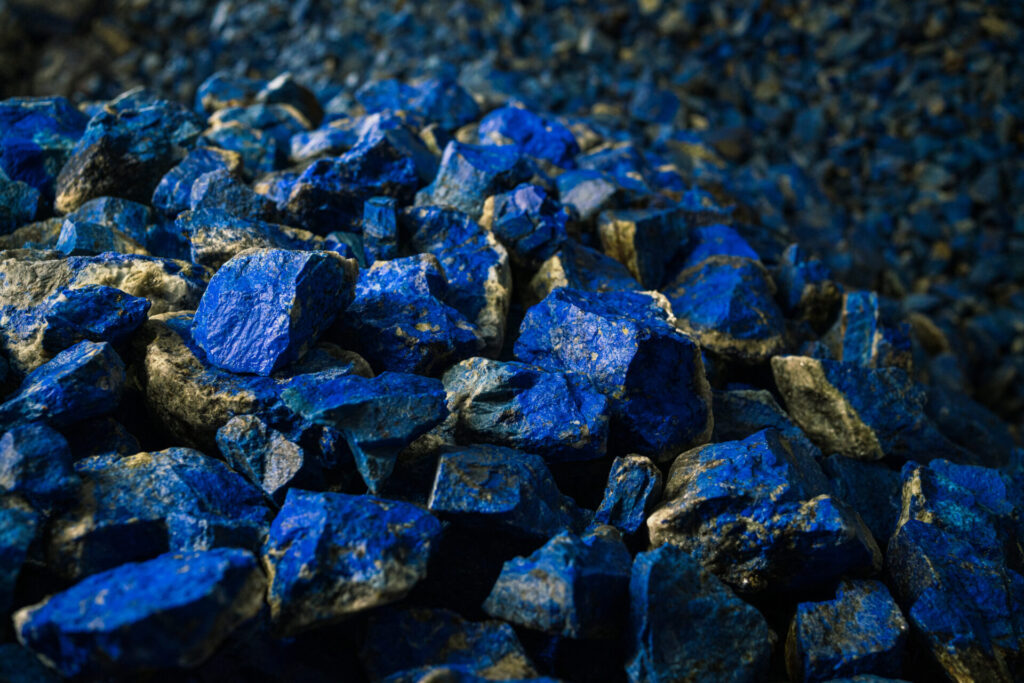
I grew up in Peshawar in the 1980s-90s, when many Afghan families had made the city a refuge. My first school was our garage, where my mother, Farhana- whose eye for beauty refused borders between art, design and craft- set up a small studio with an Afghan master artisan. Paper patterns on the floor, the sound of water on blades, bowls of offcuts- it was all one conversation. After school my siblings and I wandered the old city with my mother- the historic Qissa Khwani Bazaar and the stone mandis- handling scraps of semiprecious stones, from lapis lazuli brought from Badakhshan (Afghanistan) to amazonites, agates, serpentines, and other local hard stones, learning how materials carry memory.
I studied architecture at NCA Lahore and Pratt Institute in New York, then worked with the Aga Khan Historic Cities Program as a conservation architect. My mother taught love for making and empathy for the maker; my father taught pride in land and language. One shaped how I work, the other what I stand for. I eventually returned to Studio Lél, where that early language of stone became my own.
How has Studio Lél evolved since your mother’s time?
Studio Lél began in our family garage in Peshawar. What started as an experiment between curiosity and craft has grown into a collective that bridges generations, geographies, and disciplines.
The essence hasn’t changed: it’s still a space where making and thinking happen side by side. But the language has expanded. We’ve brought together stone inlay, glass engraving, scagliola, enamel, lapidary, copper, and brass- materials that speak to one another and to the histories they carry. Our circle has widened too.
We continue to work closely with displaced Afghan artisans and local craftspeople, preserving and evolving their knowledge through collaboration. But over time, Studio Lél’s work has travelled from Peshawar to global platforms- from the Michelangelo Foundation’s Homo Faber and Doppia Firma, to Design Miami, Abu Dhabi Art, PAD Paris with Galerie BSL, and most recently Nomad Abu Dhabi. In 2024, we received the World Crafts Council’s Award for Excellence in Bukhara.
Through all this, our compass stays the same: to honor the hand, to share authorship, and to let material speak with integrity. The evolution has been outward in reach, but inward in spirit- rooted in the same belief my mother began with, that beauty can emerge from fracture.
How did your mother’s artwork feed into your own?
I grew up watching my mother chase the perfect hibiscus in stone- walking the mandis of Peshawar at a time when few women were there. She learned by doing, by failing, by trusting her eye. That way of working- curious, exact and brave- shaped everything I do.
Her insistence on beauty in difficult times sits inside my pieces. War Gardens holds the memory of places that fracture, and Lapis Lazuli: The Wound and the Archive reads stone as both record and scar. Both grow from what she taught me: that making can be an act of care, and that beauty can carry truth.
She built a studio where authorship is shared and the hand remains visible. I continue that approach- different scale, new forms, but the same honesty with materials. In many ways, my practice is a conversation with hers, carried forward through each cut, line and fragment that finds its place.
When working on a new artwork do you always know what materials you want to use? How hard is the sourcing and cutting of precious stones?
The material often decides where a piece begins. Sometimes I know exactly what I want- lapis for depth and memory, turquoise for breath, white marble for stillness- but more often, the stone leads. Stone is unpredictable; there’s always an element of surprise. A vein might open in an unexpected direction, a hidden hue may reveal itself when cut. That uncertainty is what keeps the process alive- it teaches you to listen rather than control.
Pakistan is incredibly rich in stone. We source serpentine, onyx, amazonite, agate, and other hard stones from the north and west; lapis lazuli from Afghanistan’s Badakhshan mines; turquoise from Iran; and malachite from South Africa. These aren’t just materials- they’re routes and relationships, echoes of ancient trade and shared histories. Pairings like lapis and gold have existed in this region for thousands of years; they carry traces of belief and belonging.
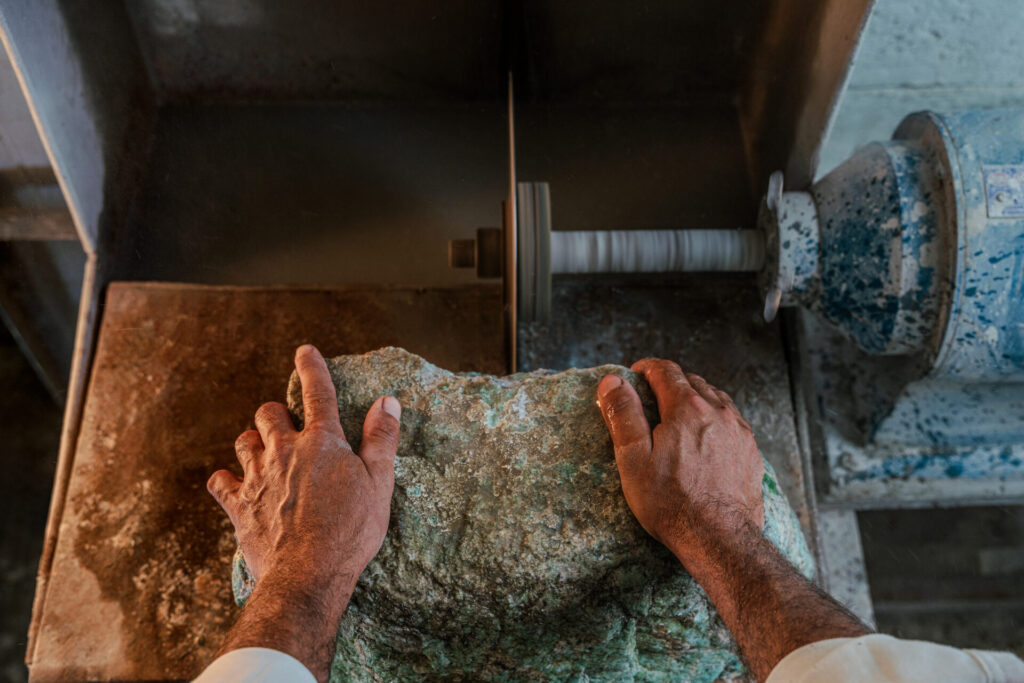
Sourcing is about relationships more than transactions. We work closely with miners, stonecutters, and suppliers- many of whom have known my family for decades. Cutting is patient work: it demands rhythm, respect, and collaboration with the material. The artisans in our studio carry that knowledge in their hands. Every offcut is kept; fragments often return later as part of new work. Nothing is wasted- the process itself mirrors the idea of repair and continuity.
What is your creative process?
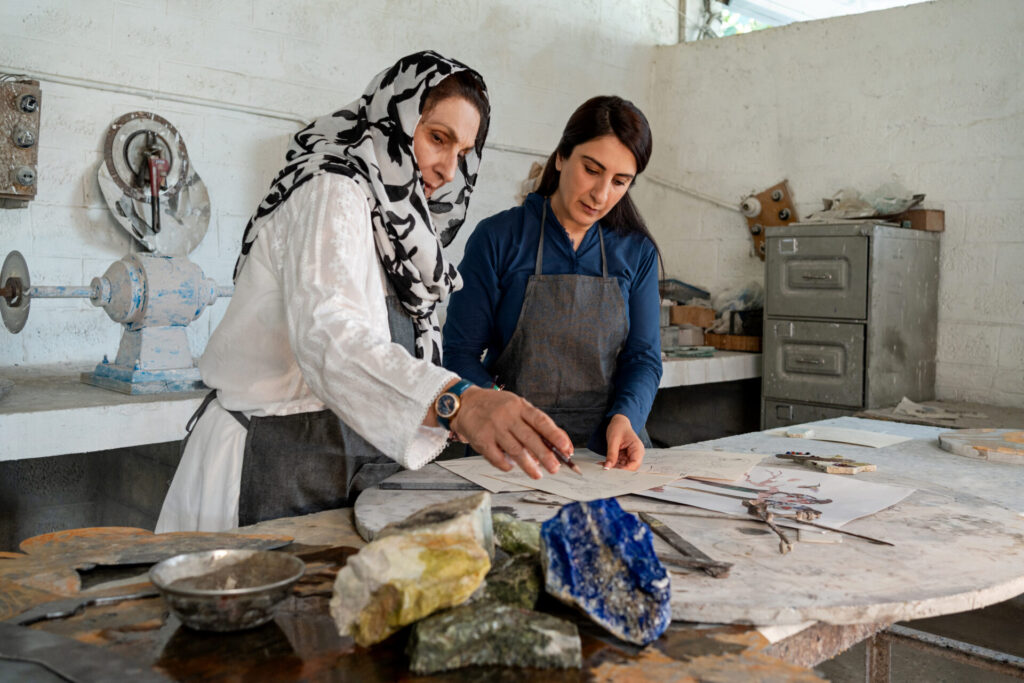
Ideas arrive in fragments- sometimes through drawing, sometimes through the weight or color of a stone. At times the material leads, and at others the idea insists on its own rhythm. I begin with a hand-drawn line, a contour that already holds motion within it. It’s scaled, tested in paper or plaster, and then translated into stone through the process of pietra dura (parchin kari)- cutting, grinding, and fitting until the line finds its place. The work may then expand into scagliola, verre églomisé, enamel, or copper, each medium adding a different register of reflection and depth.
What I love most is how slow the process is-it asks for attention, repetition and listening. I try to leave traces of the hand, of touch and imperfection, so the surface breathes. My practice is built on collaboration. In our studio, the line between artist and artisan dissolves. Before British rule in South Asia, making never separated “art,” “design,” and “craft.” It was a shared act of creation, and I try to keep that spirit alive- where each gesture carries not just skill, but story.
In the end, fracture becomes a way of bringing things together- stone by stone, story by story. The process itself resists erasure. It’s about belonging, not nostalgia; about reassembling what conflict or time has broken. Every fitted fragment holds both damage and repair, and that, to me, is the truest record of history we can leave behind.
History is an important part of your work. Where do you see the role of history in today’s world? How does reviving craft and telling stories change the narrative?
I don’t see history as something behind us- it’s a material we keep remaking. Every technique we use carries traces of migration, exchange and memory. The art of pietra dura itself moved from Florence to the Mughal courts, and later found refuge in cities like Peshawar and Kabul through the hands of artisans displaced by war. In my studio, those routes are still alive.
I don’t think of it as “reviving” craft; these are living practices held by living people- many of them Afghan artisans within my Pashtun community. Working with them is a way of continuing knowledge that could otherwise be lost, but also of reshaping how we see value, authorship and beauty.
In the end, fracture becomes a way of bringing things together- stone by stone, story by story. The process itself resists erasure. It’s about belonging, not nostalgia; about reassembling what conflict or time has broken. Every fitted fragment holds both damage and repair, and that, to me, is the truest record of history we can leave behind.
Mahmoud Darwish was an inspiration for one of your most important pieces—what other artists have inspired you?
Darwish showed me that a homeland can be carried in language without nostalgia- that memory can be held with clarity, not sentimentality. His writing finds form in restraint, and that’s something I try to do in stone: to speak of loss, belonging and beauty with balance.
My mother remains my deepest influence. I return to Nasreen Mohamedi and Agnes Martin for the discipline of line, Etel Adnan for her way of mapping memory through color, Mona Hatoum for the clarity with which she addresses displacement, and Sadequain for fearless craftsmanship.
I’m also drawn to Gulgee, especially his lapis series, where crushed stone becomes both pigment and prayer. His work blurred the boundary between matter and spirit- the gesture itself became devotion.
Tell us more about the movie you made with Sharmeen—who is your audience, and how does it impact differently from your artwork?
The film, Heart of Stone, made with Sharmeen Obaid-Chinoy, follows a return- to the mountain in Mardan, to Peshawar’s lapis basements, to the small inlaid box that first drew my mother in. It traces the journey of the miner, the artisan, and the table where fragments become whole.
It’s for anyone who wants to see what a piece carries before it becomes an object- time, labor, relationships. My artworks hold these things within their surfaces; the film gives them voice. It lets you hear the rhythm of cutting stone, the hum of the workshop, and the cadence of conversation between generations.
Why Cairo and Pakistan? What about Cairo is meaningful to you and what translates into your work?
I moved to Cairo earlier this year when my husband was posted here, but the city had already lived in my imagination for a long time. I’ve always been drawn to how ancient Egypt combined gold with lapis and turquoise- stones that once travelled the same routes linking Afghanistan, Pakistan, and the Sinai. These materials have carried stories of ritual and beauty for over five thousand years; they speak to everything I work with- light, distance, and memory.
When I walk through Khan el-Khalili’s stone and metal markets, I’m reminded of Qissa Khwani Bazaar in Peshawar, where I used to source stone with my mother. Both are marketplaces of stories- layers of trade, craft, and human connection. Cairo’s light- the pale desert against the deep Nile blue- has entered my palette, while Peshawar remains the heart of my practice.
At the Egyptian Museum, I was deeply moved by the ostraca- small shards used for writing and drawing. They inspired my piece Lapis Lazuli: The Wound and the Archive, where fragments of stone become carriers of memory. Living between Cairo and Pakistan keeps my practice moving between origin and discovery- between the familiar and the newly imagined.
Any plans for an exhibition here? Any new announcements you’d like to share?
In Cairo, I’m presenting Lapis Lazuli: The Wound and the Archive for Art D’Égypte, as part of the Arts Décoratifs exhibition at the Egyptian Museum in Tahrir, from November 14–24. The work continues the conversation that began with War Gardens but moves toward a more abstract language- exploring fracture, repair, and the lineage of materials that once travelled between our regions.
In Pakistan, at the NCA Triennale 2025, I’m showing Centre Elsewhere- hand-drawn lines translated into stone, shifting from narrative to rhythm and optical movement. Showing it at Kasb-e-Kamal Kun felt like bringing the work home; the exhibition’s focus on mastery and process aligned deeply with my own practice. The show runs until November 30.
Next, at Nomad Abu Dhabi, from November 19–22, we’ll be showing the Gandhara Carapace Series, a collaboration between Nada Debs and Studio Lél. I invited Nada to Peshawar to experience the city’s layered histories and crafts, and from that encounter grew a shared body of work that has since travelled from Design Miami to PAD Paris with Galerie BSL.
Talking with Meher, listening to how carefully and masterfully she chooses her words, her insistence on collaboration in the making space, hearing her recite historical references and analyze the work of artisans across the world, as well as share intimate tales from her line of work, is more moving and inspiring than one interview has a right to be.
I am left with a deep appreciation for craft and a strong desire to absorb more artwork.
You can also see Meher’s work Lapis Lazuli: The Wound and the Archive now at the Egyptian Museum in Tahrir.