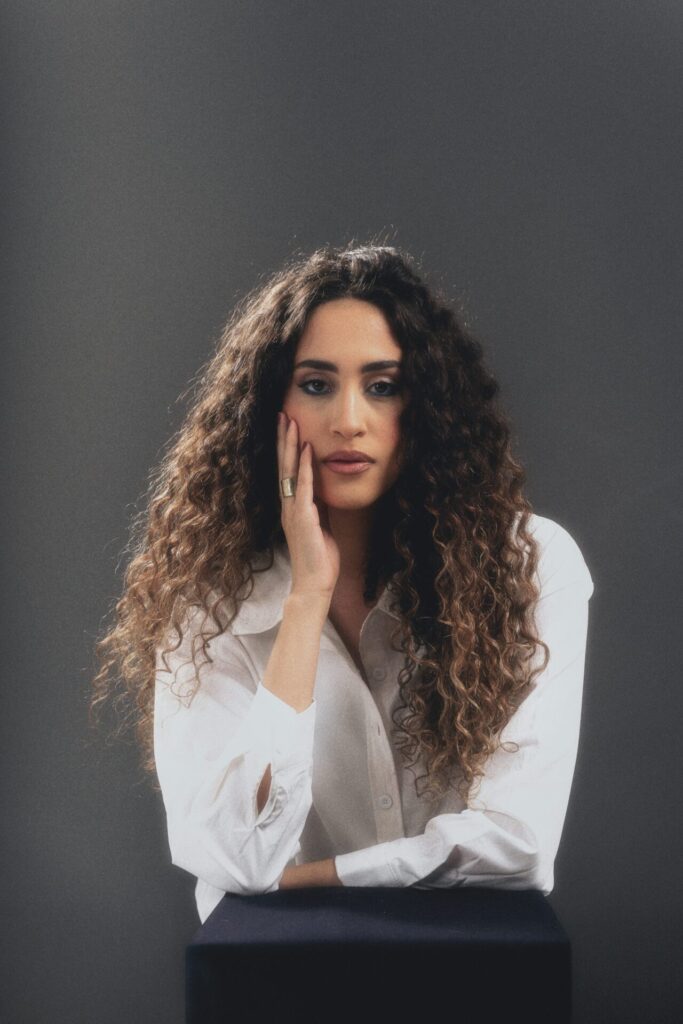
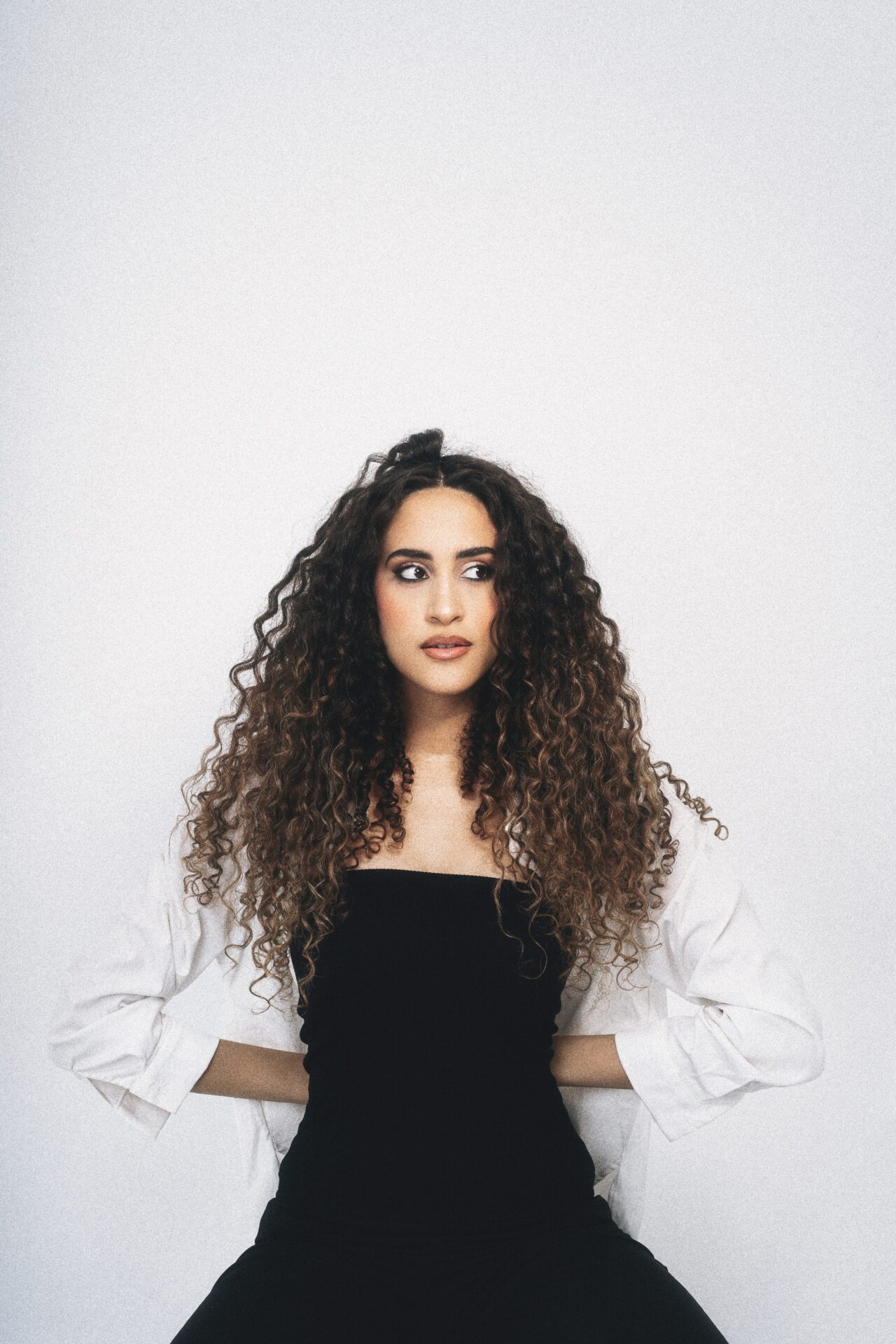
If you’ve ever listened to a song and felt like it was written just for you, chances are it was Donia Wael. The singer, songwriter, and actress has a way of turning fleeting thoughts and quiet emotions into art that speaks. We sat down with her to talk about music, acting, the little moments that make a big impact, and the story behind how she makes it all feel so real.
Your songs always feel so close and personal. For you, is songwriting telling a story or just expressing yourself?
Songwriting is a mix of both. It often starts as a very personal feeling or thought, something I’m trying to understand, and then it slowly turns into a story. I don’t always sit down intending to tell a clear narrative, sometimes I’m just expressing an emotion, or a situation that touched me. Along the way, it just reveals itself.
Your lyrics often come naturally. How do you keep that flow, especially in an industry that’s always pushing artists to produce?
I try to protect that flow by not forcing it. When I feel pressured, I step back instead of pushing harder because I always want to be honest and real in anything that I do. I try to give myself space to feel and observe because that’s where the lyrics come from. Productivity means nothing to me if the song doesn’t feel true to me.
Many listeners feel like your music speaks directly to them. Was that intentional, or did it happen naturally?
It happened very naturally. I never write with a specific audience in mind or to impress.. I write to understand myself. I think when you’re honest about your own emotions, people see themselves in that honesty and they feel it in the soul of the song. The connection wasn’t planned, but it’s something I’m very grateful for. To know that they’re not alone in this feeling and that I’m not alone as well.
About Artistic Growth
You always focus on exploring rather than perfecting. How has that shaped your artistic journey? It allowed me to make mistakes, change my mind, and grow without feeling trapped by expectations. Even though I sometimes fall into that trap, I try to instantly release myself…I’m still learning to trust my instincts more and trust the process, and just leave it to God.
Looking at your early songs compared to your recent ones, what’s changed the most — your sound, your confidence, or your emotional honesty? I think the biggest change is my emotional honesty. My sound has naturally evolved, and my confidence has grown with time, but what truly shifted is how openly I allow myself to feel and express those feelings. I’m less afraid of being vulnerable now, and that reflects directly in my music.
Do you ever feel torn between giving the audience what they expect and following your own growth? Sometimes, yes. But I’ve learned that If I’m honest with myself, the audience will feel that honesty too. I believe people will feel whatever vibe or emotion you put in the creation, and if it was not genuine, it will show.
About Acting and Midterm
In Midterm, Malak is quiet and subtle. What drew you to her? Her journey and traits instantly drew me to her, her silence. She wasn’t trying to explain herself or be understood, and that felt very honest. I was interested in a character whose emotions live beneath the surface, because that kind of quiet complexity feels very real to me.
Malak expresses herself through silence and small gestures rather than big drama. Was that hard or fun for you as an actress? It was both challenging and exciting. Silence leaves you exposed, there’s nothing to hide behind. But it was also freeing, because it allowed me to trust my instincts and focus on the smallest details. I enjoyed letting emotions exist without forcing them outward. But it was definitely a risk.
Did playing her change how you see adulthood or emotional growth? Yes, it made me realize that growing up doesn’t always look loud or decisive. Sometimes emotional growth is quiet, slow, and even uncomfortable. Malak taught me that adulthood can be about learning how to sit with your feelings instead of running away from them.
Were there moments during filming when you found it hard to step out of Malak’s mindset? Definitely. Some days her emotional weight stayed with me longer than I expected, especially anything related to her grandma or father. I had to consciously remind myself to step back and reconnect with my own life, and I’m still working on that.
Your songs in Midterm — like 3al 3ady, Ded ElKon, and Yaretna — felt part of the story. How do you write music for a character and capture their emotions? I feel like the character directly sings to me and it’s almost like magic I still don’t know how it happens. I also discovered Malak more when she wroteyaretna. The songs weren’t written to stand alone, they were meant to exist inside her world and carry her emotions forward.
Does writing music for a show or film make you experience your own emotions differently? Yes, because no matter how the character is different from you, you always find a way to connect and just it happens on its own and then you get to understand that this is exactly how you are feeling as well because every character is a part of you no matter the distance. It helps me understand and unlock things and feelings I didn’t know were there.
About Voice Work in بطل العالم
How did it feel connecting with people through your voice, without being on screen?
It was surprisingly intimate. Without visuals, the voice carries emotion, vulnerability, and intention. Knowing that people connected through sound alone was very special to me.
You recently sang for a character in بطل العالم. How is singing for a character different from performing for your audience?
Honestly anything I can use or add from me to any project makes me happy because I’m still experiencing things, feelings, and I’m learning a lot about how my voice alone can serve a story.
About Inspiration and Connection
Which artists or musical styles influence your music today? I’m influenced by any artists who are real, who I can feel emotion in their songs. I’m still exploring and trying different styles to evaluate honesty and simplicity, regardless of genre. I’m drawn to music that feels raw and unpolished, where emotion comes before perfection.
You’ve said you want people to feel less alone through your work. How does that affect the choices you make as an artist?
It makes me more comfortable in being vulnerable and just myself because I know that if I felt this, then someone else did as well, that I’m not alone. If something feels true to me, even if it’s vulnerable or quiet, I trust that it will reach someone who feels the same way it. That connection with anyone who listens to me is more important than anything else.
About the Future
After singing, acting, and voice work, what do you want to focus on next? I want to continue exploring stories that feel meaningful to me, whether through music or acting, or another art form. I’m less focused on categories now, and more interested in projects that allow me to grow emotionally and artistically.
What feeling would you like your audience to walk away with after hearing your music or watching your work? I hope they feel understood. Even if they can’t explain why, I want them to feel a little less alone, and a little more connected to themselves. I want to touch their hearts

 Nahla Zayed