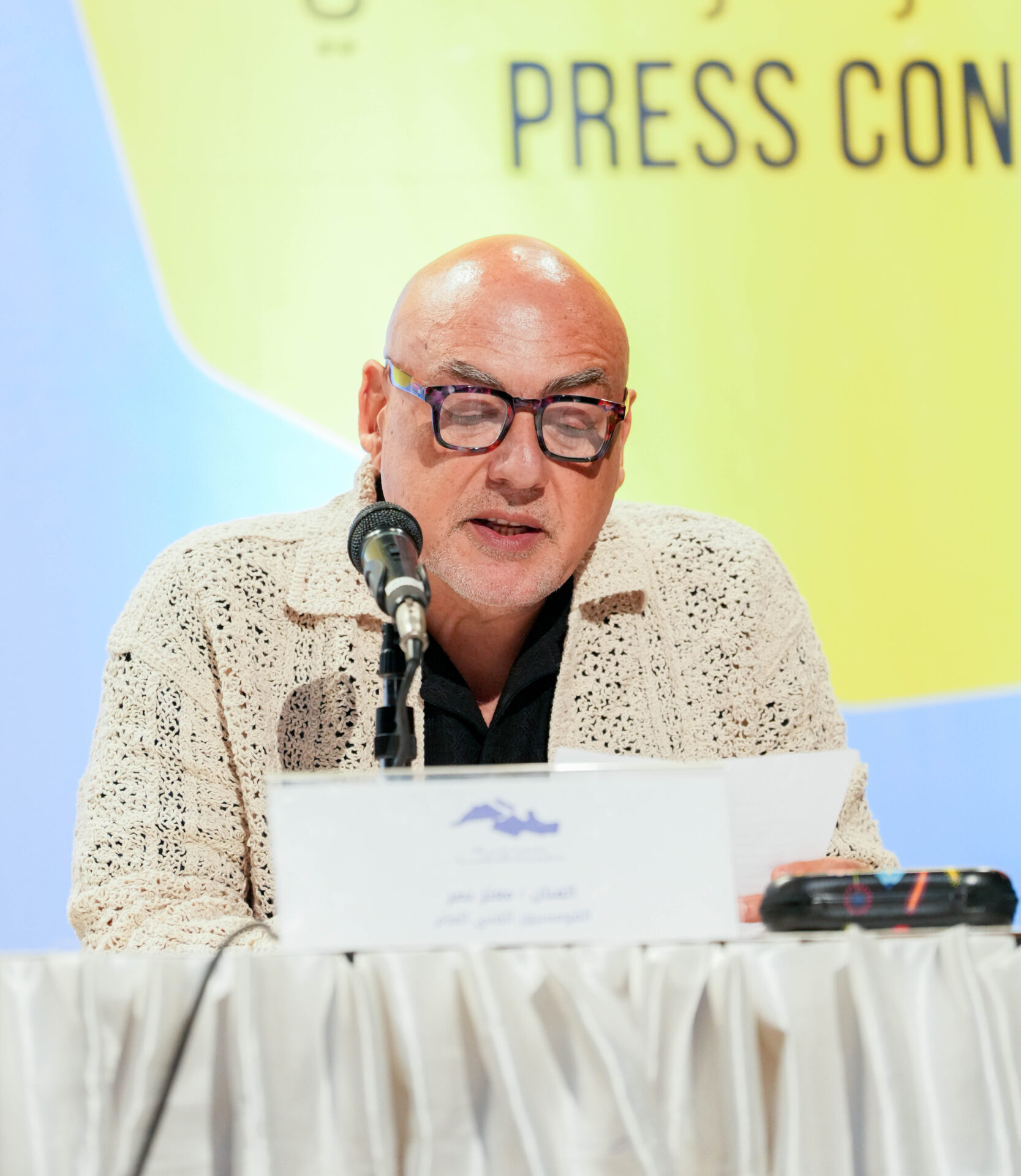
 Nahla Zayed
 After 12 years, the Biennale d’Alexandria returns in 2026 under the theme “This Too Shall Pass.” Flair sat down with Chief Curator Moataz Nasr to discuss its cultural impact, global collaborations, and his personal mission to shape Egypt’s artistic legacy.
- The Biennale d’Alexandria is returning after 12 years under the theme “This Too Shall Pass.” How do you feel this theme resonates with the challenges of our times, both regionally and globally?
“This Too Shall Pass”A meditation on progressive change and adaptation, tracing the natural progression of life as it reshapes itself. It invites us to witness the unfolding of existence as a natural act of renewal, a reminder that every ending carries the seed of a beginning, and vice versa, and that life is in continuous bloom
For me, it embodies acceptance: nothing is permanent, and that impermanence brings both humility and hope. In many cultures and philosophies, from East to West, we find versions of this wisdom. That universality is why the theme resonates so strongly today. It acknowledges the crises of our times while reminding us that change and renewal are always possible. It is not a lament but a beacon of optimism, one that I hope audiences in Alexandria and beyond will embrace.
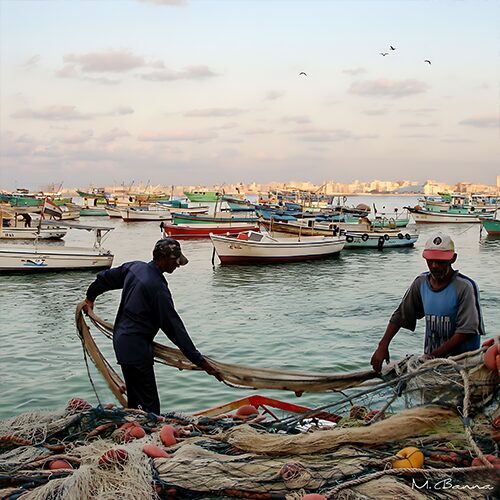
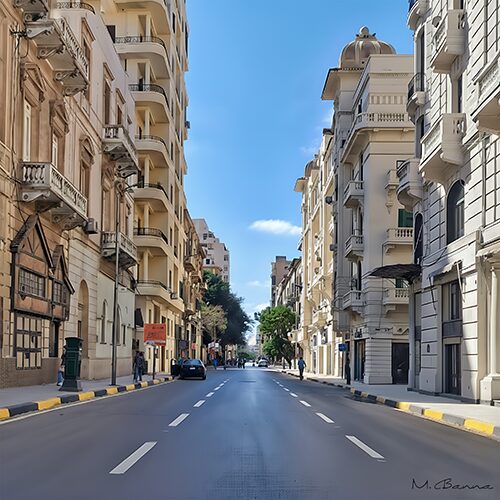
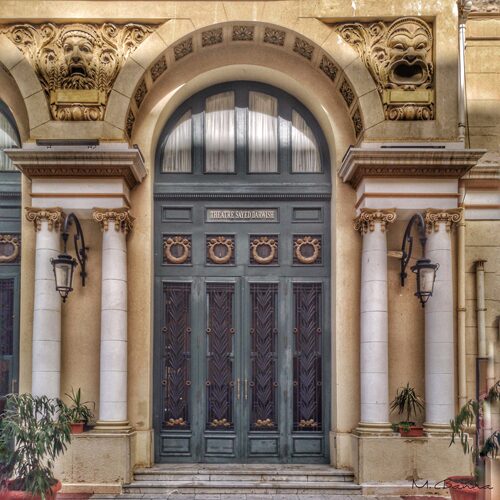
- You highlighted that when the Alexandria Biennale was founded in 1955, it was only the third in the world. Today, there are more than 270. How do you see Alexandria’s Biennale reclaiming its place among these global platforms?
Egypt’s Biennale has had a distinctive voice since its founding under Tharwat Okasha. It was conceived as a bridge between Egypt and the West, a platform where cultures could meet across the Mediterranean. Even now, with hundreds of biennales worldwide, Alexandria’s has a particular flavor rooted in Egypt’s history and identity.
Egypt was one of the earliest homes of art, and that legacy still carries weight. The world recognizes this; major museums and artists are eager to collaborate with us because they see the Biennale d’Alexandria as more than another exhibition. It is a platform of experimentation, a place where new ideas are tested against history, context, and society. Reclaiming its place among global platforms comes not through scale or competition, but by staying true to what makes it irreplaceable: a biennale shaped by Alexandria’s spirit, its memory, and its role as a cultural crossroads.
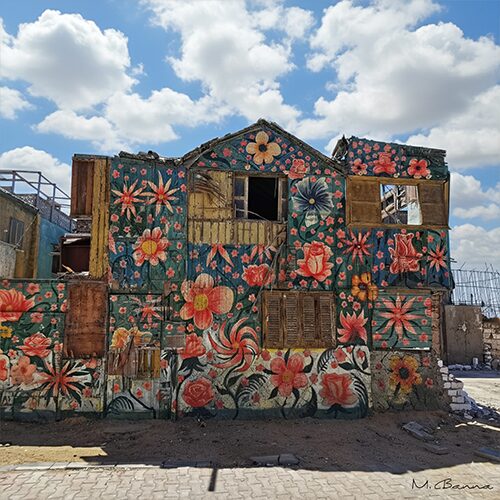

- Beyond the art world, what societal impact do you hope the Biennale will have on local communities in Alexandria and across Egypt?
Art is not meant to stay behind a glass door; it must live among people. This edition will place works in public spaces so that Alexandrians encounter art in their daily lives. I believe this can shift perspectives, inspire pride, and even influence how people think and behave. The Biennale is also designed to outlive its exhibition period, with year-round activations, talks, and competitions that engage schools, families, and communities across Egypt.
Imagine a nationwide call for people to find or create objects that embody modern art, culminating in a massive exhibition of works by ordinary Egyptians. Such initiatives are about making art inclusive, reminding people that it belongs to everyone. Ultimately, the Biennale is a soft power: it can elevate culture, strengthen national identity, and spark a renewed love for art that spreads far beyond Alexandria.
- The Biennale has strong partnerships with countries like Italy, Spain, France, and Turkey. How do these collaborations enrich the event’s narrative?
The Biennale d’Alexandria has always been international by nature, drawing from the Mediterranean’s shared heritage while inviting voices from far beyond. Collaborations with countries such as Italy, Spain, France, and Turkey are vital because they add layers of dialogue and exchange. Each brings its own traditions, questions, and artistic visions that both challenge and enrich our own.
At the same time, we are careful to maintain the Biennale’s Egyptian character, the flavor that makes it distinct among global platforms. What excites me most is how these partnerships transform the Biennale into a true laboratory, where ideas circulate freely across borders and artists influence one another. In a world where division often dominates, these collaborations are proof that art can still create bridges, reminding us of our interconnectedness across history and geography.
- You described this revival as both a responsibility and a challenge. On a personal level, what does this role mean to you as an artist and cultural leader?
Being asked to lead the Biennale’s return is one of the greatest honors of my life. I was born and raised in Alexandria, and my family has long carried a deep pride in being Egyptian. To relaunch an event that has been part of the city’s identity for decades feels like coming full circle. That’s why I look at it as more than just a professional milestone; it is a personal responsibility to my country and its culture.
For years, through projects like Darb 1718, I have believed that culture is a mission, something larger than any one artist. The Biennale is my chance to extend that mission on an international scale. It is both challenging and deeply rewarding, because I know this work can shape how Egypt is seen abroad and how Egyptians see themselves at home.