 Sama Farrag
 “Kol haywan leeh afas, we kol afas leeh hekaya.”
In the crevices of Cairo on a warm Thursday night, I went to the zoo. But there were no cages in sight, and the only creatures present were dressed in freshly laundered clothes and worn-out shoes. I was sitting in the audience of Kesset Genenet El Haywanat, a modern Egyptian take on Edward Albee’s The Zoo Story, and enjoying my time significantly more than if I had gone to the actual zoo.
Albee’s one-act play revolves around alienation and the pursuit of human connection, and it is within this pursuit that the Egyptian adaptation truly finds itself. As soon as you walk into the theater, you see a bench, a lamppost, and feel an overwhelming sense of tension. The stage does not mimic the greenery and wildlife you would typically see at a zoo, but you find a single shrub labelled “shagara”, a garbage can labelled “zebala”, and two cardboard clouds labelled “sehaba”. I found these small and seemingly insignificant elements to be some of my favorite parts of the play. It felt like a deconstructed menagerie that I was attempting to make sense of, but due to the absurdist nature of the play – nothing was really as it seemed.
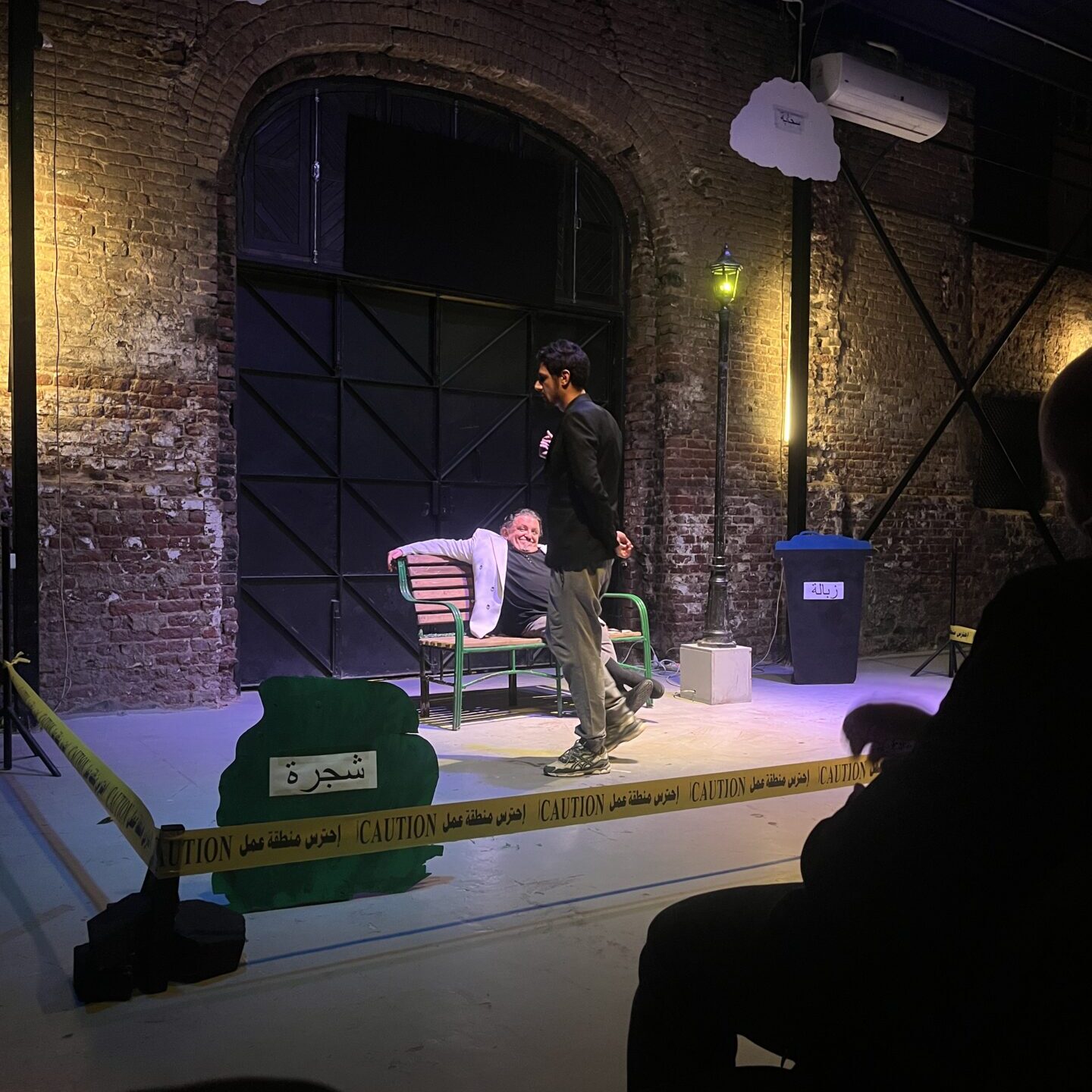
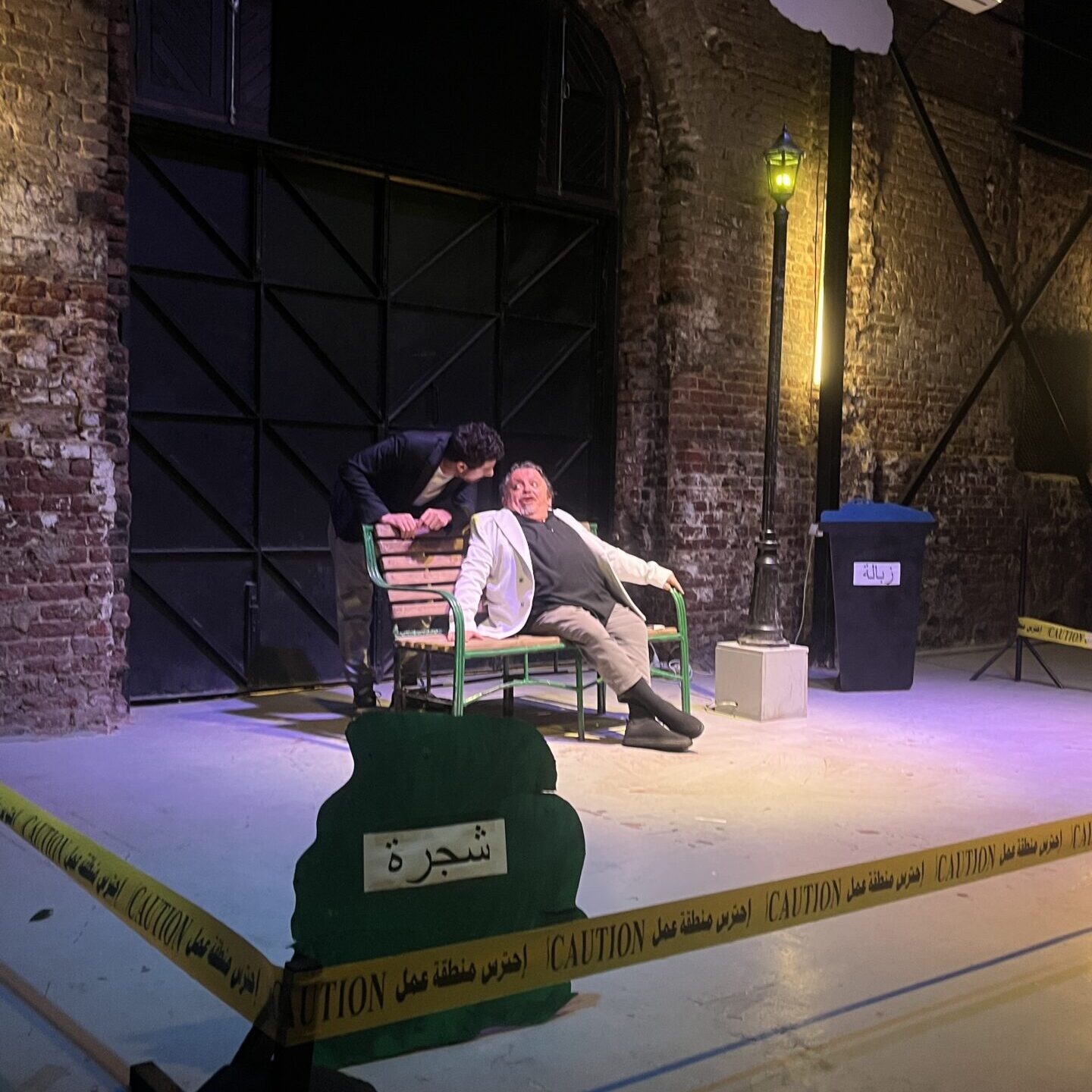
Before a single word is uttered, the scene announces itself. An old man occupies an equally old bench. He’s reading a newspaper, smoking dokha, and you can faintly make out traces of wiped-away blood on the floor. I can hear the audience whispering, “Howa fih eh?” and “Did it start yet?” I see their heads turning sharply, looking around in confusion, and I hear subtle uncomfortable shuffling—a foot here, a chair there—as they attempt to settle into the quietly disorienting space that we’ve just walked into. A slightly disheveled man walks in from stage left, entering the scene using the very same door I had just walked in from 10 minutes earlier to get to my seat. The man, whom we later learn is Waheed, silently staggers around the stage before he turns to the front row and asks to have a seat. It’s in that moment that the fourth wall collapses, slowly but surely placing the audience inside the scene. No longer people watching a play, but spectators at a zoo.
The play unfolds as one long conversation between a man desperate and starving for human connection, a man unlucky enough to have been there, and an audience listening intently—almost as if eavesdropping. Waheed proceeds to tell the unnamed man stories that are bizarre and decidedly disturbing, with the man staring at him with nothing but perplexity and a twinge of awe—maybe a little bit of pity. With every story Waheed tells, I find myself unable to peel my eyes away, as if watching an animal within its enclosure. I pondered over my own connections and conversations and deeply understood why Waheed was dumping everything onto a stranger and why this stranger was listening. Sometimes all a person needs is someone to talk to, without fear of judgement and the rare feeling of being truly heard.
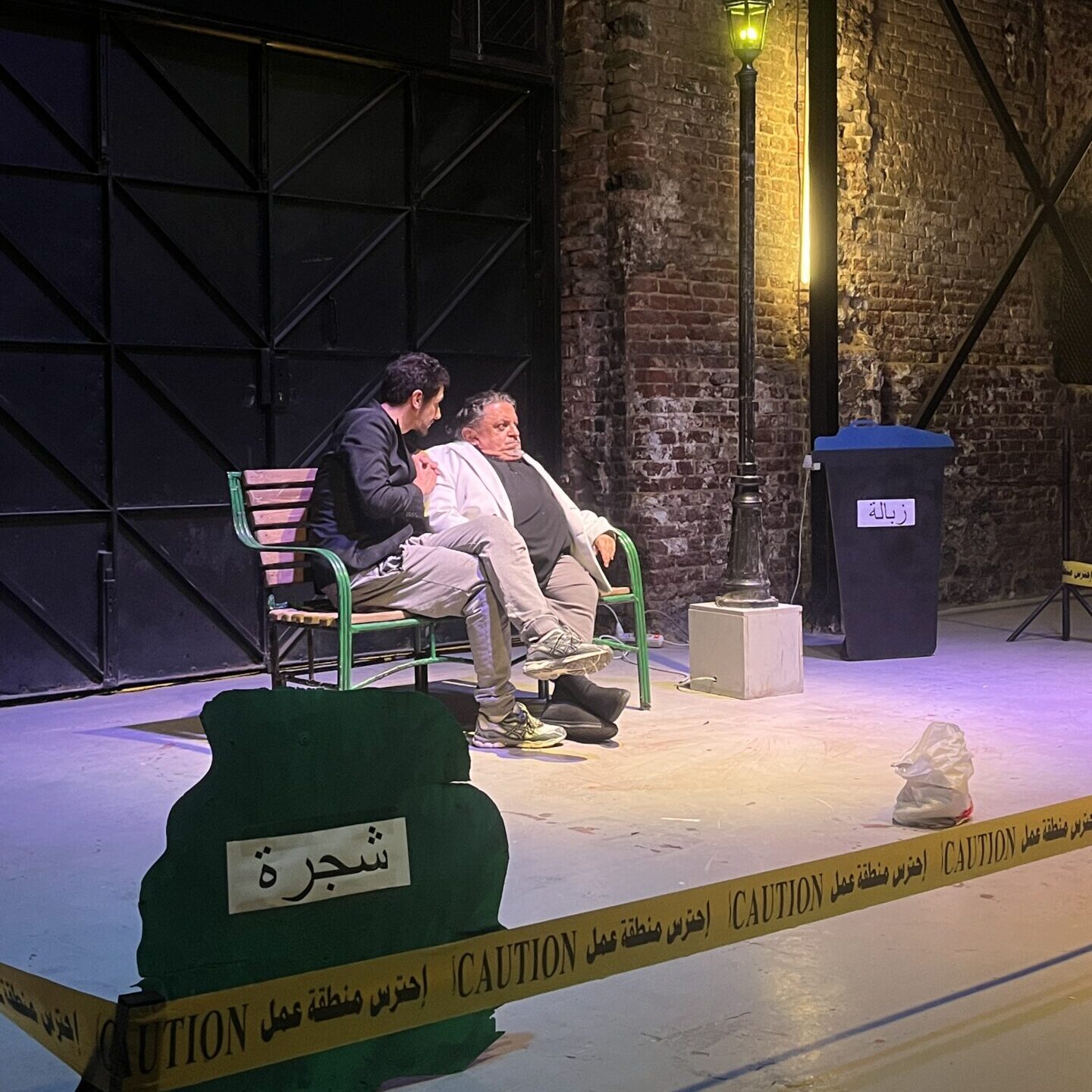
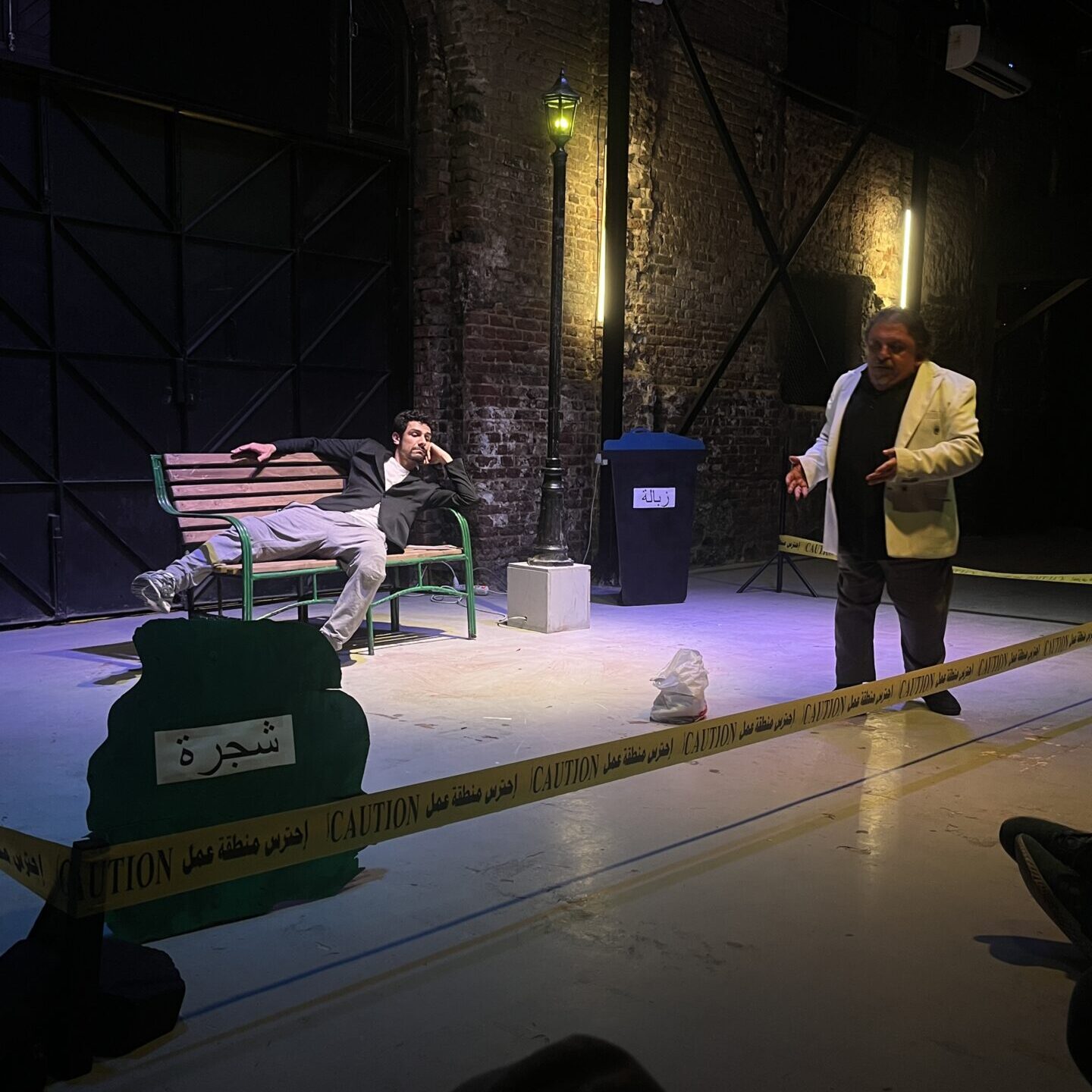
The dialogue flows with ease. The writing is sharp, raw, and incredibly admirable. It places trust in being unfiltered and natural, rather than the over-the-top and riddled with metaphorical nonsense dialogue that we usually encounter—resembling a real-life conversation. Actors Kareem Hosem and Nagui Chehata bring a precise and deeply compelling performance that feels grounded and authentic enough to draw the audience into their vulnerability. The simplicity of the set design was especially charming, relying on the audience’s willingness to suspend disbelief rather than creating an overwhelming spectacle. It was stripped back and intentional, anchoring the one-act play just the right amount and leaving the rest to imagination and inference.
I was completely blown away by Kesset Genenet El Haywanat. Even days later, it lingered—I remembered elements that I hadn’t picked up on before and understood things I had initially failed to. Upon leaving, I was analyzing everything for the rest of the night and having “Ohhhhh” moments over dinner. This play does not end after the lights are turned off and the set is turned over; it continues to unfold as you recall silences that initially made no sense and contemplate why we never learn the stranger’s name. First-time writers and directors Youssef El Khashab and Talal El Maghraby do a remarkable job of honoring a classic while making room for their own vision. They maintain the balance between realism and absurdity in a way that does not feel forced but familiar. The pacing left me on the edge of my seat throughout the entirety of the play, and their stage direction carried itself with intention. For their debut, Youssef and Talal have most definitely created a lasting impact on the stage. Their adaptation of The Zoo Story stays with you through its intensity, depth, and precision, and I hope we can see more from them in the near future.
I give it a 4.5 out of 5. Personally, I would have loved to experience it on a larger stage, where the tension could expand and the performance could fully command the space. (Fingers crossed for a rerun!)