 Hedayat Reda
 “Evolve or die” is an expression we’ve often heard referred to in honour of Darwin’s theory of evolution: in fashion, in culture, in tech, even in war. But until my sit-down with the founders of Blak and Blak by O, I had never heard it referred to in food.
“We change ourselves every seven years. Every seven years, every single cell in your body changes—that includes your tongue—and so, your palate changes.”
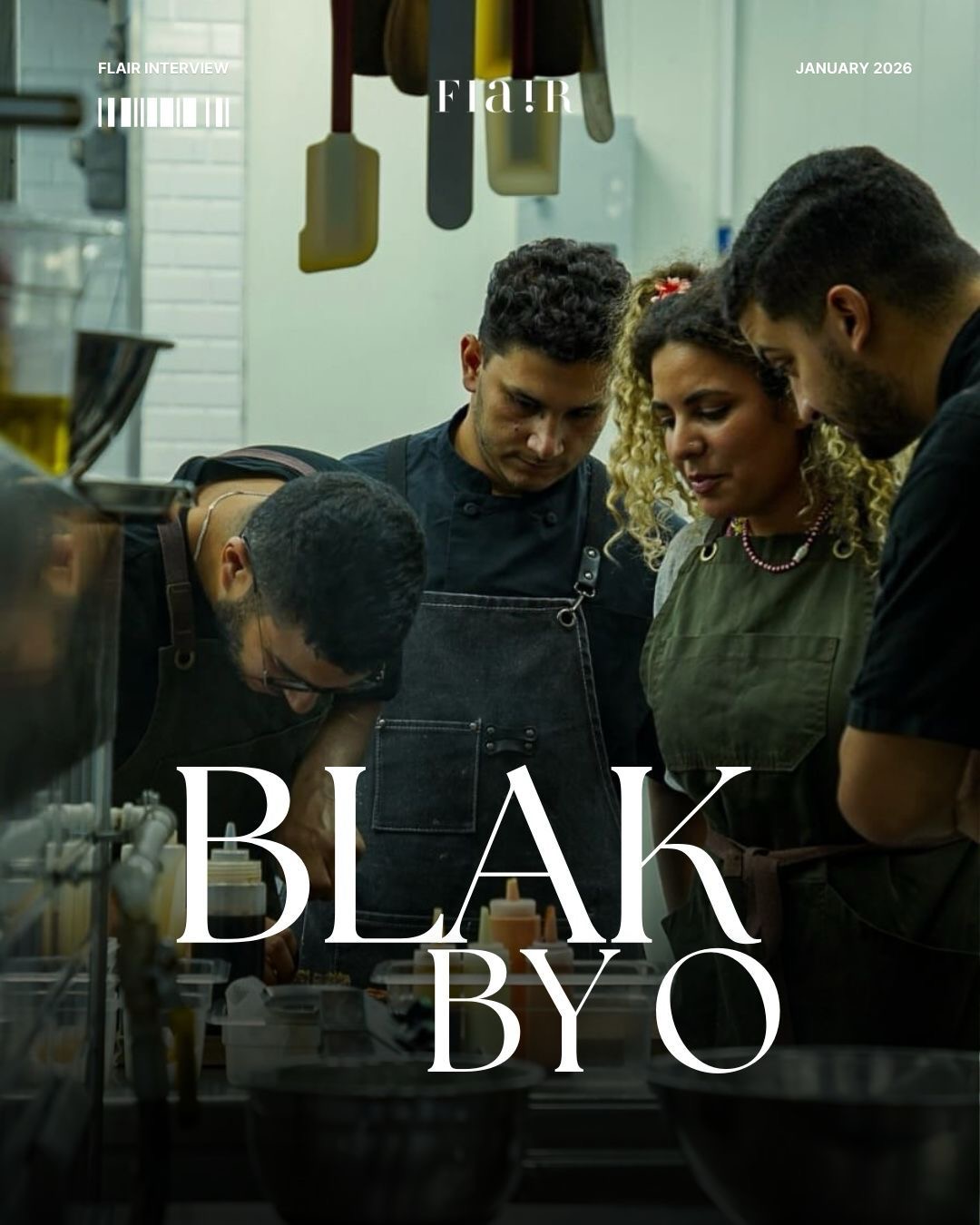
Omar Semary and Hana El Gohary’s philosophy is simple: food is meant to be an experience. A messy, fun, creative, whimsical experience. Coming from a background in fine-dining kitchens, both culinary school graduates fell in love with food early on—long before accolades, tasting menus, or open kitchens entered the picture. What started as instinct and curiosity hardened into discipline: long hours, exacting standards, and an almost obsessive commitment to craft.
“I started working in fine dining from my first restaurant. It was just pure luck,” chef Hana shares her story. Like Tinkerbell, she is vivacious and full of life, sprinkling her magic fairy dust onto her tales and tribulations.
“I like food to be playful. I want you to taste it and smell it. Eat it with your hands, eat it with tweezers.”
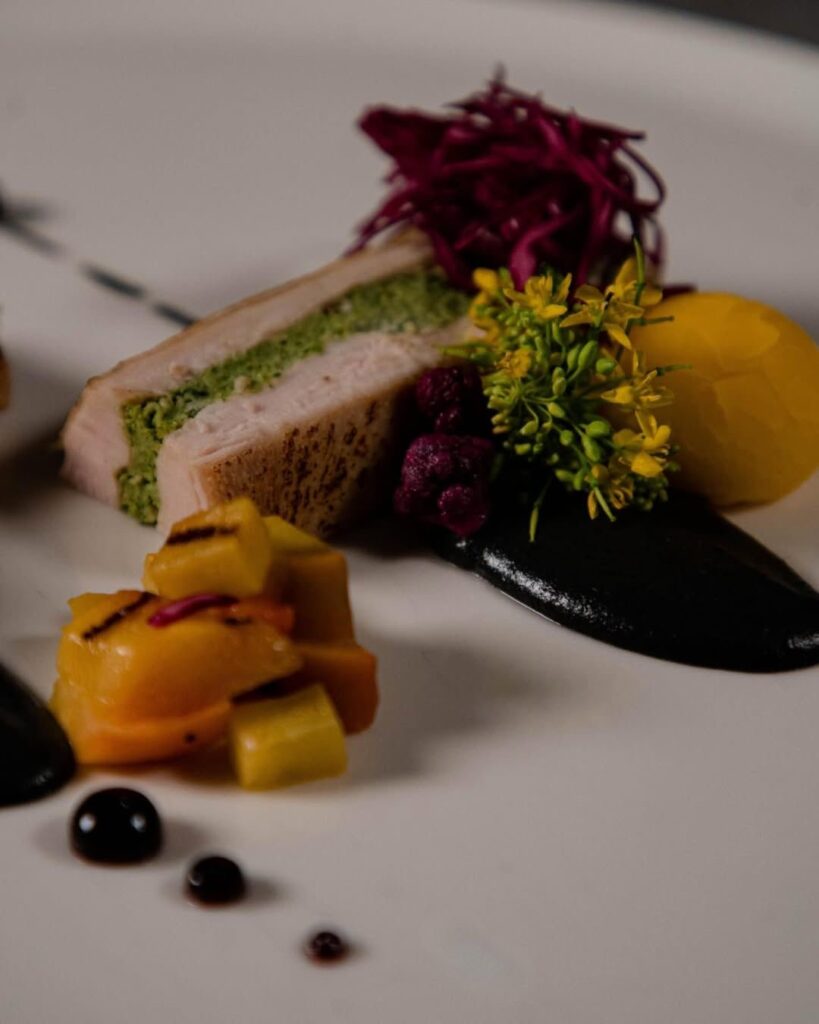
Falling in love with food from her youth, Hana didn’t set out to pursue the culinary arts in Canada. At just 18, having moved to Montreal to study psychology, she found herself the youngest and only woman on a team of seasoned chefs, learning her craft in high-caliber kitchens—from La Queue de Cheval, a steakhouse and raw bar, to Shay, a Lebanese-Filipino fusion spot, and Toqué!, a leader in Québécois gastronomy. Each experience built on the last, shaping a versatile and deeply grounded culinary foundation.
“At Queue de Cheval, they were placing bets on me that I wouldn’t last for two weeks. The only reason I began to learn was because I don’t smoke. So, when they were all taking their smoke breaks, they would let me do small tasks for them. Eventually, I got the hang of things and started working for real.”
Hana and I are sitting in MAD Concepts Group CEO Indji Ghattas’ living-room-like office, the mother company of Blak and Blak by O. It is mid-week, and the team at Blak is full swing—from the kitchen staff, to the operations crew, to the marketing magnates. The room is covered in paintings and photos of old automobiles, hung on the walls, lining the floor, everywhere you can look. Like the brand, the space is edgy but homey. New, happening, and yet deeply familiar.
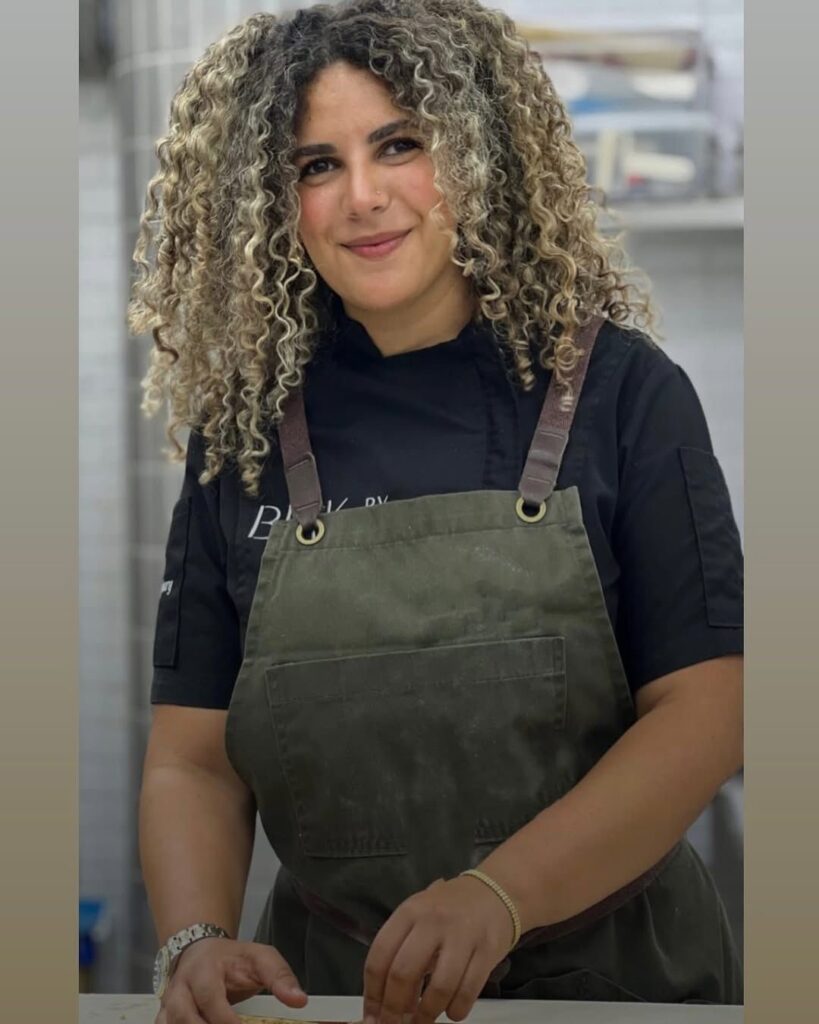
“It takes a village. The team started out with just Omar, Indji, and myself, but now we’re up to almost 20 people,” Hana explains proudly, sharing some history with me.
Together, this dynamic trio is redefining fine dining in Egypt—both on a grand scale and up close. Their flagship, Blak, delivers large-scale, event-only experiences with buffet stations, pass-arounds, and seated dinners, while Blak by O transforms food into an experiential feast where texture, color, and flavor play center stage (think edible velvet, playful silk, and whimsical netting in food form). Most recently, the team has expanded into pop-up dinners and intimate sit-downs, bringing their bold, playful cuisine directly to diners.
The story of how Omar and Hana met is one for the books.
“When I joined La Queue de Cheval, I was greeted as the ‘other’ Egyptian—there aren’t many Egyptians in Montreal’s fine dining scene, but Omar was one of them. The day I met him happened to be his last day at the restaurant and my very first,” Hana recalls. “It was just a brief encounter in the middle of a bustling kitchen, and everyone kept saying, ‘So you’re the other Egyptian.’ I was shocked. ‘What do you mean other Egyptian? I am the Egyptian,’” she shares, laughing.
Omar’s cooking journey follows a similar trajectory to Hana’s. Falling in love with cooking at the tender age of eight, he went on to pursue it doggedly, with a singular focus that is unmissable.
“Our head class teacher was sick, so we went to a cooking class and made cookies—baskot, they were still called that at the time. I went home, waited for my parents to fall asleep, and baked them again. The next day, my dad told my mom, ‘I finished the biscuits.’ And I remember thinking, this is the feeling I want—someone enjoying something I made. I became addicted to it,” Omar narrates.
That feeling would shape his path: culinary school, fine dining, fried chicken, burgers, cheap noodle shops, and kitchens spanning Japan, London, and Spain.
“I get a lot of inspiration from anime,” Omar says. “In Japan, you live to master your craft. I try to bring that energy to everything I do.”
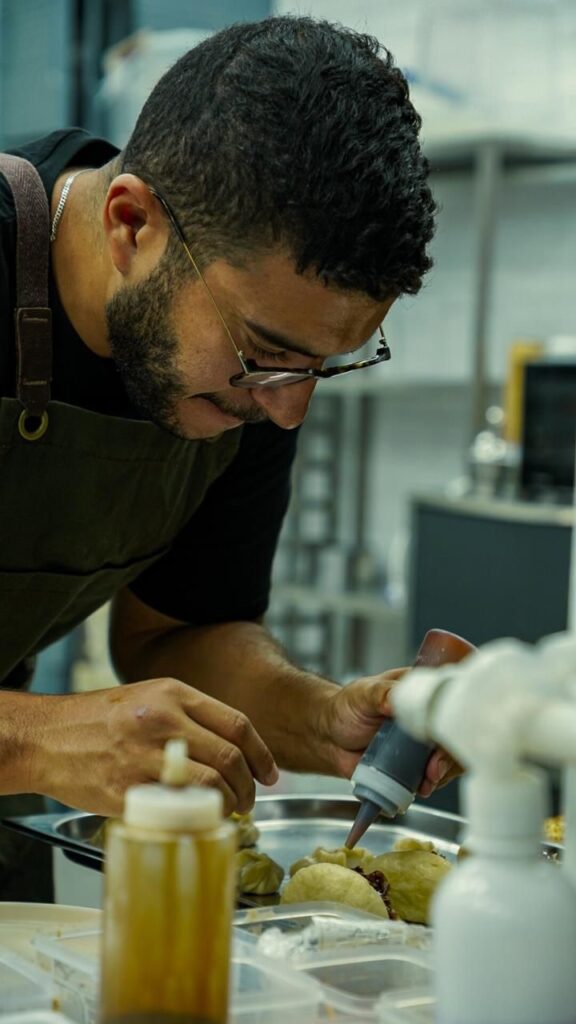
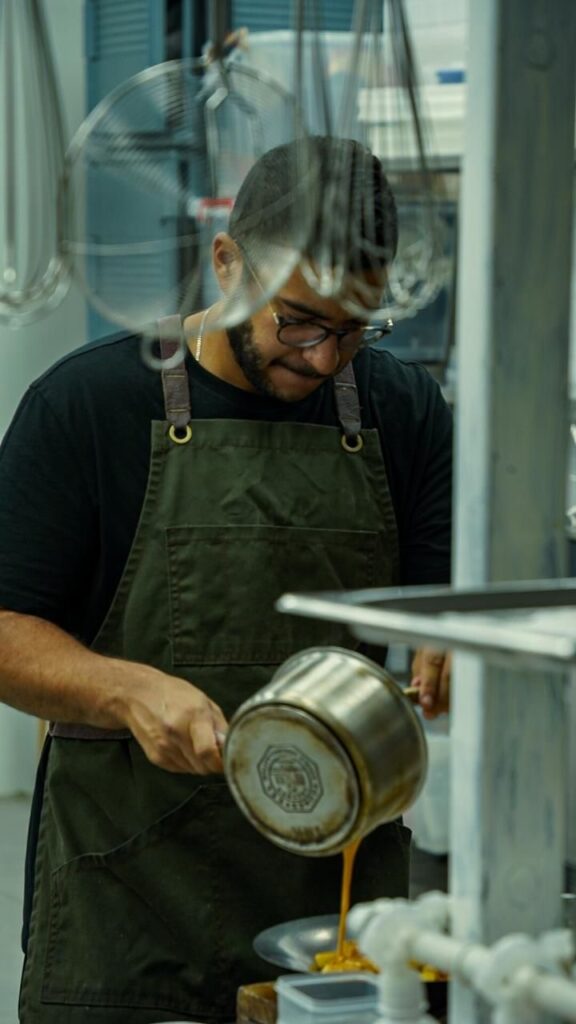
Where Hana flits like Tinkerbell, Omar might be a grounded John—or perhaps a mischievous Captain Hook, the darker side to Hana’s light. With his funky dark brown glasses and a passionate gaze, he’s a whirlwind of ideas and a naturally born storyteller, with a deep appreciation for the artistry behind every creation.
“For me, food doesn’t just have to taste amazing,” he explains. “It has to be craveable. You don’t remember the good combination of dishes you had at a restaurant months ago—you remember that one noodle dish you couldn’t get over. That’s why restaurants like El Prince succeed; they’ve hacked the formula.”
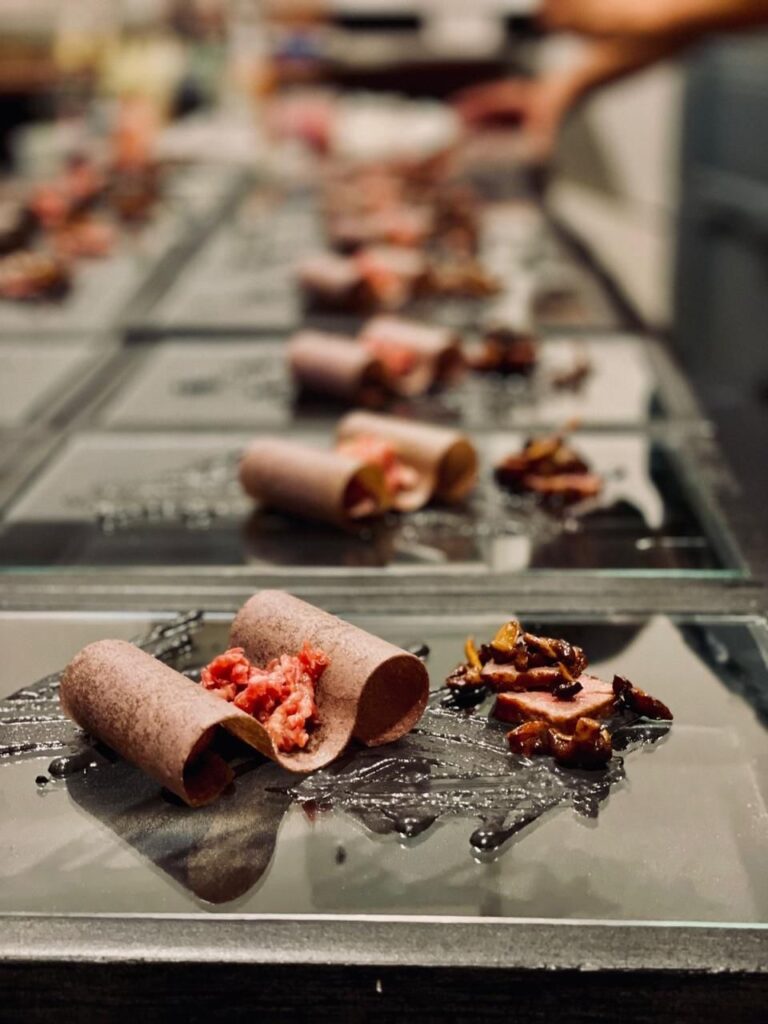
After exchanging some stories, I am suddenly called into the sofra, a long dining table bedecked in an assortment of platters and dishes, served on elegant slabs of marble. A wide array of small puff pastries line the table, covered in finely sliced meats, and to the left is a cylindrical concoction I’ve never seen before. It looks mouth-watering and daunting at the same time.
Hana guides me through the menu, prepared by the team:
“This is my version of a salmon bagel. This over here is salmon tartare with black rice. This is the Pringle cylinder with beef tartare and ginger—this is our most famous canapé…”
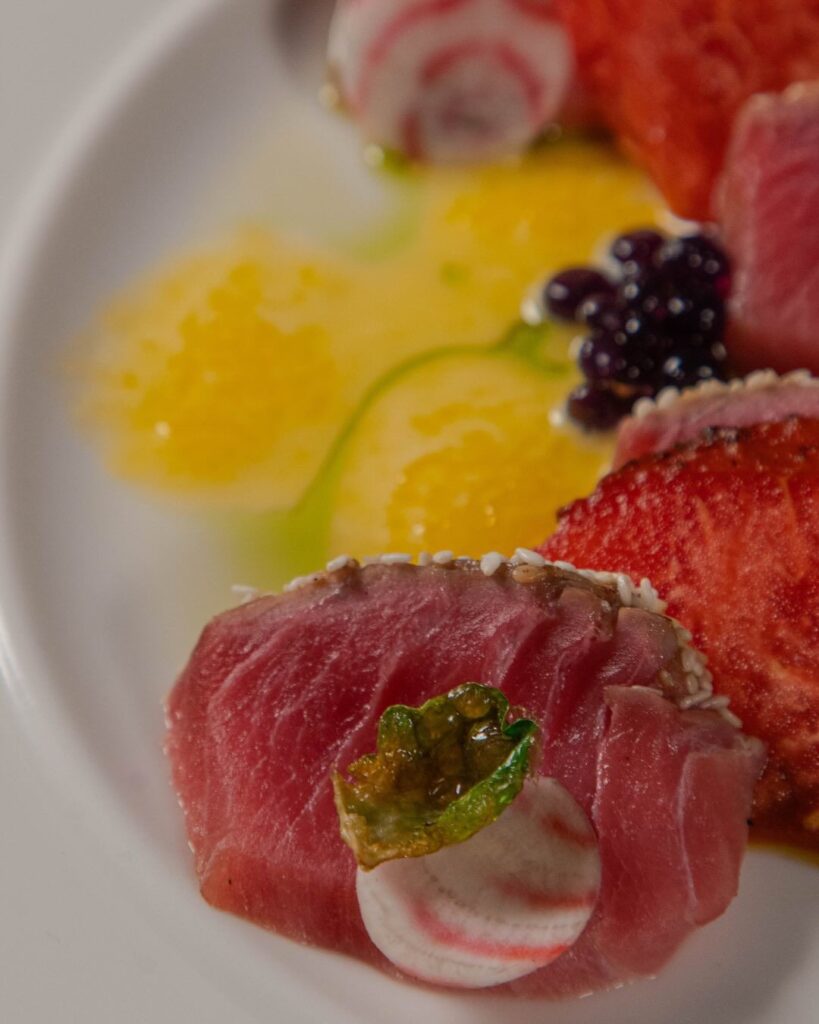
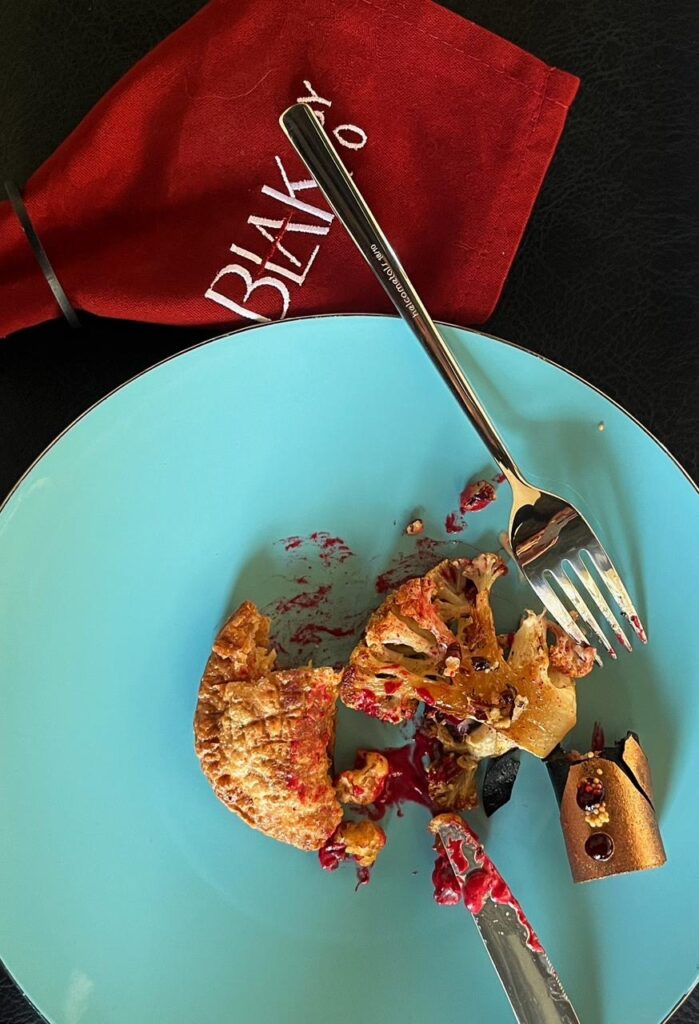
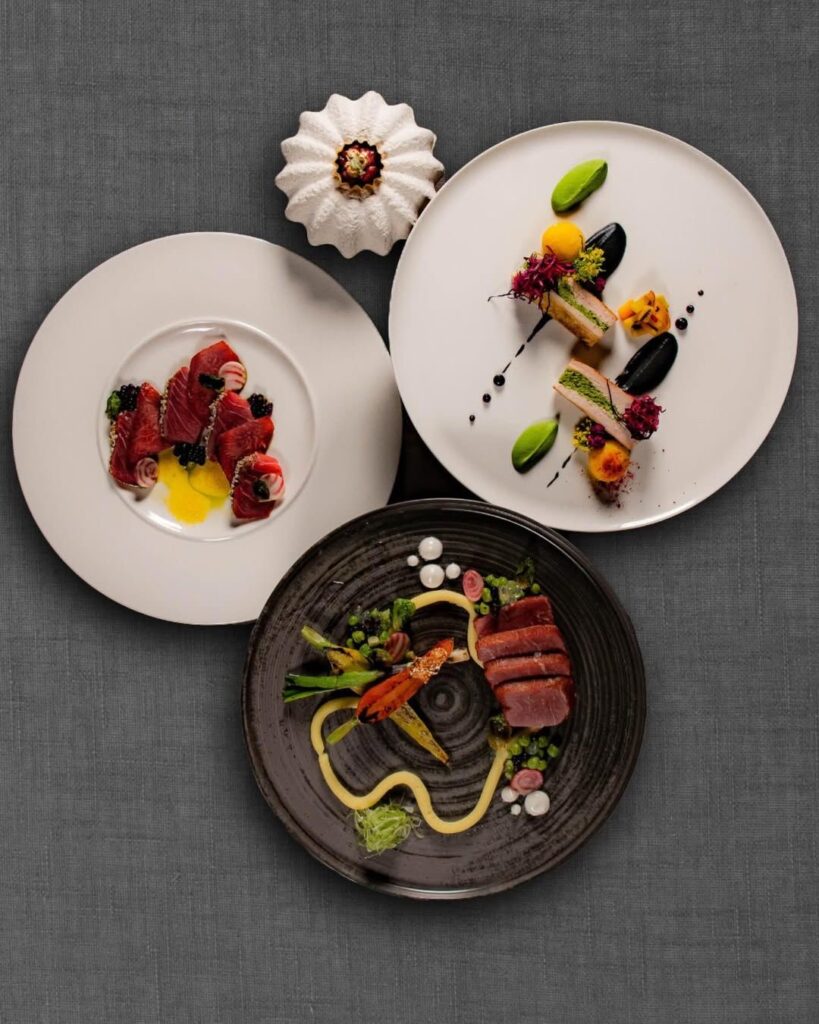
She goes on to outline eight colourful dishes, ranging from bright turquoise blue to charcoal black, including an entremet dessert (a multi-layered French gâteau), piped with chocolate and coffee.
I am so excited to taste this gorgeous food, so I pick up the canapé closest to me and am met with an explosion of flavour and homeyness. The flavour profile is rich, yet simple. Complex, yet subtle. Like being transported on a musical journey for my mouth, each dish comes equipped with its own unique melody. The deconstructed salmon bagel feels like an old country song—Maren Morris circa her debut album Hero. The blue-coloured tuna is zesty, fun, and experimental, Dua Lipa on her last tour. While the baby duck canapé reminds me of an OG blues song: Stevie Ray Vaughan’s The Thrill Is Gone or Chris Stapleton’s Tennessee Whiskey. Hearty and filling, yet moist and easy. Each dish goes down smoothly, leaving me with an appetite for more.
As I am about to take a bite of the last plate—a steak in black sauce—Omar pipes in:
“This is our signature steak and fries,” Omar says, pointing to the Pringle cylinder stuffed with mashed potatoes, and the mixture of gastrique, umami butter, and garlic mayo that line the plate artfully. “It is one of our go-to plates.”
After our tasting, the cooks sweep me up in the story of the Pringle—the cylindrical chip they use to serve a variety of cooked concoctions—and how it has become a signature in many of their dishes. Earlier, Hana had shared with me that sour cream and onion Pringles are among her favourite snacks, and that they decided to replicate this beloved nibble and use it in their menu at Blak.
“I believe our food is fun dining. We’re constantly merging and unmerging things. You have to have some curiosity, you have to want to try,” Omar states, not skipping a beat.
As I watch the two of them, the chemistry between the chefs becomes obvious. Like siblings who have spent a long time together, they complete each other’s sentences, encourage each other’s stories, and build each other up. When Omar mentions that his style of cooking is “a bit dark and twisted,” Hana explains how he can go into the zone and get extremely creative, regardless of what is happening in his personal life. When Hana talks about how she can get a little “all over the place” in the kitchen, Omar insists that she is perhaps one of the finest chefs he has ever worked with—one who has yet to reach her full potential.
But they both agree that at Blak, every detail is tailored to the guest. They are bringing an experience where each person is treated as unique, with dishes designed specifically for them based on questions like “Where do your parents live?” or “What flavours do you prefer?”
“Blak is about bringing new flavours and combinations to Egypt. Our role is to make you try something a little bit weird, but you’re fine with it,” Chef Hana shares their ethos.
Nonetheless, even with this level of care, catering remains a challenging business, full of complex logistics and unpredictable variables, so occasional flukes are inevitable.
A first “failure” story Hana recounts is the first time she made an entremet for a client:
“I didn’t know that in catering you have to stabilize food before it goes out. I had a birthday party that I made an entremet cake for, but I didn’t know the cream needed to stay in the fridge or risk cracking. Halfway through the dessert, I realized it had cracked all along the middle!” she laughs infectiously.
Thankfully, the clients did not notice the faux pas, considering it part of Blak’s avant-garde persona and the boundaries they stretch in all that they do.
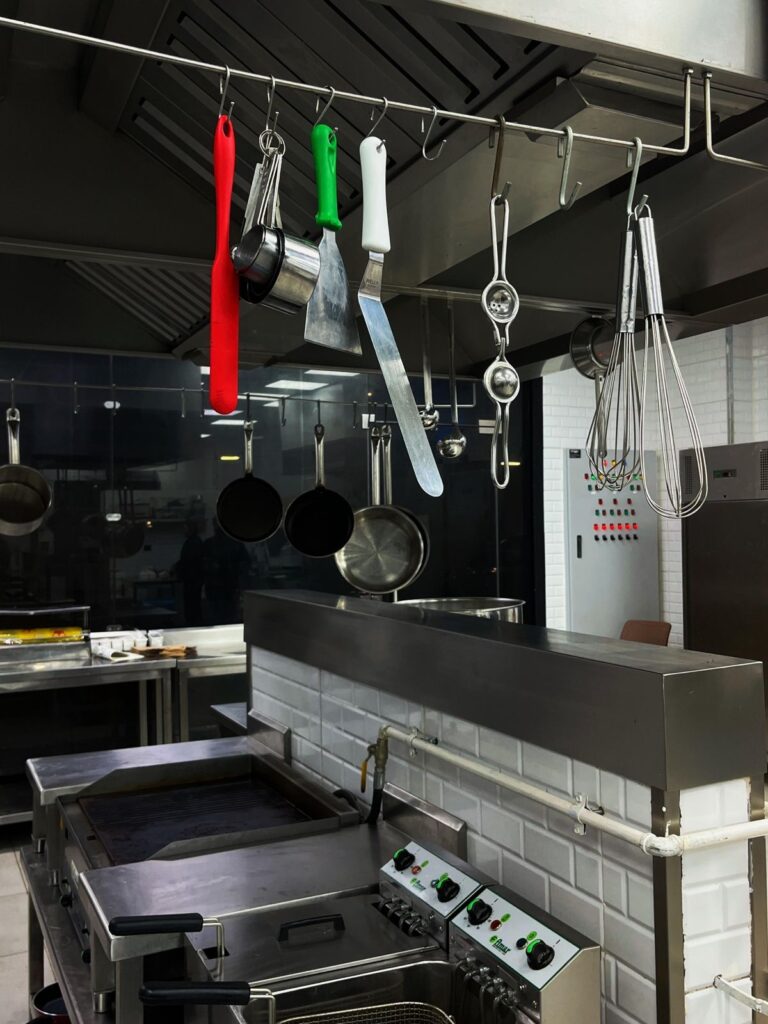
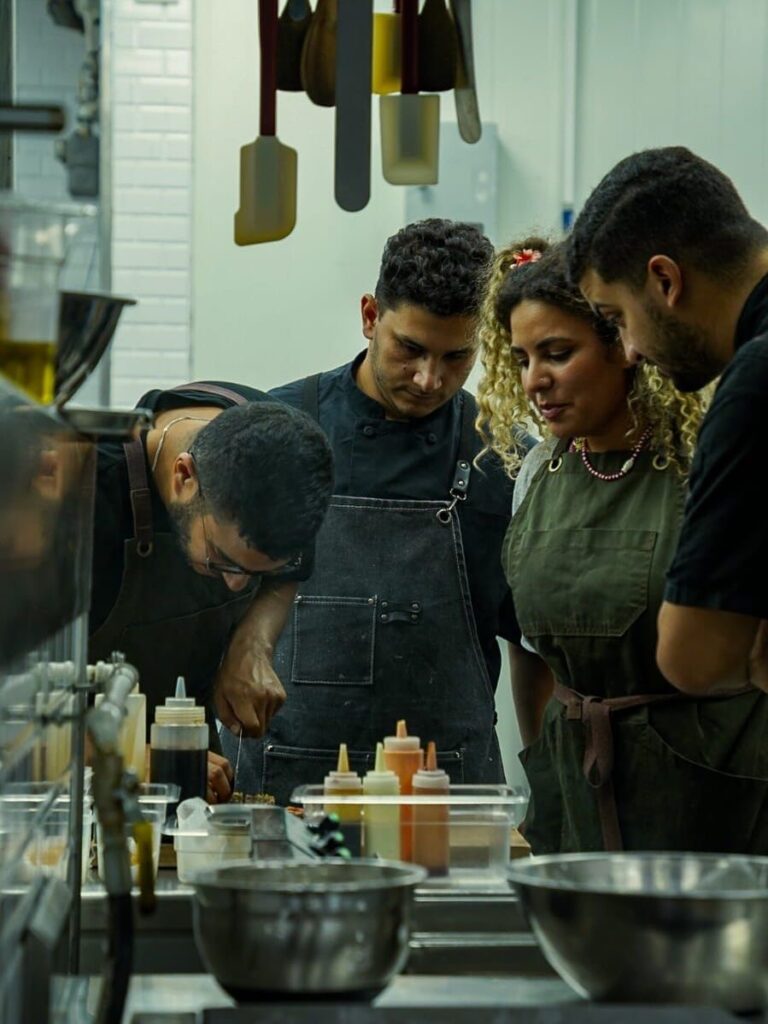
“A lot of the time, I feel like it’s not a kitchen, it’s a lab,” Hana says. “We come here, we experiment, we try new things.”
On the topic of health and sustainability, Omar explains their sourcing process to me:
“Ehna el samak betaana koloh senara. We only source from small local farms—no companies, no farmed fish.”
“Respect your ingredients, invest in your ingredients,” Hana continues the thread, sharing how Omar has a network of providers for each crop and can frequently be found arguing with them over the phone (and then quickly making up).
“What’s next for Blak? A restaurant?” I ask, already craving another salmon bagel tart and wondering where I can get my fix.
“I didn’t want you to ask this question,” Omar jokes. “For the last week, the three of us have been considering it. We are originally chefs of restaurants, so for sure there will be a restaurant at some point. What I can tell you—aghashehulek—is that one of our next events will be a fourteen-course meal, all pasta dishes.”
“Do I get an invite?” I laugh, my stomach already growling.
The chefs assure me they would keep me in the loop, and we go off into a description of our favourite foods, prompted by some questioning on my part.
“Ramen, for sure,” Hana states confidently.
“Probably Korean, or Japanese,” Omar reflects more thoughtfully.
To end the meal, Omar shows me a video from his last trip to Korea of him eating a live octopus—wiggles and all.
“I believe if something is great, its purpose is to be eaten greatly,” he philosophizes on cooking the creature, while I try really hard not to make a face (or scream!).
More than anything else, I start to gather that this is their cooking mantra for everything: fun and daring, but artistic and yummy.
And yummy it definitely is.