 Flair Magazine
 By Menna Saad El Din
As the gilded halls and historic avenues of Paris once again play host to the pinnacle of fashion, there’s an undeniable hum in the air—a palpable sense of change that goes beyond mere seasonal trends. This edition of Paris Fashion Week, unfolding as we speak, feels less like a continuation and more like a profound rebirth, largely driven by an unprecedented array of Creative Director debuts. These new minds and fresh tastes are not just tweaking aesthetics; they are giving the very fabric of the fashion industry a radical, much-needed makeover.
From established powerhouses reinvigorating their legacies to avant-garde labels pushing the boundaries, a new guard is stepping forward, promising a future where innovation and heritage intertwine in thrilling, unexpected ways. This season is a testament to the industry’s dynamic spirit, as designers bravely articulate their visions, signaling a vibrant new chapter for luxury and style.
Let’s delve into the pivotal moments and groundbreaking collections that are defining this transformative Paris Fashion Week:
The Reigning Houses & Fresh Perspectives
Chanel:
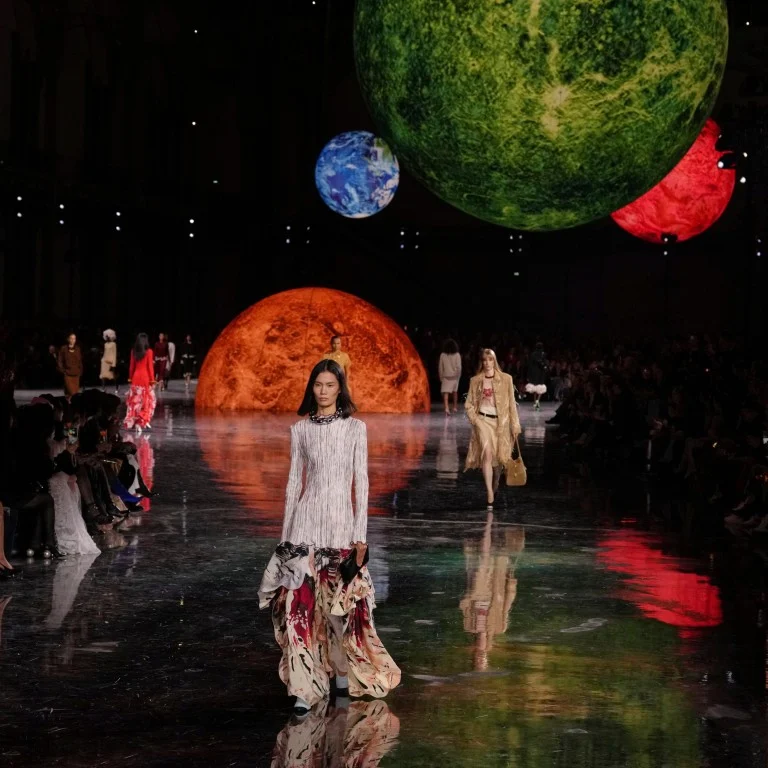
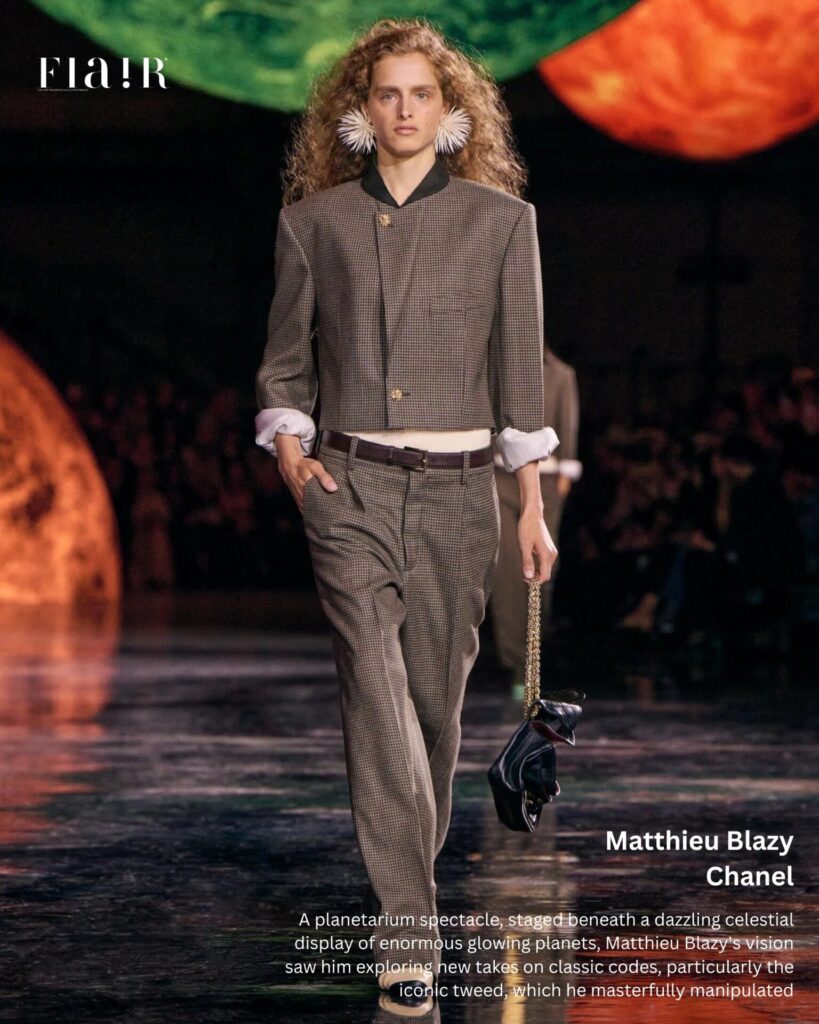
Under the enduring vision of Virginie Viard, Chanel continues to weave its narrative of Parisian chic with a contemporary sensibility. This season’s collection was a masterclass in elegant layering and textural play, reinterpreting house codes—tweed, pearls, and camellias—through softer silhouettes and a focus on everyday wearability that still exudes unparalleled luxury. Viard’s ability to keep Chanel perpetually relevant yet distinctly itself is a quiet force that continues to resonate.
Dior:
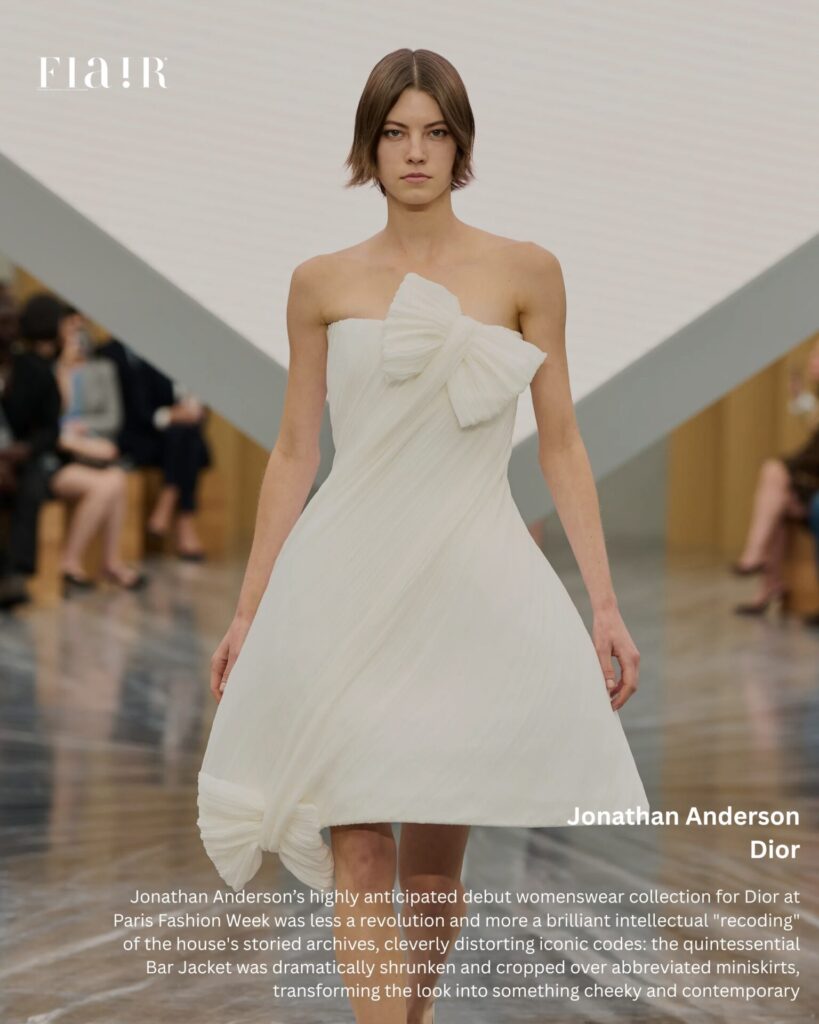
Jonathan Anderson’s highly anticipated debut womenswear collection for Dior at Paris Fashion Week was less a revolution and more a brilliant intellectual “recoding” of the house’s storied archives. Anderson, the first designer since Christian Dior himself to oversee men’s, women’s, and couture, presented a collection built on the “tension between dressing up and reality.” His vision cleverly distorted iconic codes: the quintessential Bar Jacket was dramatically shrunken and cropped over abbreviated miniskirts, transforming the ‘New Look’ into something cheeky and contemporary. Alongside commercial pieces like denim minis and chic capes, Anderson included fantastical elements such as theatrical bows, “double balloon” skirts that riffed on 18th-century panniers, and surreal hats, successfully merging the intellectual artistry he honed at Loewe with Dior’s inherent drama to signal an exciting, complex new era for the French powerhouse.
Valentino:
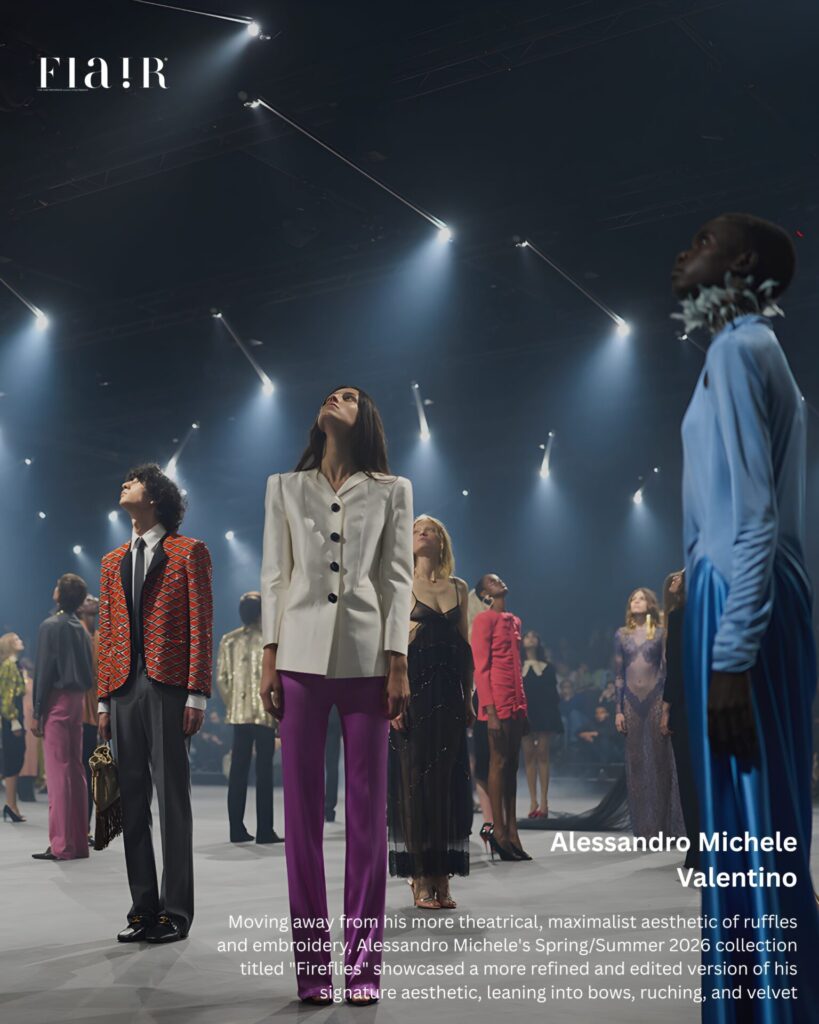
The departure of Pierpaolo Piccioli left a significant void, but the appointment of Alessandro Michele at Valentino has sent ripples of excitement across the industry. While his debut collection is highly anticipated, given his transformative tenure at Gucci, expectations are for a maximalist, romantic, and deeply theatrical reinterpretation of Valentino’s codes. Michele’s vision promises to infuse the brand with a new kind of opulent fantasy, making this one of the most talked-about debuts of the season.
Loewe:
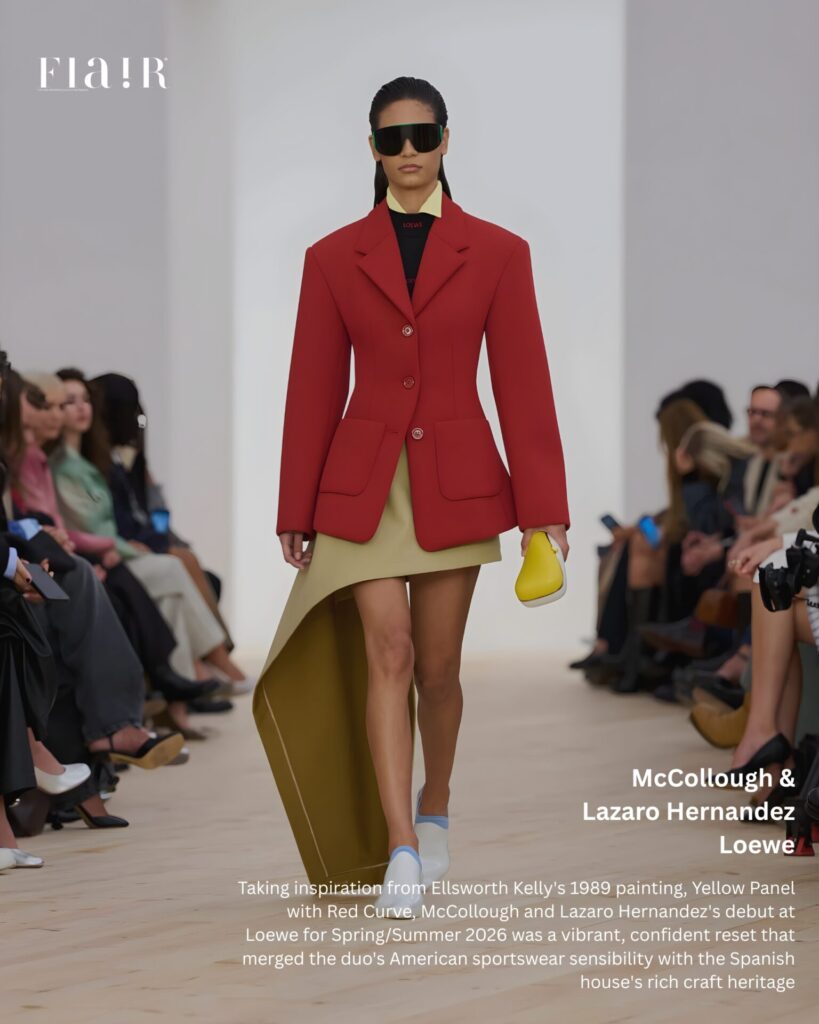
Jack McCollough and Lazaro Hernandez’s debut at Loewe for Spring/Summer 2026 was a vibrant, confident reset that merged the duo’s American sportswear sensibility with the Spanish house’s rich craft heritage. Taking inspiration from Ellsworth Kelly’s 1989 painting, Yellow Panel with Red Curve, the collection was a study in bold, elemental colors and sculpted forms, showcased in items like deliberately rigid leather mini dresses and jackets that held a fixed hourglass shape. Beyond the architectural ready-to-wear collection, they introduced the new Amazona 180 bag, signaling a pragmatic yet artful new chapter for the brand.
Issey Miyake:
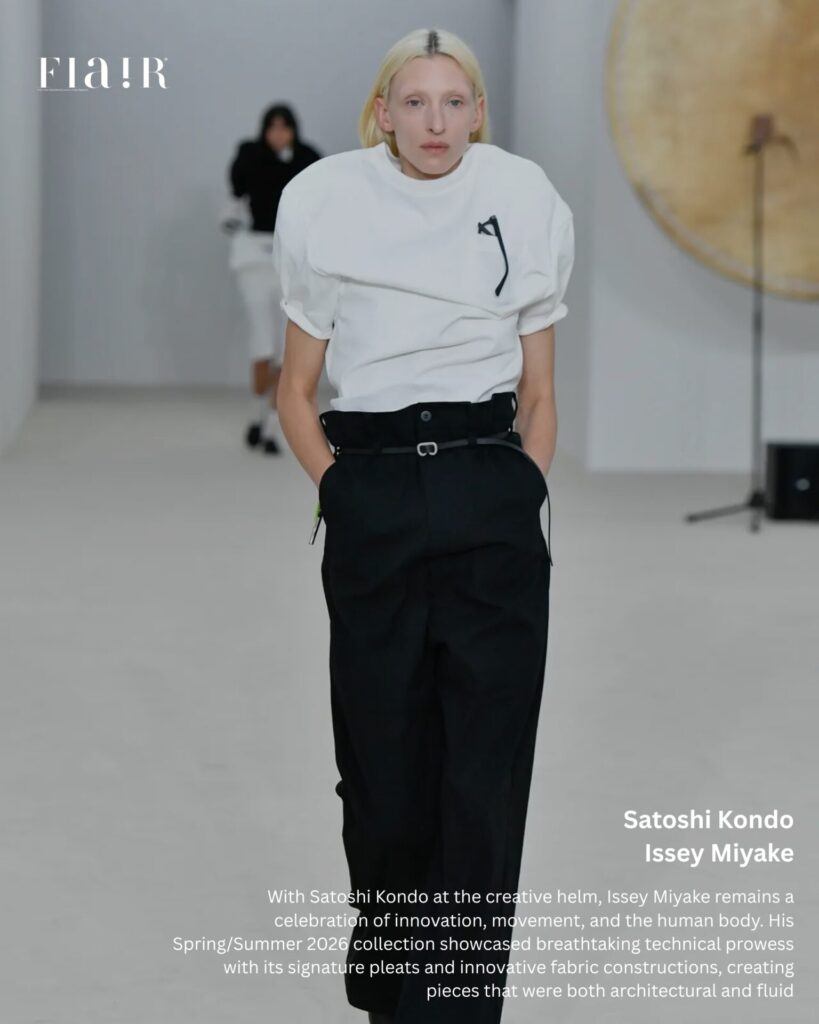
With Satoshi Kondo at the creative helm, Issey Miyake remains a celebration of innovation, movement, and the human body. His Spring/Summer 2026 collection showcased breathtaking technical prowess with its signature pleats and innovative fabric constructions, creating pieces that were both architectural and fluid. Kondo’s vision continues to honor the brand’s legacy while pushing its technical boundaries into fascinating new territories.
Saint Laurent:
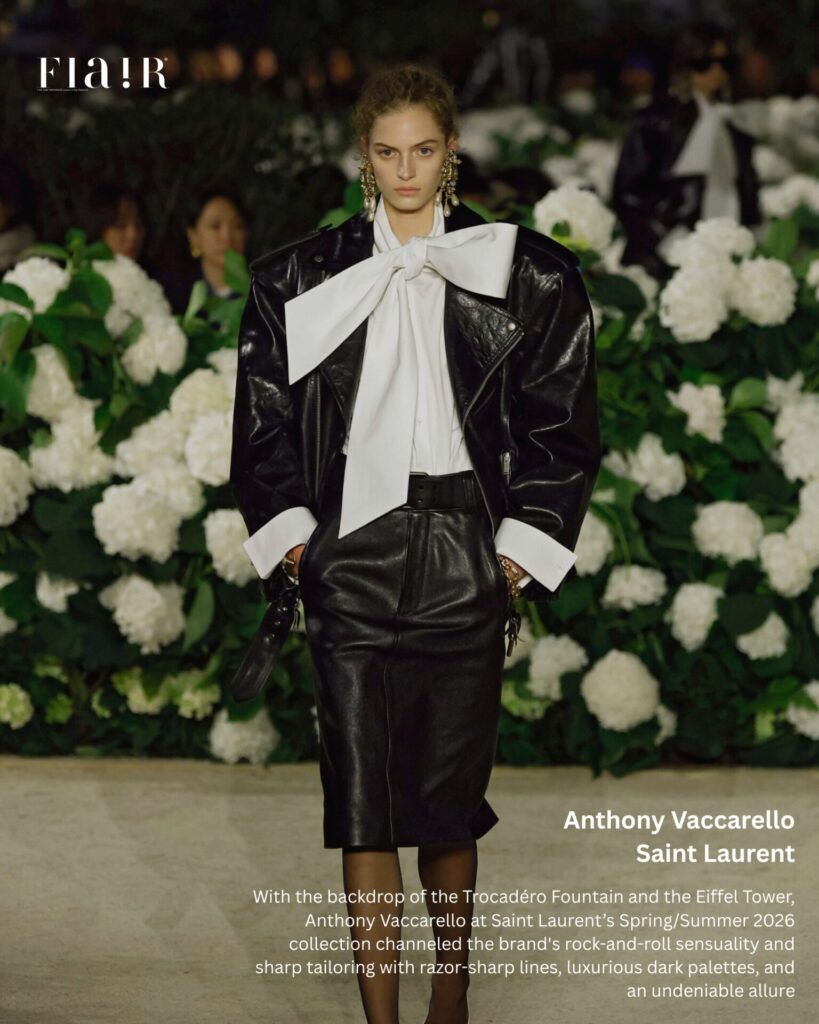
Anthony Vaccarello at Saint Laurent’s Spring/Summer 2026 collection channeled the brand’s rock-and-roll sensuality and sharp tailoring. This season saw a continuation of his distinctive aesthetic: razor-sharp lines, luxurious dark palettes, and an undeniable allure. His collections consistently offer a powerful, confident wardrobe for the modern woman who embraces both strength and overt femininity.
Chloé:
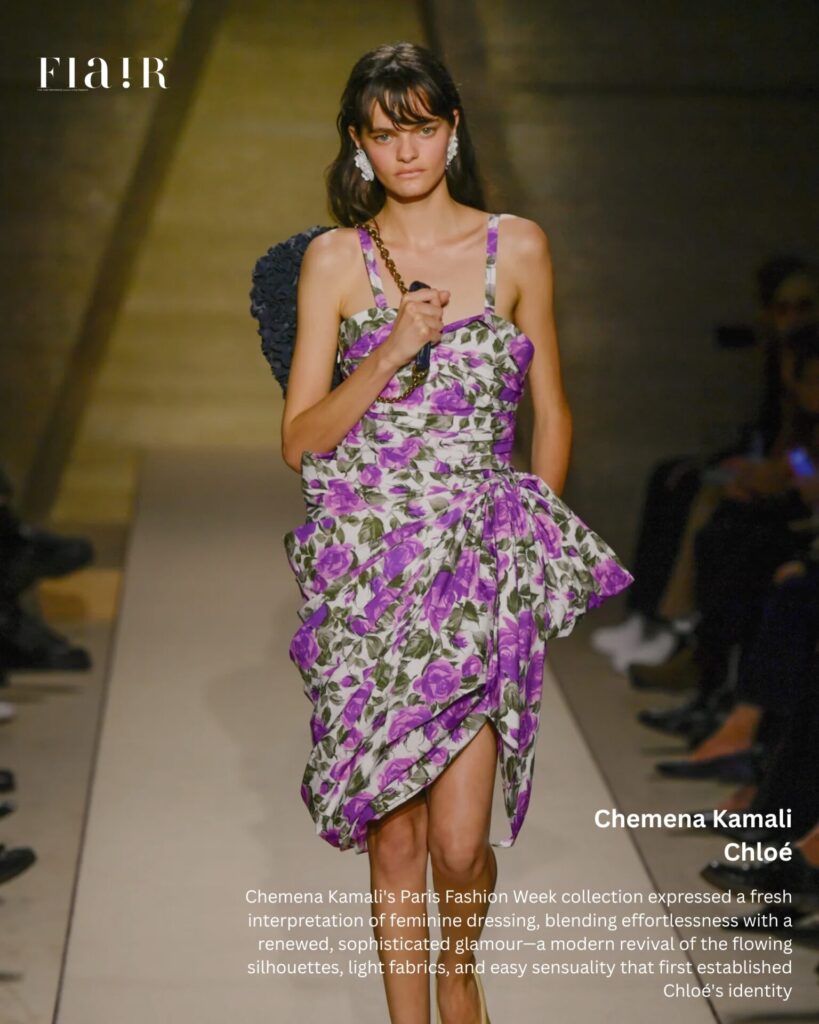
With the recent appointment of Chemena Kamali, Chloé was poised for a fresh chapter at Spring/Summer 2026 Paris Fashion Week. Kamali’s arrival signaled a decisive return to the house’s quintessential codes, with her vision rooted in the brand’s signature bohemian and romantic aesthetic. The collection expressed a fresh interpretation of feminine dressing, blending effortlessness with a renewed, sophisticated glamour—a modern revival of the flowing silhouettes, light fabrics, and easy sensuality that first established Chloé’s identity.
Miu Miu:
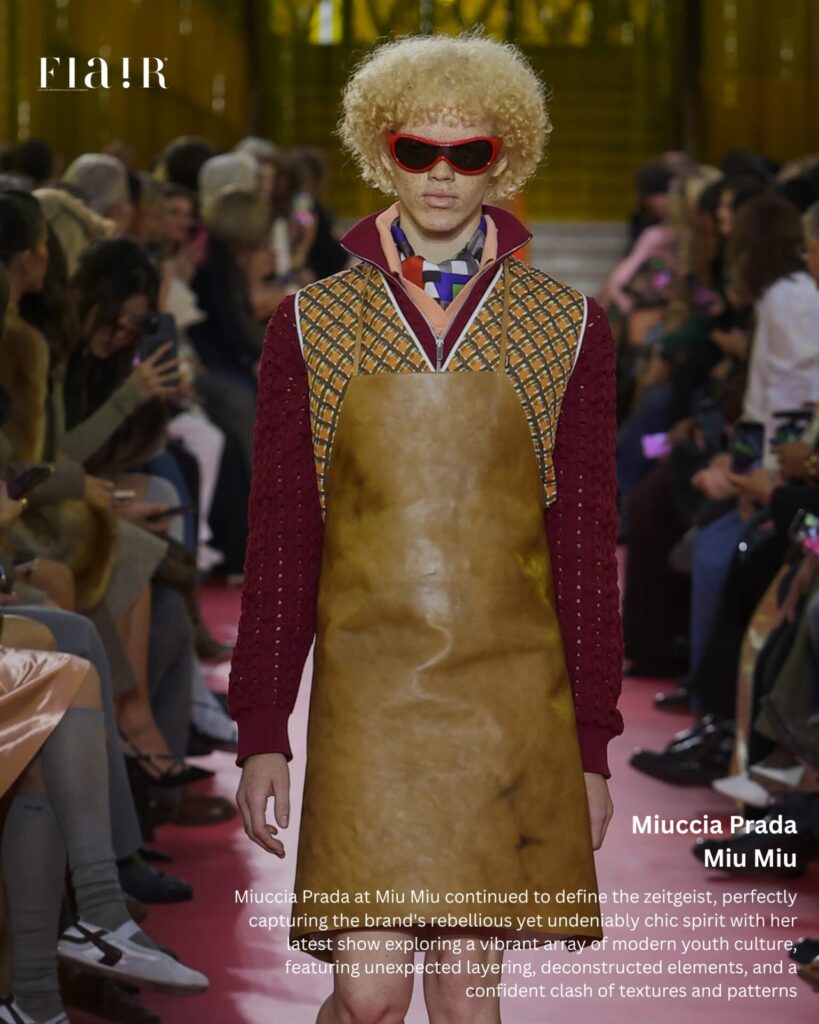
Miuccia Prada at Miu Miu continues to define the zeitgeist, with her latest show exploring a vibrant array of modern youth culture. With unexpected layering, deconstructed elements, and a confident clash of textures and patterns, she perfectly captured the brand’s rebellious yet undeniably chic spirit at this year’s Spring/Summer 2026 runway show.
Victoria Beckham:
Victoria Beckham presented a collection at this year’s Spring/Summer 2026 runway show that further solidified her brand’s position in luxury fashion. Focusing on elevated tailoring, sophisticated draping, and a nuanced color palette, her designs continue to champion a sleek, powerful femininity, while offering a polished yet effortless wardrobe for the discerning modern woman.
Maison Margiela:
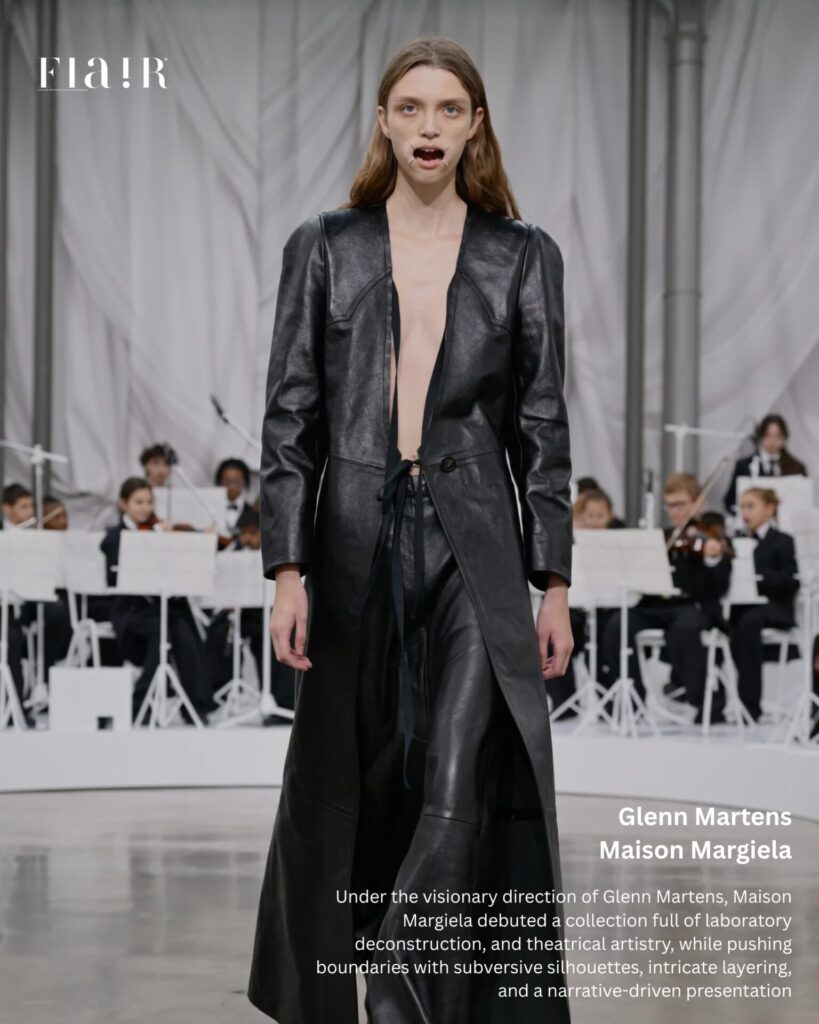
Under the visionary direction of John Galliano, Maison Margiela continues to be a laboratory of deconstruction and theatrical artistry. This Spring/Summer 2026 season’s collection was a masterclass in haute couture techniques applied to ready-to-wear, pushing boundaries with subversive silhouettes, intricate layering, and a narrative-driven presentation that challenges conventional notions of beauty and garment construction.
This Paris Fashion Week was more than just a parade of clothes; it was a living, breathing testament to the industry’s capacity for reinvention. With so many new voices shaping the conversation, and established designers continuing to evolve their narratives, we are witnessing a genuinely transformative period. This season’s runways of Paris did not just showcase fashion; they were a forecast for the future—a future that is bold, diverse, and exhilaratingly new.